


If you have lipedema, you may also have been told your joints are “too flexible,” or you may feel your heart pound when you stand in a long line or step out of a hot shower. Lipedema, hypermobility and POTS are usually diagnosed by different doctors and treated as separate problems. The research suggests they are worth looking at together.
I will walk you through what each condition is, what the studies show about how they overlap, and what needs to change in lipedema care when POTS or hypermobility is involved.
What Are Lipedema, Hypermobile EDS and POTS?
A chronic condition, almost always in women, where painful fat builds up evenly in both legs and often the arms, sparing the hands and feet. It bruises easily, feels tender, and does not shrink with diet and exercise the way ordinary fat does.
The most common type of Ehlers-Danlos syndrome. Joints move past the normal range, skin can be soft or stretchy, and pain, sprains and partial dislocations are common. Hypermobility spectrum disorders are part of the same group.
Postural orthostatic tachycardia syndrome. When you stand, your heart rate rises by 30 beats per minute or more within ten minutes without a drop in blood pressure, with lightheadedness, fatigue, brain fog or palpitations.[1]
Each one is usually diagnosed by a different specialist, which is one reason the overlap gets missed.
For more on the joint side, including how the Beighton score works, read my post on hypermobility and lipedema. This post focuses on POTS and what it means for compression, exercise and lymphatic drainage.
How Often Do Lipedema, EDS and POTS Overlap?
The best evidence connects hypermobility and POTS. In a study of 91 adults with POTS, 31 percent met the criteria for hypermobile EDS, and another 24 percent had loose joints without meeting the full criteria.[2]
Hypermobility also comes up often in lipedema. A US survey of 707 women with lipedema and 216 women without it found the lipedema group was nearly 13 times more likely to report joint hypermobility, after adjusting for age and body size. They also reported far more leg swelling in the heat, easy bruising and fatigue.[3] In a 2025 survey of 670 women with lipedema, 44 percent reported hypermobile areas of the body. That study relied on self report, not an exam.[4]
The link between lipedema and POTS itself has not been measured yet. I could not find a study that counts how many women with lipedema have POTS. One small 2025 study of people with hypermobile EDS, most of whom also had lipedema, found that their autonomic symptoms rose along with their immune symptoms.[5] It is a small study and cannot prove a link.
Hypermobility and POTS: well documented. Hypermobility and lipedema: seen in several surveys. Lipedema and POTS directly: not yet studied. If you read that all three always go together, that goes further than the research does. A fair takeaway: if you have one of these conditions, ask to be screened for the other two.
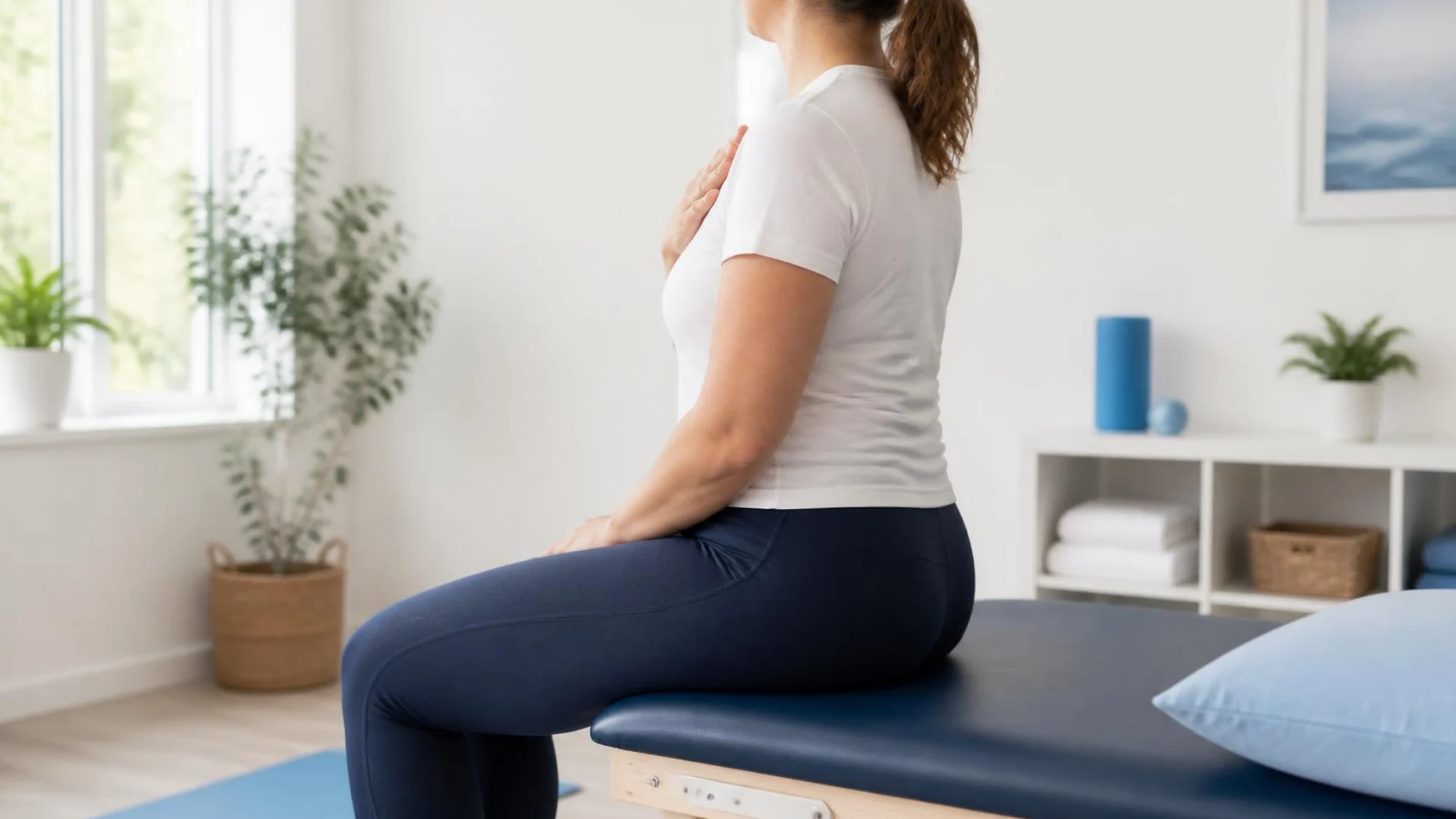
Standing still is hard on a body with POTS and lipedema. Lying down, moving and compression all help blood and lymph get back to the heart.
Why Would These Conditions Happen Together?
Nobody knows for sure yet. The leading explanation starts with connective tissue.
Connective tissue holds your joints together, but it also forms the walls of your veins and lymph vessels and the fascia around your muscles. When it is more elastic than usual, joints move further, and the veins in your legs and belly may stretch more when you stand. More blood pools there, less returns to the heart, and the heart beats faster to make up for it. That fast heartbeat on standing is POTS.
Lipedema adds to the load. The fat tissue is inflamed, its small blood vessels bruise easily, and lymph moves through it slowly. Add blood pooling on top of that, and it makes sense that the legs feel heavier by evening and that heat makes both the swelling and the heart rate worse.
Mast cells can be involved too. In one review of 195 medical records, mast cell activation syndrome (MCAS) was found in 31 percent of patients with both POTS and EDS, compared with 2 percent of those with neither.[6] If you get flushing, hives or food reactions, tell your care team. I explain how MCAS flares affect swelling in my post on lymphatic drainage for MCAS.
What Does It Feel Like to Have All Three?
Most patients describe their symptoms by what happens during their day, not by diagnosis. These are the patterns that come up most.
| What you notice | What may be driving it |
|---|---|
| Legs feel heavier and fuller by late afternoon | Slow lymph flow in lipedema tissue, plus blood pooling from time upright |
| Dizzy or racing heart in a hot shower, on a summer day, or standing in line | Heat widens blood vessels and gravity pulls blood down, the classic POTS trigger |
| Bruises you cannot remember getting | Fragile small vessels in lipedema tissue and connective tissue that tears more easily |
| Joints that ache, click or slip, especially knees and hips | Hypermobility, with lipedema adding weight and changing how the legs line up |
| Wiped out for a day or two after doing “too much” | Autonomic fatigue, muscles working hard to steady loose joints, and an inflammatory flare |
If several of these sound familiar, tell your doctor about all of them. A lipedema plan that ignores POTS or hypermobility may not fit you, and only an assessment can tell which conditions you actually have. If you are still working out whether your leg pain is lipedema, start with my lipedema pain checklist.
“From the moment I met Dr. Grace, I knew I was in the right hands. After years of feeling like something was wrong with my body, I was finally diagnosed with lipedema, and finding Grace has truly been life-changing.”
Does Compression Help POTS and Lipedema?
Yes, and the same garment can help both. In lipedema, compression supports the tissue and eases pain and heaviness. In a survey of 279 women with lipedema, the top reasons for wearing it were feeling supported, less pain and better mobility, although many were unhappy with the fit.[7]
In POTS, compression limits how much blood pools in the legs and belly when you stand. A 2026 systematic review of POTS treatments lists compression as a first-line option, while rating the evidence as low certainty because most studies are small.[8] The largest compression trial in that review tested 30 adults on a tilt table. Average heart rate was 109 beats per minute with no compression, 103 with lower-leg compression, 97 with abdomen and thigh compression, and 92 with full compression from the waist down. Symptoms improved in the same order.[9]
For lipedema patients, the useful detail is where the compression goes. Knee-high stockings did the least. Compression over the thighs and abdomen did the most, and that is also where lipedema tissue usually sits. If you have POTS, ask about thigh-high or waist-high garments, or an abdominal binder worn with leg compression if full tights are too much.
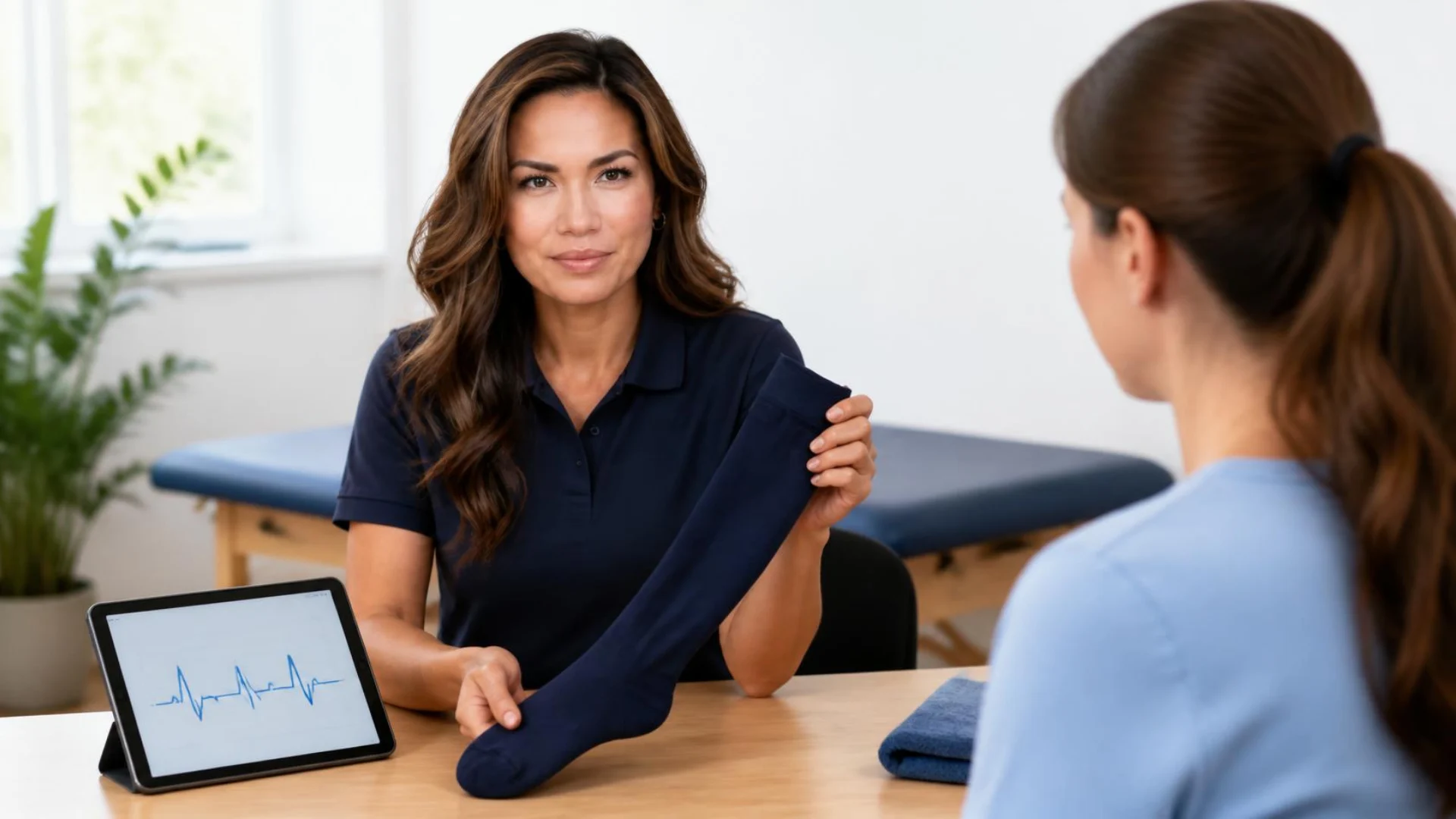
With POTS, how high a garment reaches matters as much as how firm it is.
Fit matters too. Lipedema tissue is tender and hypermobile skin marks easily, so a garment that rolls or digs in ends up in a drawer. If you wear compression every day and your swelling still is not changing, read why compression alone may not be reducing your swelling.
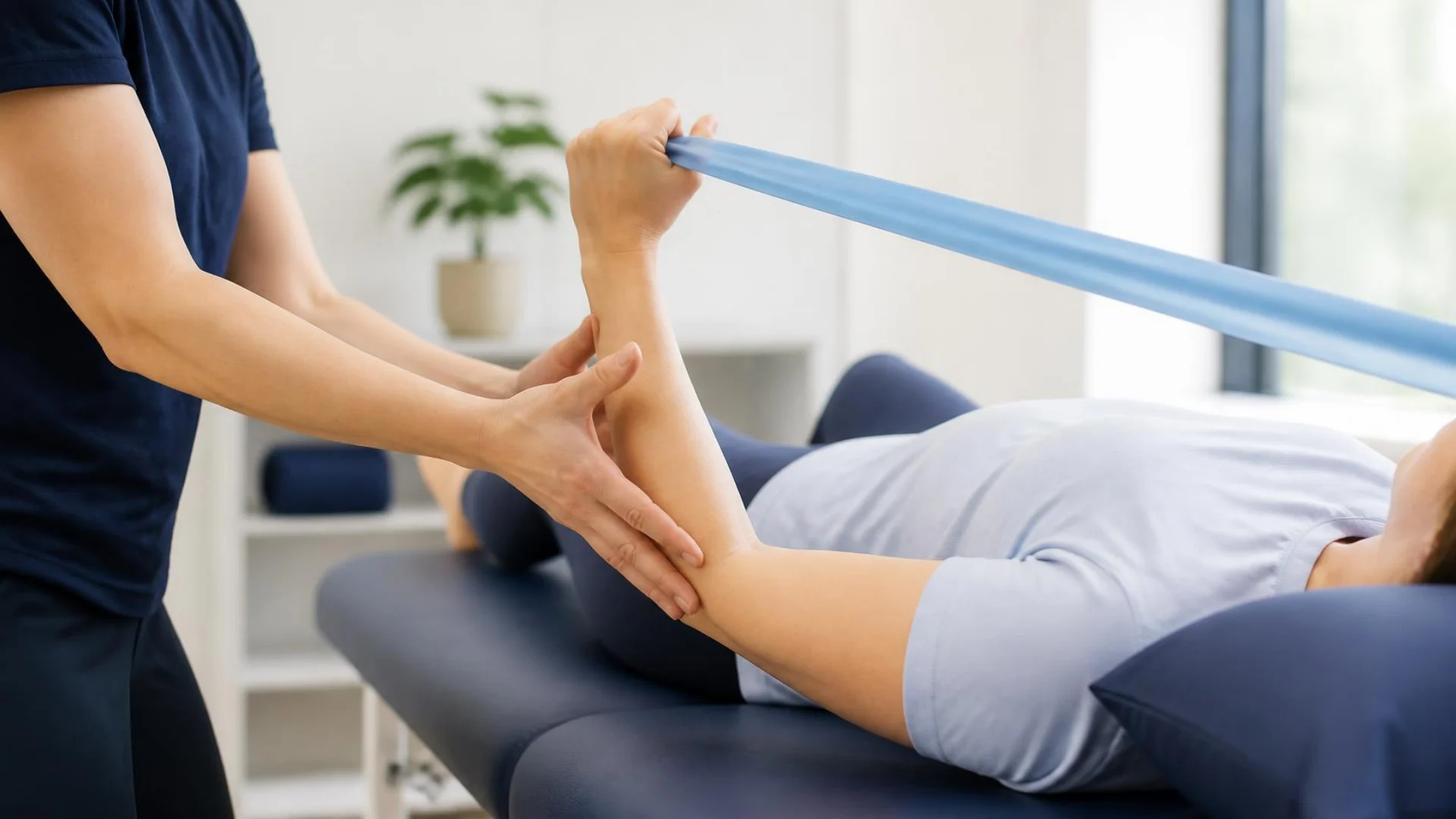
Starting exercise lying down or seated lets muscles get stronger before the heart has to work against gravity.
What Exercise Is Safe With POTS and Hypermobility?
“Just walk more” can leave someone with POTS dizzy and someone with hypermobility sore for days. Exercise still helps all three conditions. It just needs to start in the right position.
A 2025 systematic review of exercise for POTS found that heart rate improved in every study that measured it, and quality of life improved in all four studies that measured it. Several programs started with exercise lying down or seated and moved to upright training over time.[10] The studies were small, and people with hypermobility or MCAS were mostly left out, so exercise for this group needs to be set for each person.
This fits how I approach exercise for lipedema: low impact, steady, and dosed so it helps lymph flow without causing a flare. For loose joints, the focus is slow strength work that teaches the muscles around each joint to hold it steady. Start lying down or seated, and add standing work later.
Keep track of how you feel the day after you exercise. If you feel fine during a session but wiped out for two days afterward, it was too much, and the plan should be adjusted.
“Dr. Grace is the professional, compassionate, and intelligent physical therapist that we all hope to have during rehabilitation. She takes time to fully understand the problem and then devises a comprehensive plan. I will be forever grateful for her being a permanent part of my wellness plan.”
Is Lymphatic Drainage Safe With POTS?
It is usually well tolerated. Manual lymphatic drainage uses light pressure and a slow rhythm, and it is done lying down, which takes the load off the heart. At the end of a session, sit up slowly and rest for a minute before you stand. If your blood pressure tends to run low, check with your cardiologist first.
Lying down also works best for self drainage at home. My guide to lymphatic drainage positions shows the setups I teach.

Compression, fluids, salt as advised by your doctor, and a simple symptom log.
What Should You Ask Your Doctor?
If you have lipedema and the POTS or hypermobility parts of this post sound familiar, ask your physician whether a standing heart rate test or a referral for autonomic testing makes sense, and whether a hypermobility screen is worth doing. If you already have a POTS or EDS diagnosis and your legs are painful, tender and bruise easily in a matching pattern on both sides that spares your feet, ask whether lipedema has been considered.
Fluids and salt are part of standard POTS care, and a 2026 systematic review lists salt as a first-line option.[8] How much is right for you depends on your blood pressure, kidneys and medications, so that decision belongs with your physician or cardiologist.
How I Can Help
I am one of only five clinicians in Loudoun County with both DPT and CLT credentials, with more than 20 years of experience. At my Leesburg clinic, the joint, exercise and lymphatic sides of your care can be planned together in one place. You can read how I structure care on my lipedema and lymphedema therapy page.
“Dr. Grace Villaver is a gift to the Lymphedema and Lipedema community. Her expertise with this disease has made her an invaluable partner in my recovery. I highly recommend Dr. Grace to anyone navigating this illness.”
Every body is different, and nothing here replaces an individual assessment. If you are in Loudoun County or Northern Virginia and this sounds like you, reach out here.
Lipedema With Comorbid hEDS/HSD and POTS: Assessment and Treatment Considerations
For physicians, nurse practitioners and physical therapists managing lipedema with comorbid hEDS/HSD or POTS. Each condition changes the safe dose of interventions used for the others.
Epidemiology and Strength of Evidence
Miller and colleagues found that 31% of 91 adults with POTS met 2017 hEDS criteria, with a further 24% showing generalized joint hypermobility.[2] In lipedema, Aday and colleagues reported an age and BMI adjusted odds ratio of 12.88 for joint hypermobility in 707 women with a lipedema phenotype versus 216 controls, with markedly elevated odds of heat-related leg swelling (OR 66.82) and fatigue (OR 9.59).[3] Direct prevalence data for POTS in lipedema are lacking; a 2025 hEDS pilot (n = 25, predominantly lipedema in the adipose group) linked immune dysfunction with COMPASS-31 scores, which is hypothesis generating only.[5] MCAS has been reported in 31% of patients with both POTS and EDS versus 2% with neither.[6]
Screening
In lipedema patients reporting orthostatic intolerance, heat intolerance or post-exertional fatigue, a bedside active stand test with heart rate and blood pressure measured supine and at intervals over ten minutes is a reasonable first screen. The consensus definition of POTS requires a sustained heart rate increase of at least 30 beats per minute (40 in patients aged 12 to 19) within ten minutes of standing or head-up tilt, in the absence of orthostatic hypotension, with chronic symptoms.[1] Positive screens warrant referral for formal autonomic evaluation. Beighton scoring and the 2017 hEDS criteria checklist should be applied with the caveat that lipedema tissue volume and fibrosis may limit end-range motion and lead to underestimation.[4] A history of flushing, urticaria, food or medication reactivity should prompt consideration of mast cell involvement before introducing new topical products or vigorous manual techniques.
Compression Prescription
Bourne and colleagues’ randomized crossover tilt study in 30 adults with POTS showed a graded effect by compression territory: mean heart rate during head-up tilt was 109 bpm without compression, 103 bpm with lower leg compression, 97 bpm with abdominal and thigh compression, and 92 bpm with full abdominal and leg compression, with parallel improvements in orthostatic symptom scores driven by better maintained stroke volume.[9] The authors suggested abdominal compression alone may help when full lower body compression is not tolerated, although a smaller trial of splanchnic compression alone showed no significant change, and Schiweck and colleagues’ 2026 systematic review (7 RCTs and 13 non-randomized studies of non-pharmacological treatment) rated the certainty of evidence as low or very low while still placing compression and salt among first-line options.[8] For the lipedema patient with comorbid POTS, this argues against below-knee garments as the default and toward thigh-high, waist-high or combined binder plus leg options, with attention to tissue tenderness, skin fragility in hEDS, and garment satisfaction, which is frequently low in lipedema populations.[7]
Exercise Prescription
Cortez and colleagues’ 2025 systematic review (eight studies, most with fewer than 50 participants) found heart rate improvement in every report, quality of life improvement in all four reports that measured it, and modest stroke volume gains. Risk of bias was moderate to high, dropout reached 59% in some cohorts, heterogeneity precluded meta-analysis, and patients with hypermobility, MCAS or ME/CFS were largely excluded.[10] The 2026 treatment review likewise found one RCT of partly supervised aerobic training without a significant change in COMPASS-31, set against favorable non-randomized data, and recommends individually adapted programs.[8] The recumbent-first progression used in this work aligns well with existing lipedema exercise principles of low impact, moderate intensity loading. For hEDS and HSD, programming should emphasize motor control and mid-range strengthening over end-range stretching. Monitoring should include next-day symptom response, since post-exertional symptom exacerbation is a common reason for dropout in this group.
Manual Lymphatic Drainage and CDT
MLD is generally well tolerated in POTS when delivered supine, with gradual transitions to standing. Plan intensive phase bandaging around orthostatic tolerance and hEDS skin fragility, and coordinate fluid, sodium and blood pressure targets with the patient’s cardiologist or autonomic specialist. For patients in Loudoun County and Northern Virginia, I am available for consultation and co-management, with the musculoskeletal, autonomic and lymphatic components assessed within a single plan of care through my lipedema and lymphedema therapy program.
If This Sounds Like You
If you have been seeing separate doctors for your heart rate, your joints and your legs, ask whether these could be connected. The research is still catching up, but there is enough to take the overlap seriously and to plan your care around all of it.
In health,
Dr. Grace, DPT, CLT
References
- Vernino S, Bourne KM, Stiles LE, et al. Postural orthostatic tachycardia syndrome (POTS): State of the science and clinical care from a 2019 National Institutes of Health Expert Consensus Meeting, Part 1. Auton Neurosci. 2021;235:102828. doi:10.1016/j.autneu.2021.102828
- Miller AJ, Stiles LE, Sheehan T, et al. Prevalence of hypermobile Ehlers-Danlos syndrome in postural orthostatic tachycardia syndrome. Auton Neurosci. 2020;224:102637. doi:10.1016/j.autneu.2020.102637
- Aday AW, Donahue PMC, Garza M, et al. National survey of patient symptoms and therapies among 707 women with a lipedema phenotype in the United States. Vasc Med. 2024;29(1):36-41. doi:10.1177/1358863X231202769
- Fiengo E, Sbarbati A. Lipedema and Hypermobility Spectrum Disorders Sharing Pathophysiology: A Cross-Sectional Observational Study. J Clin Med. 2025;14(20):7195. doi:10.3390/jcm14207195
- Wang TJ, Schubart JR, Wagner W, et al. Intersection between hypermobile Ehlers-Danlos syndrome and adipose disorders: investigating fascial remodeling with ultrasound imaging. J Rare Dis. 2025;4:52. doi:10.1007/s44162-025-00113-x
- Wang E, Ganti T, Vaou E, Hohler A. The relationship between mast cell activation syndrome, postural tachycardia syndrome, and Ehlers-Danlos syndrome. Allergy Asthma Proc. 2021;42(3):243-246. doi:10.2500/aap.2021.42.210022
- Paling I, Macintyre L. Survey of lipoedema symptoms and experience with compression garments. Br J Community Nurs. 2020;25(Sup4):S17-S22. doi:10.12968/bjcn.2020.25.Sup4.S17
- Schiweck N, Langer K, Maier A, et al. Systematic literature review: treatment of postural orthostatic tachycardia syndrome (POTS). Clin Auton Res. 2026;36:3-16. doi:10.1007/s10286-025-01172-2
- Bourne KM, et al. Compression garment reduces orthostatic tachycardia and symptoms in patients with postural orthostatic tachycardia syndrome. J Am Coll Cardiol. 2021;77(3):285-296. doi:10.1016/j.jacc.2020.11.040
- Cortez MM, Aikins K, Arnold AC, et al. Impact of exercise to treat postural orthostatic tachycardia syndrome: a systematic review. Front Neurol. 2025;16:1567708. doi:10.3389/fneur.2025.1567708
