


In the first session with a newly diagnosed lipedema patient, I almost always hear some version of the same story. They tried every diet. They were told the women in their family just have big legs. They were sent home with instructions to eat less and move more, and they did — for years — and nothing changed the way it was supposed to. Some were told flat out it was a willpower issue. Some were questioned about whether they were really following their plan.
By the time they find me, most of them have stopped trusting their own perception of their body. So when a diagnosis finally arrives, it brings two things at once: relief that there is a clinical explanation for what they have been experiencing, and the weight of learning that what they have is chronic. Both of those things land at the same time. Both deserve space before we talk about treatment.
The Diagnosis Comes After a Very Long Time Without One
The average diagnostic delay in lipedema is estimated at 22 years.[1] That is not a typo. For two decades, on average, patients with lipedema are living with symptoms that are real, measurable, and progressive, while being told they need to try harder, eat less, or simply accept how they look. The misdiagnosis is typically obesity or lymphedema, both of which lead to treatment approaches that do not address the actual condition.[2]
By the time the correct diagnosis arrives, most patients have not just been dealing with a medical condition. They have been dealing with a medical system that has failed to recognize it. That history does not disappear when a clinician finally puts the right name on the chart. It shapes how patients receive information, how much they trust clinical recommendations, and how they feel about their own judgment. Acknowledging that history is part of the clinical work, not a preliminary to it.
"From the moment I met Dr. Grace, I knew I was in the right hands. After years of feeling like something was wrong with my body, I was finally diagnosed with lipedema, and finding Grace has truly been life-changing."
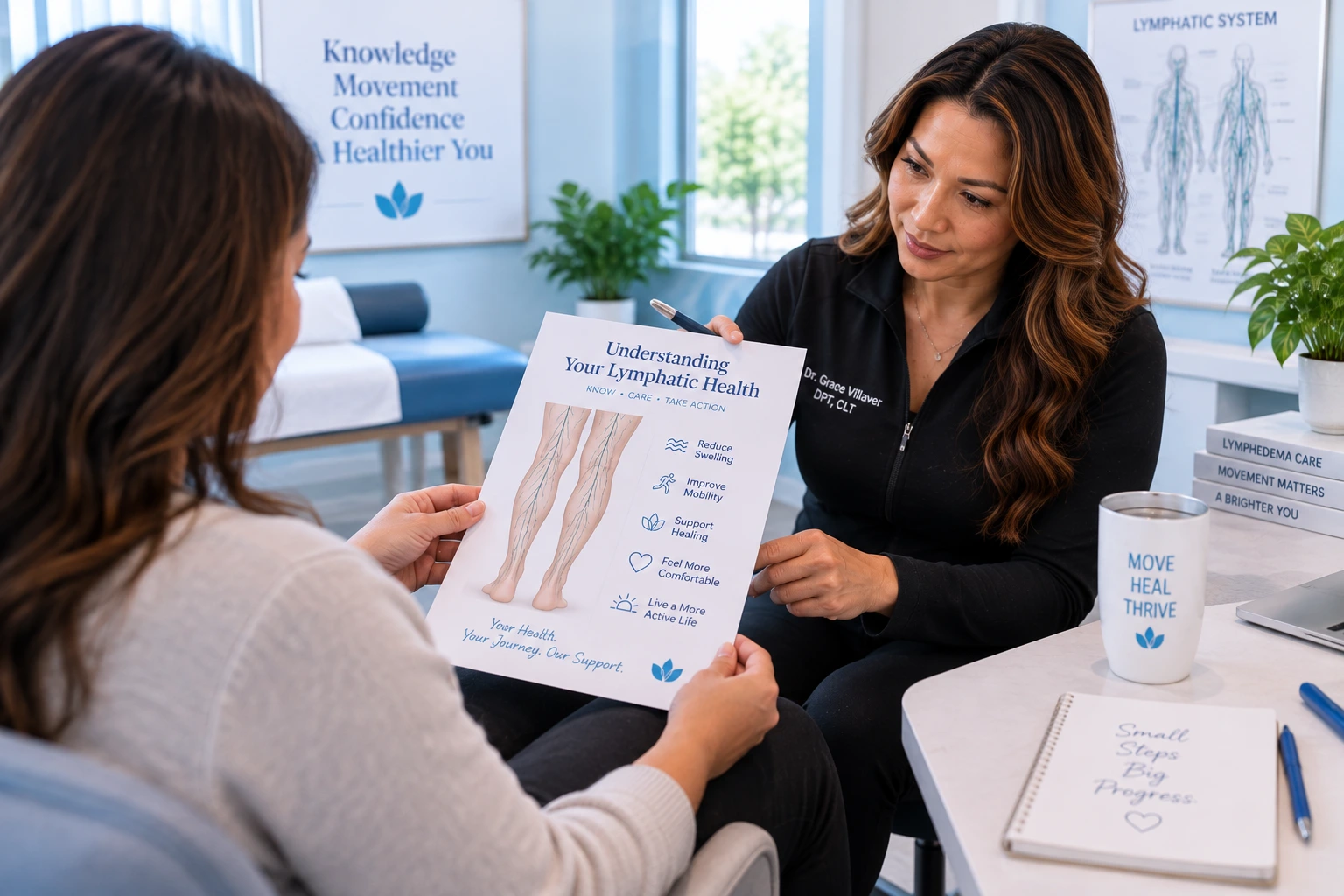
Understanding what is actually happening in your tissue changes how you approach treatment — and how you feel about your body.
Your Body Was Not Failing You
One of the most important things I tell newly diagnosed patients is this: every diet that did not change your lower body, every exercise program that did not reduce your legs, every time a doctor told you to try harder and nothing changed — none of that was a failure of effort. It was a biological reality that was not being recognized.
Lipedema fat is structurally and metabolically different from general adipose tissue. It is characterized by adipocyte hypertrophy, chronic low-grade inflammation driven by macrophage infiltration, microvascular dysfunction, and progressive fibrosis.[3] Standard caloric restriction and exercise do not resolve this fat because it is not accumulating through the same mechanisms that respond to those interventions. A 2026 narrative review confirmed that misdiagnosis as obesity leads to ineffective treatments like weight loss programs and bariatric surgery, with patients in case series continuing to experience lipedema pain even after significant general weight reduction.[2]
Diet does still matter in lipedema management, specifically in reducing the systemic inflammatory environment that makes symptoms worse. But diet working to manage inflammation is a different clinical goal from diet eliminating the fat that defines the condition. Understanding the difference between those two things changes how patients relate to food, to their body, and to their treatment plan.
Rebecca came in believing surgery was the only path forward after years of trying everything else without the result she expected. What changed for her was understanding what the condition was actually doing and what treatments were designed to address it at that level.
"Before going to her I thought surgery was my only option. After just a few lymphatic massages and other helpful insight that she's provided, I feel that I don't need the surgery. I highly recommend Dr. Grace at Level Up."
The Emotional Weight Is Part of the Condition
The psychosocial burden of lipedema is documented and significant, and it is worth naming directly rather than treating as a sidebar to the physical symptoms. A 2025 cross-sectional study of 245 women with lipedema found significantly higher levels of health-related stigma compared to an age-matched general female population, with social support directly associated with better emotional and social functioning outcomes.[4] A 2026 controlled cross-sectional study measuring validated psychological outcomes found that women with lipedema reported significantly greater body image dissatisfaction, perceived distress, and depressive symptoms compared to healthy controls.[5]
These findings describe what I see in the clinic. Patients who have spent years absorbing the message that their body is a problem they created carry that message into their diagnosis and into their treatment. The shame attached to a lower body that did not respond to the things it was supposed to respond to does not lift automatically when a diagnosis arrives. In many cases, it takes time and explicit reframing for patients to separate their own effort and character from the biological behaviour of a condition they did not choose.
I address this directly in the clinical relationship because it affects everything downstream. Patients who believe their condition reflects a personal failure are less consistent with compression, less willing to start exercise, and less likely to stay engaged with a care plan that requires sustained effort. Reframing the biology is a clinical intervention, not just emotional support.
A 2025 review in Archives of Psychiatry and Psychotherapy confirmed that people with lipedema face increased risk of anxiety, depression, and eating disorders, exacerbated by frequent misdiagnosis and the lack of awareness among healthcare professionals.[6] Effective treatment requires integrating physical therapy with psychological support, not treating one and hoping the other improves on its own.

Managing a chronic condition well looks different from curing one. The goal shifts — and so does what progress means.
Management Is Ongoing — and That Is a Different Thing From Giving Up
Lipedema is a chronic condition. The Lipedema World Alliance Delphi Consensus defines it explicitly as a condition requiring ongoing medical management, with symptoms that may persist for many years before diagnosis and that require sustained therapeutic attention after it.[7] Understanding this early changes what a patient expects from their care and what they measure their progress against.
The gold standard treatment is Complete Decongestive Therapy (CDT), which consists of manual lymphatic drainage, compression therapy, therapeutic exercise, and skin care. CDT works in two phases: an intensive phase aimed at reducing volume and improving tissue condition, and a maintenance phase that the patient sustains independently with regular clinical support. Neither phase is temporary in the sense that completing it means the condition is resolved. What the maintenance phase means, practically, is that the day-to-day burden of managing the condition becomes something the patient controls at home, with clinical sessions as calibration points rather than the primary intervention.
That shift from intensive to maintenance is where appropriately dosed exercise becomes genuinely useful rather than counterproductive. Exercise in lipedema requires specific parameters to support lymphatic function without triggering the inflammatory responses that worsen congestion. Getting that calibration right is part of the clinical work in the early phases, so that patients have a movement practice they can sustain without fear of flaring.
Patti described what changes when a provider understands the condition at this level — not just the physical symptoms, but the whole picture of what managing a chronic disease across time actually requires.
"Dr. Grace Villaver is a gift to the Lymphedema and Lipedema community. Her expertise with this disease has made her an invaluable partner in my recovery. I highly recommend Dr. Grace to anyone navigating this illness."
The Provider You Choose Matters More Here Than in Most Conditions
Most general practitioners are not trained in lipedema. A 2025 systematic review confirmed that the lack of awareness among healthcare providers remains a primary driver of misdiagnosis and delayed care.[3] This means that finding a provider with the specific credentials and clinical experience to manage lipedema accurately is not a nice-to-have. It is the foundation of getting the right treatment in the first place.
The dual DPT and CLT credential is specifically relevant here. A Doctor of Physical Therapy brings musculoskeletal assessment, therapeutic exercise prescription, and the clinical reasoning to identify what is driving a patient's movement limitations alongside their lymphatic symptoms. A Certified Lymphedema Therapist brings the manual skills, compression protocol knowledge, and CDT training to manage the lymphatic dimension directly. In lipedema, where the musculoskeletal and lymphatic systems are both affected and interact with each other, having both in a single provider changes the clinical picture significantly. What to look for in a certified lymphedema therapist covers this in more detail.
Lauren described what shifts when the provider relationship is built around the right clinical framework. The at-home work becomes something she can actually do, because the sessions built the foundation and the knowledge to sustain it.
"Entrusting Dr Grace with my Lipedema therapy has been life changing. Initially I was hesitant to schedule concierge care but it has truly been the best decision for my health I could have made. She doesn't just treat your symptoms but empowers you to continue care at home. She is the best."
Progress in Lipedema Looks Different From What You May Expect
Patients come in hoping to see their legs return to a size that preceded the condition. That is an understandable hope, and I do not dismiss it. But the more accurate measure of progress in lipedema is a different set of things: less spontaneous pain, less pain with touch and pressure, better tolerance of heat and orthostatic loading, reduced frequency of flares, more consistent volume from morning to evening, and a sense of agency over a condition that previously felt entirely outside of their control.
Volume reduction from CDT is real and documented. Compression garments worn consistently maintain it. Reaching a plateau is not the same as reaching the limit of what is possible. It often means the intensive phase is complete and the maintenance phase is working. The patients who do best over years are the ones who recalibrate their definition of progress early, because they stop measuring against an impossible benchmark and start measuring against their own baseline.
If you have just been diagnosed and are trying to work out what the next step looks like, that is exactly the conversation to have in a clinical setting with someone who knows the condition. My lipedema and lymphedema therapy page covers how I structure that initial assessment and the phases of care that follow. Reach out here and we can start from where you actually are.
Newly Diagnosed Lipedema: Clinical Priorities in the First Months of Care
This section is written for the physician, nurse practitioner, or physical therapist receiving a newly diagnosed lipedema patient who may or may not have had access to a specialist before their referral. The clinical priorities in the first months differ from the steady-state management picture, and the psychosocial dimension deserves specific clinical attention rather than referral-by-default.
The Diagnostic Delay and Its Clinical Consequences
A clinical trial protocol referencing the peer-reviewed lipedema literature cites a mean diagnostic delay of 22 years, during which patients typically undergo ineffective interventions for obesity or venous disease while the lipedema progresses through stages.[1] A 2025 systematic review of 61 lipedema studies confirmed that misdiagnosis as obesity or lymphedema is the primary driver of delayed care and increased morbidity, with symptoms refractory to dietary and exercise interventions for general weight management.[2] The clinical implication is that newly diagnosed patients have likely already accumulated stage progression that would not have occurred with earlier intervention. The initial assessment should therefore include staging, tissue quality evaluation, and documentation of the degree of fibrosis, lymphatic involvement, and musculoskeletal impact, rather than proceeding directly to a standard CDT protocol calibrated for early-stage disease.
Psychosocial Assessment Is a Clinical Requirement
The psychosocial burden of lipedema meets the threshold for routine clinical screening rather than opportunistic management. A 2025 cross-sectional study of 245 women with lipedema found significantly elevated health-related stigma compared to an age-matched general female population of 1,872 participants, with stigma particularly pronounced in midlife, when social support networks also tend to contract.[4] A 2026 controlled cross-sectional study using validated instruments including the PHQ-9, EAT-26, PSS, and WHO-5 found that women with lipedema reported significantly greater body image dissatisfaction, perceived distress, maladaptive cognitive beliefs, and depressive symptoms compared to healthy controls.[5] A 2025 review in Archives of Psychiatry and Psychotherapy confirmed increased rates of anxiety, depression, and eating disorders in the lipedema population, exacerbated by diagnostic delay and the repeated experience of clinically ineffective treatment recommendations.[6]
Routine PHQ-9 and GAD-7 administration at initial assessment is appropriate in this population. Where moderate-to-severe symptoms are present, referral to a psychologist familiar with chronic illness and body image concerns is warranted alongside the initiation of physical treatment. The Lipedema World Alliance Delphi Consensus (2023) explicitly includes psychological and social support addressing body image and mental well-being as a required component of lipedema management, alongside the physical CDT components.[7]
Setting Realistic Clinical Expectations
Patients arriving at their first lipedema appointment frequently carry one of two misaligned expectations: that treatment will eliminate the lipedema fat and return the lower body to its pre-disease appearance, or that nothing meaningful can be done. Both misalignments produce poor adherence. The first leads to early disengagement when volume reduction does not match expectation; the second to low motivation before treatment has had sufficient time to demonstrate effect. The evidence-based framing for newly diagnosed patients is that CDT produces measurable and documented reductions in pain, swelling, mobility limitation, and quality of life burden; that the maintenance phase requires sustained self-management to preserve those gains; and that the long-term goal is stable, manageable disease rather than resolution. A 2025 systematic review of dietary interventions in lipedema across nine studies and 269 women found consistent improvements in pain, inflammation, and quality of life alongside weight and fat mass reduction with structured dietary protocols, supporting the position that adjunctive nutritional management contributes meaningfully to outcomes without replacing the mechanical components of CDT.[8]
For patients in Loudoun County or Northern Virginia being referred following a new lipedema diagnosis, I am available for clinical consultation and for supervised Phase I CDT initiation. The dual DPT and CLT credential allows the musculoskeletal, lymphatic, and movement dimensions of the condition to be assessed and treated within a single clinical relationship, which reduces the coordination burden on the patient at a point in their care when they are already managing significant new information. The approach I use for lipedema and lymphedema therapy integrates staging, tissue assessment, CDT initiation, exercise prescription, and psychosocial support framing within the first phase of care.
You Now Have a Starting Point
A diagnosis does not change what your body has been doing. It changes what you can do about it. The years before the diagnosis were not wasted — many of my patients developed considerable insight into their own symptoms, their triggers, and what helps them feel better, that informs their care plan from the first session. What the diagnosis adds is clinical direction: a treatment framework that is calibrated to what is actually driving your symptoms, a provider who understands the condition at the level it requires, and a realistic picture of what management looks like across time.
That is where we start.
References
- ClinicalTrials.gov. Visualizing Vascular Mechanisms of Lipedema (NCT05464927). National Institutes of Health. Cites mean diagnostic delay of 22 years from peer-reviewed lipedema literature. clinicaltrials.gov/study/NCT05464927
- Paolacci S, et al. Lipedema and obesity: A narrative review and treatment protocol. Int J Mol Sci. 2026. PMC12936841
- Bhatt N, et al. Lipedema Diagnosis, Clinical Manifestations, and Therapeutics: A Systematic Review. PubMed. 2025. PMID 41498193
- Romeijn JRM, et al. Health-related stigma, perceived social support, and their role in quality of life among women with lipedema. Health Care Women Int. 2025. doi:10.1080/07399332.2025.2499487
- Basile G, et al. Body Image, Psychological Distress, and Well-Being in Italian Women with Lipedema: A Controlled Cross-Sectional Study. Women. 2026;6(3):50. doi:10.3390/women6030050
- Seynhaeve B, et al. Lipedema: The Psychological Dimension. Arch Psychiatry Psychother. 2025;2:59–66. doi:10.12740/APP/201427
- Bertsch T, et al. Lipedema World Alliance Delphi Consensus-Based Position Paper on the Definition and Management of Lipedema. PMC. 2023. PMC12796449
- Lim HY, et al. Clinical or cultural? Dietary interventions for lipedema: a systematic review. Maturitas. 2025. doi:10.1016/j.maturitas.2025.005249
