

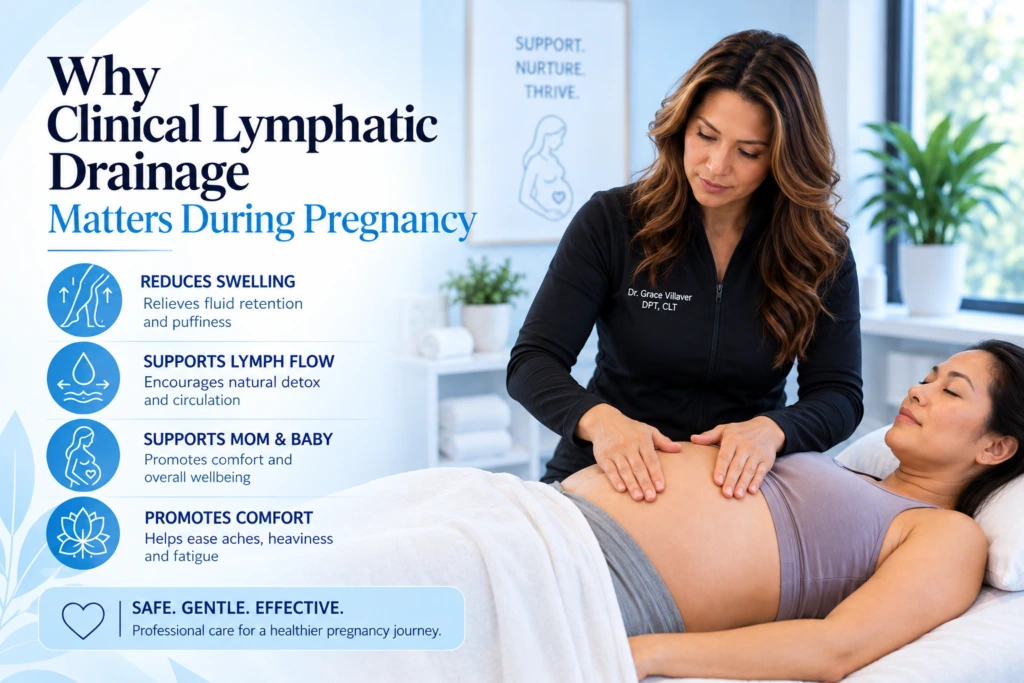
When a pregnant patient walks into my clinic with swollen ankles, aching legs, and that exhausted "I cannot get comfortable" look on her face, I always ask: did your doctor mention lymphatic drainage as an option? And far too often, the answer is no. She tells me nobody on her prenatal care team brought it up. She had to search for answers herself because the swelling was making her miserable and she refused to just accept "this is normal."
Here is what I want every pregnant woman to know: swelling during pregnancy is common, but it is not something you just have to suffer through. Prenatal massage is wonderful for relieving muscle tension and promoting relaxation. But when edema becomes uncomfortable or persistent, manual lymphatic drainage offers a different approach. MLD is a specialized technique that targets the lymphatic system directly, and when performed during pregnancy, it requires additional training in pregnancy physiology, contraindications, and medical coordination.
Pregnancy changes your body in profound ways. Your lymphatic system is working overtime. Your venous return is compromised. Your blood volume has increased by nearly 50%. Understanding these changes is essential when working with pregnant patients, which is why specialized lymphatic training matters.
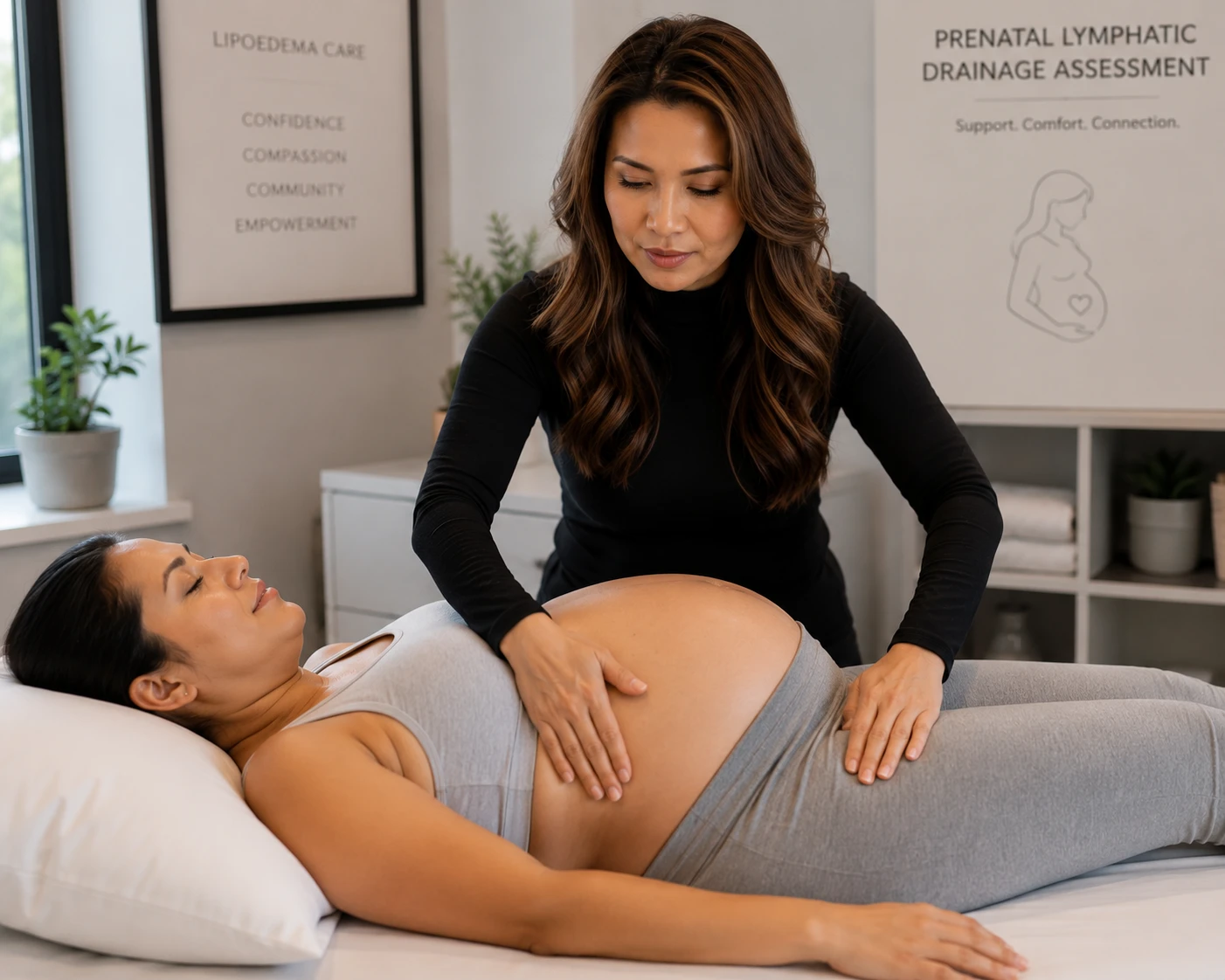
Why Pregnancy Causes Swelling (And Why It Matters)
Pregnancy is not just "you are carrying extra weight." Your body undergoes massive physiological changes to support a growing baby, and many of these changes directly impact your lymphatic and venous systems.
- Blood volume increases by 40 to 50%. Your body produces significantly more blood to nourish the placenta and fetus. Blood volume increases gradually over gestation, with red cell mass also increasing(1). This increased volume puts added strain on your circulatory system.
- The uterus compresses the inferior vena cava. As your baby grows, the weight of the uterus presses on the inferior vena cava (the large vein that returns blood from your lower body to your heart). Venous return in the inferior vena cava can be compromised in late pregnancy if a woman lies flat on her back due to pressure from the uterus, resulting in reduced stroke volume and cardiac output(2)(3).
- Venous compliance and blood volume increase. Systolic and diastolic blood pressures drop during normal pregnancy, and venous compliance and venous blood volume are increased(1). This makes your veins more prone to pooling and less efficient at pumping fluid back up to your heart.
- Cardiac output increases by approximately 50%. Your heart is working significantly harder to circulate all that extra blood. Cardiac output increases by some 50% by mid-third trimester, with both stroke volume and heart rate increasing over the course of pregnancy(1).
- Lower extremity venous pressure increases. Increasing venous pressure and blood volume, in combination with reduced flow rates within the deep veins, predisposes pregnant women to chronic venous insufficiency(2). Venous filling index increases significantly during pregnancy(3).
- Vein diameters enlarge dramatically. Common femoral vein diameters increase significantly during pregnancy (0.99 cm in first trimester to 1.21 cm in late third trimester)(3). Saphenofemoral junction vein diameters similarly increase from 0.46 cm to 0.68 cm(3).
All of these changes are normal. They are protective mechanisms designed to keep you and your baby safe. But they also create the perfect storm for lower limb edema, heaviness, discomfort, and in some cases, dangerous complications like blood clots.
What the Research Shows About Manual Lymphatic Drainage in Pregnancy
A peer-reviewed prospective study published in PMC evaluated 15 pregnant women in their fifth to eighth months of gestation who received one hour of manual lymph drainage to the legs. The volume of the legs was measured by water displacement volumetry before and after drainage. The results were clear: manual lymph drainage significantly reduced swelling of the legs of pregnant women during the day (P = 0.04)(4). The study concluded that outpatient intervention with lymphatic drainage can effectively relieve swelling symptoms in pregnant women(4).
A randomized clinical trial published in PubMed compared manual lymphatic drainage versus perineal massage in 49 secundigravida women with gestational edema. Pain intensity measurements showed statistically significant differences for a decrease after 30 weeks (P = .037), after 36 weeks (P = .000), and at the end of puerperium (P = .014) for MLD compared to perineal massage(5). The study demonstrated that MLD treatment reduced pain intensity with respect to perineal massage in pregnant women with gestational edema from 25 weeks of gestation to the end of puerperium(5).
A Cochrane Database systematic review examined interventions for varicose veins and leg edema in pregnancy(6). While the review emphasized the need for more high-quality studies, it acknowledged that nonpharmacological interventions like lymphatic drainage show promise for managing pregnancy-related swelling.
Reduces Lower Limb Edema
Manual lymphatic drainage moves stagnant fluid out of the legs and back into circulation, significantly reducing swelling and heaviness(4).
Relieves Discomfort and Pain
Research shows MLD can significantly decrease pain intensity in pregnant women with gestational edema(5).
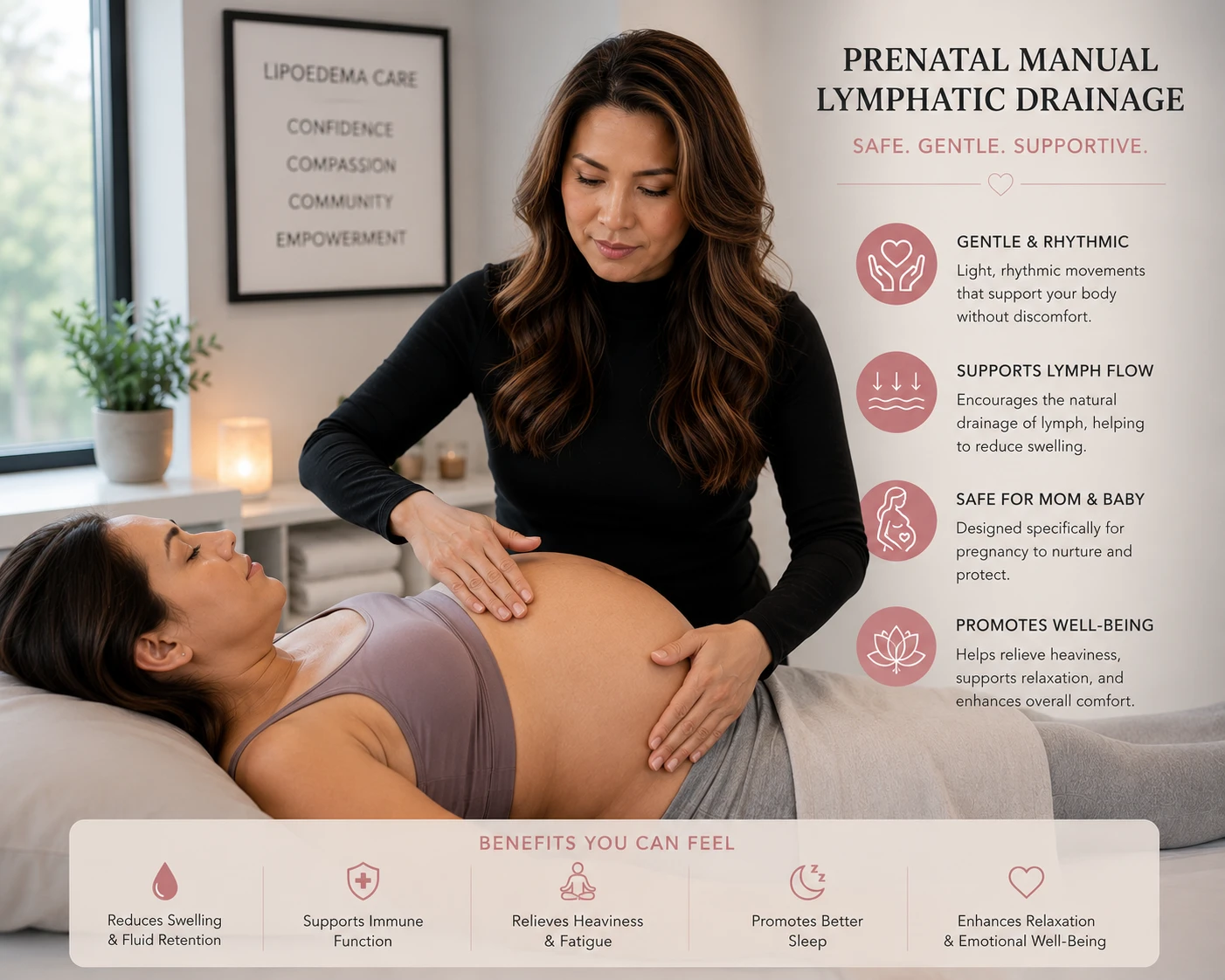
Why Specialized Lymphatic Training Matters for Pregnancy
Massage therapists are skilled professionals who provide valuable prenatal care. Many have extensive training in pregnancy massage techniques, body mechanics, and client comfort. Manual lymphatic drainage, however, is a distinct modality that requires additional specialized training beyond standard massage certification.
When MLD is performed during pregnancy, the practitioner needs specific knowledge in three areas: lymphatic system physiology, pregnancy-related cardiovascular changes, and medical contraindications. Here is why this specialized training matters:
1. Absolute Contraindications Exist
There are conditions during pregnancy where manual lymphatic drainage should NOT be performed. A peer-reviewed review in Z Lymphol documented effectiveness, indications, and contraindications of manual lymph drainage therapy in painful edema(7).
Clinical Contraindications for MLD in Pregnancy:
- Acute venous thrombosis or pulmonary embolism
- Active infections or fever
- Decompensated heart failure
- Unexplained bleeding or severe complications
- High-risk pregnancy conditions requiring medical clearance
Certified Lymphedema Therapists complete specialized training in recognizing these medical contraindications and coordinating care with obstetricians.
2. Technique Must Be Modified
Pregnancy requires significant modifications to standard lymphatic drainage technique:
- The abdomen is avoided. We do not work directly on the pregnant abdomen.
- Pressure is extremely gentle. Pregnancy tissue is more sensitive, and aggressive pressure can cause discomfort or complications.
- Positioning is critical. Venous return in the inferior vena cava can be compromised in late pregnancy if a woman lies flat on her back due to uterine pressure(2). Side-lying or semi-reclined positioning is required.
- Session length is shorter. We start with shorter sessions to assess tolerance and avoid overwhelming the system.
3. Physiological Changes Demand Clinical Knowledge
The physiological changes throughout the arterial and venous systems during pregnancy are well documented in peer-reviewed medical literature(1)(2)(3). A therapist must understand that cardiac output increases by 50%, blood volume increases by 40 to 50%, venous compliance increases, and inferior vena cava compression occurs. Without this knowledge, improper technique could exacerbate problems rather than relieve them.
4. Obstetrician Clearance Is Required
I never perform lymphatic drainage on a pregnant patient without clearance from her obstetrician or midwife. This is not just a formality. It is a safety protocol. Your prenatal care provider knows your full medical history, your risk factors, and any complications that could make lymphatic drainage unsafe.
What My Patients Say
When Should You Seek Prenatal Lymphatic Drainage?
Consider clinical lymphatic drainage if you are experiencing:
- Persistent lower limb swelling that worsens throughout the day
- Heavy, achy legs that interfere with daily activities or sleep
- Difficulty fitting into shoes by the end of the day
- Mild varicose veins or visible venous engorgement
- General discomfort or fatigue related to fluid retention
Seek immediate medical attention if:
- You have sudden, severe swelling in one leg only (possible deep vein thrombosis)
- You experience sudden shortness of breath or chest pain (possible pulmonary embolism)
- You have severe headaches, vision changes, or upper abdominal pain (possible preeclampsia)
- You have any unexplained vaginal bleeding or severe abdominal pain
Why DPT and CLT Training Matters for Prenatal Lymphatic Drainage
As a Doctor of Physical Therapy AND a Certified Lymphedema Therapist, I bring specialized training in both the musculoskeletal changes of pregnancy (joint laxity, postural shifts, pelvic girdle pain) and the lymphatic and vascular physiology behind fluid retention.
My CLT certification includes over 135 hours of specialized lymphatic training, including contraindication assessment, medical coordination protocols, and pregnancy-specific modifications. This is in addition to my doctorate-level education in anatomy, physiology, and pathology.
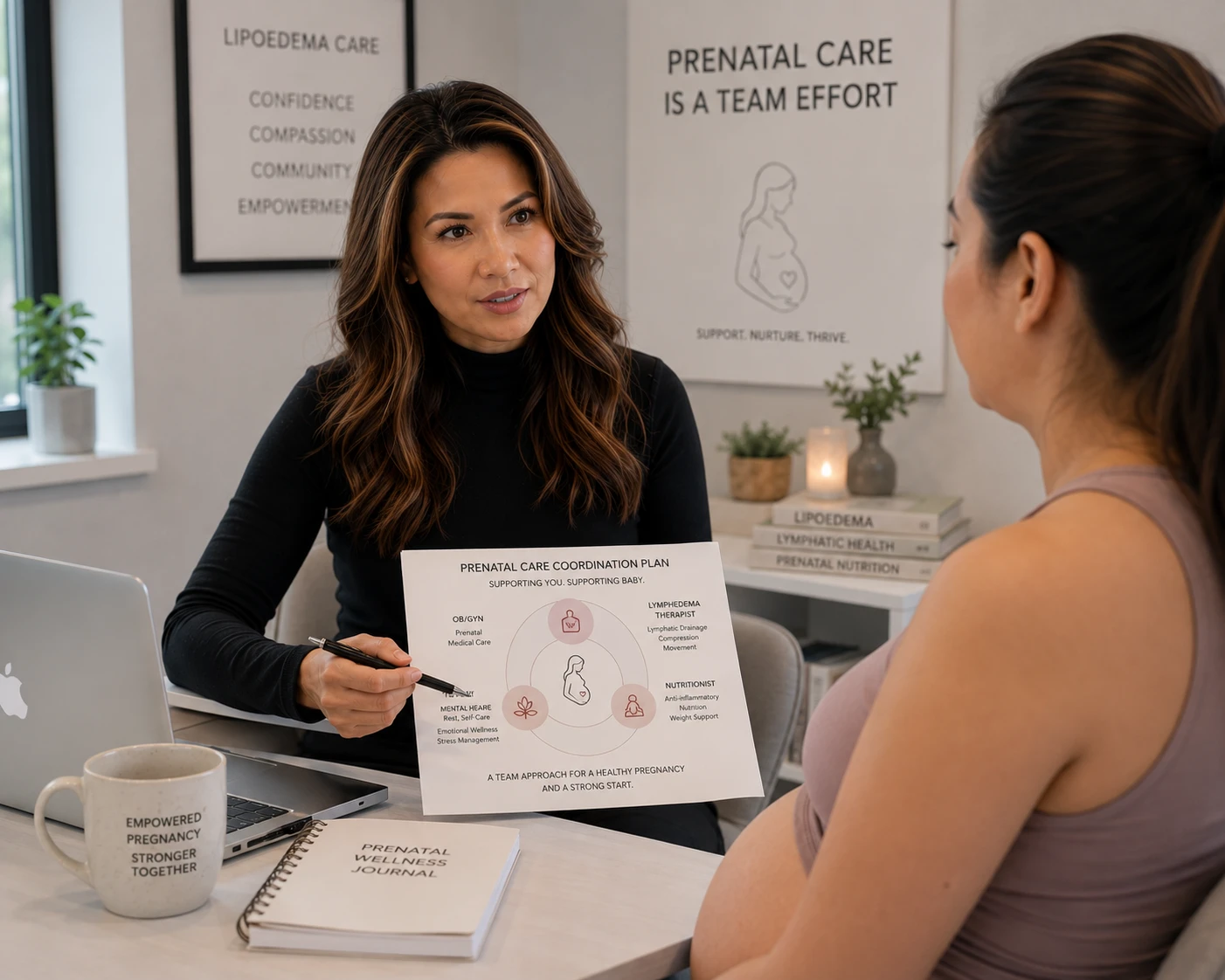
I work collaboratively with your prenatal care team, including your obstetrician, midwife, doula, and any massage therapists you are seeing. My role is to provide the specialized lymphatic drainage component of your care while coordinating with everyone else supporting your pregnancy.
Ready for Relief?
If you are in Leesburg, Ashburn, or Northern Virginia and you are pregnant with persistent swelling, discomfort, or heaviness in your legs, schedule a comprehensive evaluation.
I will coordinate with your obstetrician, assess for contraindications, modify technique to keep you and your baby safe, and create a treatment plan that actually addresses the physiology behind your symptoms.
Pregnancy is hard enough. You should not have to suffer through preventable discomfort just because nobody told you that clinical lymphatic drainage exists.
Let's get you moving, sleeping, and feeling better. Safely. Learn more about certified lymphatic therapy and how it can support your pregnancy journey.
References
- (1) Sanghavi M, Rutherford JD. Cardiovascular physiology of pregnancy. Circulation. 2014;130(12):1003-1008. PubMed PMID: 10709851. pubmed.ncbi.nlm.nih.gov/10709851
- (2) Kroese LF, et al. The hemodynamic effects of pregnancy on the lower extremity venous system. J Vasc Surg Venous Lymphat Disord. 2017;5(3):452-458. PubMed PMID: 29454441. pubmed.ncbi.nlm.nih.gov/29454441
- (3) Winer-Muram HT, et al. Anatomic and physiologic changes in lower extremity venous hemodynamics associated with pregnancy. J Vasc Surg. 1994;20(5):763-770. PubMed PMID: 8918321. pubmed.ncbi.nlm.nih.gov/8918321
- (4) de Godoy JMP, Godoy MDFG. Lymph Drainage in Pregnant Women. PMC3819918. 2013. PubMed PMID: 24251034. pmc.ncbi.nlm.nih.gov/PMC3819918
- (5) Castro-Martín E, et al. Effectiveness of manual lymphatic drainage vs. perineal massage in secundigravida women with gestational oedema: A randomised clinical trial. Midwifery. 2020;89:102786. PubMed PMID: 32533763. pubmed.ncbi.nlm.nih.gov/32533763
- (6) Bamigboye AA, Smyth R. Interventions for varicose veins and leg oedema in pregnancy. Cochrane Database Syst Rev. 2007;(1):CD001066. cochranelibrary.com
- (7) Asdonk J. Effectiveness, indications and contraindications of manual lymph drainage therapy in painful edema. Z Lymphol. 1995;19(1):16-22. PubMed PMID: 7571790. pubmed.ncbi.nlm.nih.gov/7571790
- (8) Hung P, et al. Changes in lower extremity blood flow during advancing phases of pregnancy and the effects of special footwear. PMC5868937. 2018. pmc.ncbi.nlm.nih.gov/PMC5868937
- (9) Lahlou-Casulli A, et al. The Molecular and Cellular Basis of Physiological Changes in Pregnancy. PMC12154306. 2024. pmc.ncbi.nlm.nih.gov/PMC12154306
- (10) Certified Lymphedema Therapist: Vodder Method MLD. Level Up Rehabilitation Services. levelupptdoc.com
