Specialized Lymphatic Care That Heals
If your doctor referred you, or you've been searching for answers on your own, you've likely been living with swelling, tightness, and discomfort that just won't go away. You're in the right place. As a Doctor of Physical Therapy and Certified Lymphedema Therapist with 20+ years of experience, I specialize in lymphedema and lipedema care. My approach combines Manual Lymphatic Drainage, Custom Compression, Targeted Exercise, and Skin Care into one personalized plan built around your specific condition and goals.

Swelling That Won't Resolve Is Telling You Something
If your swelling has not improved despite other treatments, it is not just bad luck. It is a sign the underlying condition has not been properly addressed. Every day it goes unmanaged, the risk of progression increases. You deserve a provider who actually looks at the whole picture.
Swelling That Keeps Returning
Persistent swelling in your arms or legs that doesn't respond to elevation, rest, or general massage, and keeps coming back no matter what you try.
Post-Surgery Recovery Stalled
After cosmetic or orthopedic surgery, fluid buildup delays healing and creates complications. Early, expert lymphatic care supports a better recovery process.
Dismissed or Misdiagnosed
Lipedema is routinely mistaken for obesity. Lymphedema is often dismissed as just swelling. You know something is wrong, and I'm here to take that seriously.
I Help Patients With These Conditions
If one of these sounds like what you're dealing with, you're not alone. There is a clear, evidence-based path forward.
Post-Surgical Swelling
Cosmetic or orthopedic recovery
Lipedema
Abnormal fat accumulation
Lymphedema
Long-term lymph swelling
Cancer-Related Lymphedema
Breast, gynecologic, head and neck cancer
Lipolymphedema
Combined lipedema and lymphedema
Chronic Venous Insufficiency
CVI-related swelling
Phlebolipolymphedema
Combined venous, lipedema, and lymphedema
Chronic Swelling Disorders
Persistent edema conditions
Phlebolymphedema
Combined venous and lymphatic dysfunction
CLINICAL LYMPHATIC DRAINAGE VS. SPA MASSAGE
Both have their place. But when swelling is affecting your daily life, the difference in training and approach really matters.
Massage Therapy
Wellness Professionals
- Excellent for relaxation, stress relief, and general wellness
- Helps ease muscle tension and support recovery from everyday stress
- A meaningful part of many people's self-care routines
- Best suited for maintenance, relaxation, and lifestyle support
Clinical Lymphatic Drainage
Medical-Grade Lymphatic Care
- Evidence-based Complete Decongestive Therapy (CDT) guided by a doctoral-level clinician
- Full clinical assessment of your lymphatic and musculoskeletal systems together
- Addresses the underlying issues driving your swelling, not just the surface symptom
- Multi-component care: Manual Drainage, Compression, Exercise, and Skin Management
- 135+ hours of specialized training beyond a DPT degree
- Coordinates directly with your medical team for integrated care
The Bottom Line: Many of my patients tried spa-based lymphatic massage first and still came to me because the swelling kept returning. That's not a knock on those services. It is a sign that what you're dealing with needs a different level of clinical expertise, comprehensive assessment, and a structured, multi-component treatment plan. That's exactly what I provide.
Why My Approach Works
My patients get better outcomes because I don't just treat the swelling in isolation. I look at your whole picture. Complete Decongestive Therapy is a structured, multi-component protocol that addresses the underlying causes of lymphatic dysfunction. The goal is to help you manage your condition more effectively so you can get back to the activities that matter to you.
Manual Lymph Drainage
Gentle, precise technique that redirects fluid through functioning lymphatic pathways.
Compression Therapy
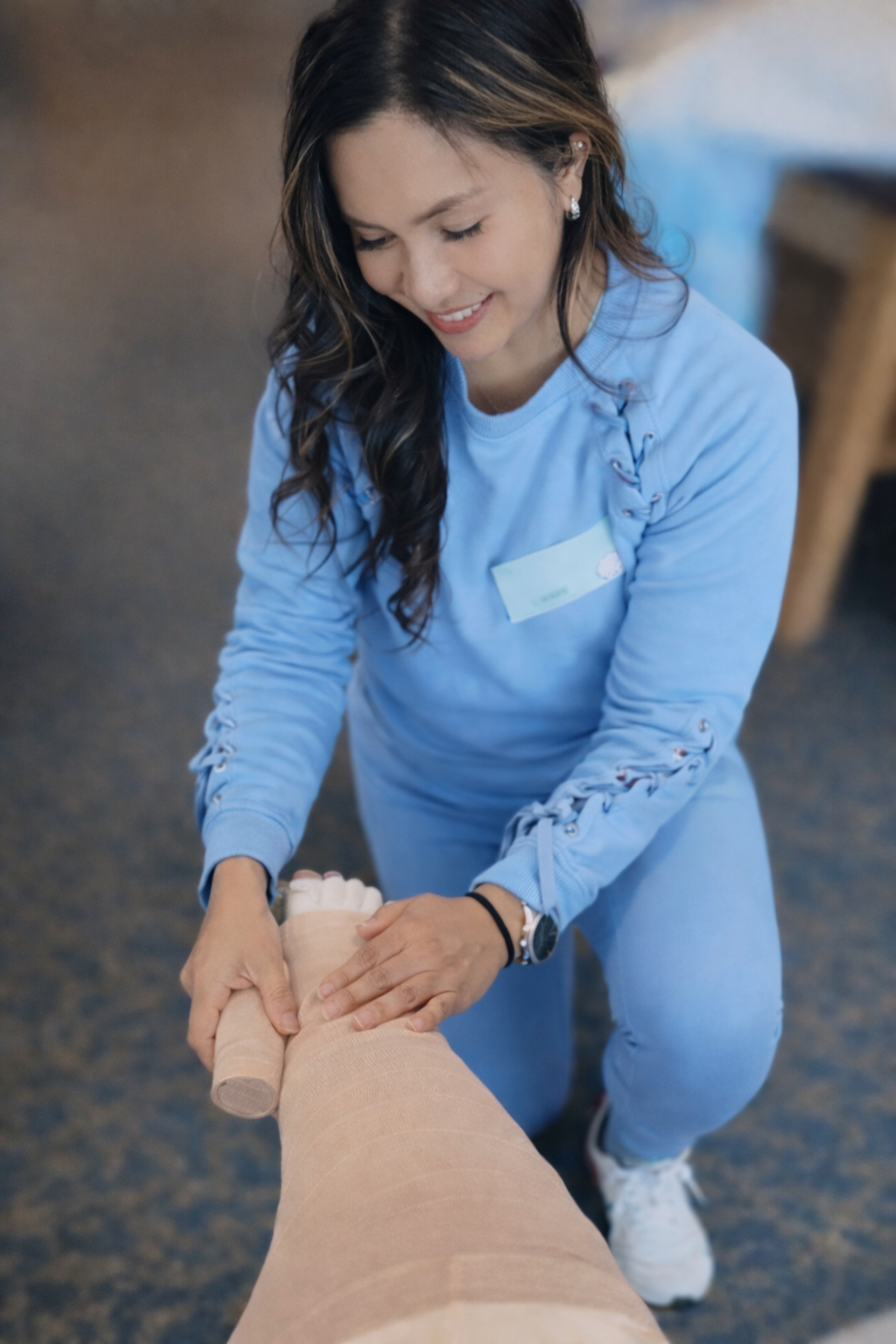
Custom bandaging and garment fitting to maintain your progress between sessions.
Therapeutic Exercise
Movement-based protocols that activate the lymphatic system and support functional strength.
Skin Care Protocol
Education and guidance to protect skin integrity and help prevent infection or complications.
Self-Management Training
I teach you how to maintain your progress independently so you stay in control over time.
I'm One of the Few Providers in Loudoun County With Both a DPT and CLT
That combination isn't just a credential. It changes what's possible for your care.
I See the Whole Picture
As a DPT, I can evaluate your entire musculoskeletal system alongside your lymphatic health, catching related orthopedic and muscular issues that other lymphatic providers may overlook entirely.
Complete Treatment, Not Just Drainage
CDT means Manual Lymphatic Drainage plus compression management, therapeutic exercise, and skin care education, all working together in one integrated plan.
I Work With Your Medical Team
I communicate directly with your doctors and physicians, provide clinical documentation, and ensure your lymphatic care integrates with your broader medical plan.
Trained to Recognize Red Flags
My clinical training means I can identify contraindications and complications that require physician involvement, keeping your care safe and appropriately coordinated.
Swelling and Movement, Addressed Together
I address both lymphatic dysfunction and movement limitations in one cohesive treatment plan so you work toward regaining function, not just temporary relief.
20+ Years of Clinical Experience
I've been applying clinical research to real patient outcomes for over two decades. That depth of experience shapes every decision I make in your treatment.
Ready to Talk About What's Going On?
Schedule a complimentary discovery call. No pressure, no commitment. Just a real conversation about your symptoms and whether I'm the right fit for what you're dealing with.
Certified in Manual Lymph Drainage / Complete Decongestive Therapy · TITLEIST Certified Golf Fitness

DR. GRACE VILLAVER
DPT, CLT, CMTPT/DN, TGFI, COMT
Doctor of Physical Therapy
Certified Lymphedema Therapist (MLD & CDT)
Certified Myofascial Trigger Point Therapist / Dry Needling
Titleist Certified Golf Fitness Instructor
Certified Orthopedic Manual Therapist
Adjunct Faculty, Marymount University
Many patients come to me after trying other approaches and still struggling. My goal is to look at the whole picture, identify what's actually driving your symptoms, and work with you on a plan to help you manage your condition and get back to the activities that matter to you, whether that's golfing, traveling, or simply getting through the day with more comfort.
My Care Is Designed For You If...
- You're managing lymphedema, lipedema, or persistent swelling that hasn't responded to other care, and you're ready to work with a specialist
- You're recovering from surgery and want a provider who will take a thorough, clinical approach to your recovery process
- You want clinical lymphatic therapy backed by medical training, not a spa service rebranded as treatment
- You value a provider who looks at your whole picture, applies medical knowledge, and builds a personalized plan alongside you
- You prefer care delivered within a traditional insurance-based clinic model
- You're primarily looking for relaxation or stress relief rather than medically guided lymphatic therapy
- You prefer a spa or wellness setting rather than a clinical, outcomes-focused approach
- You're not ready for a specialized, condition-focused treatment program right now
Understanding Your Condition
Now that you've recognized what you're dealing with, let's go deeper, in plain language, with no jargon.
"One of the things I hear most from patients is, 'I just wish someone had explained this to me sooner.' Whether you've been living with this for years or just received a diagnosis, I want you to understand what's actually happening in your body, not just try to manage it in the dark. Select whichever condition applies to you below. I'll walk you through what I see clinically, what it means for your daily life, and what my approach to treatment looks like. Knowledge is the first step toward meaningful progress."
What Happens After Surgery
Post-surgical inflammation is the body's natural response to tissue injury and it's expected. But when it becomes excessive or lingers, it creates real problems.
- Swelling, redness, warmth, pain, and limited movement around the surgical site can persist well beyond normal healing timelines.
- The inflammatory process increases blood flow and immune activity to protect the area, but too much of it can delay your recovery significantly.
- Without proper management, excessive inflammation can lead to fibrosis, scar tissue buildup, and chronic swelling that becomes more difficult to address over time.
Why Early Intervention Supports Recovery
- Getting the right care early, ideally within 24 to 72 hours for most cosmetic procedures with physician clearance, can support a better recovery trajectory.
- Complete Decongestive Therapy, including manual lymph drainage, compression, targeted exercises, skin care, and self-management instruction, helps control fluid buildup and supports lymphatic drainage.
- Early intervention can reduce swelling and stiffness, support mobility, and help lower the risk of developing secondary lymphedema or problematic scar tissue.
Post-Surgical Lymphatic Care
After surgery, I perform a thorough clinical assessment to understand where fluid is pooling and why. I then build a structured CDT plan that combines manual lymphatic drainage to redirect fluid through functioning pathways, multilayer compression bandaging to maintain progress between sessions, gentle therapeutic exercises to activate your lymphatic system without stressing healing tissue, and skin care guidance to protect surgical sites. I also coordinate with your surgeon to make sure my care aligns with your physician's recovery plan. My focus is supporting your body's natural healing process at a pace that is appropriate for your stage of recovery.
Assess
Clinical evaluation of your surgical sites, fluid patterns, and overall lymphatic function
Drain
Gentle manual lymphatic drainage to redirect fluid through healthy pathways
Compress
Custom bandaging or garment fitting to maintain your progress between sessions
Teach
Self-management guidance so you can support your own recovery at home
What Is Lipedema?
Lipedema is a chronic condition marked by the symmetrical, abnormal accumulation of fatty tissue, usually in the legs and sometimes the arms, and it almost exclusively affects women.
- This isn't weight gain that responds to diet or exercise. The fat in lipedema has its own distribution pattern and is resistant to conventional weight loss approaches.
- The affected areas are often painful, tender to touch, and bruise easily, far beyond what you would expect from typical fat tissue.
- Unlike obesity, lipedema fat stops at the wrists and ankles, leaving the hands and feet unaffected. This is a key diagnostic marker.
Why It Needs Proper Treatment
- Lipedema causes significant discomfort, reduced mobility, and real psychological distress, especially when it has been dismissed as just a weight issue.
- Without treatment, it can progress and worsen, often leading to secondary lymphatic impairment called lipolymphedema.
- Management focuses on symptom control through compression therapy, Manual Lymphatic Drainage, and lifestyle guidance, all tailored to your specific stage and presentation.
Lipedema Management
Lipedema requires consistent, ongoing management rather than a single course of treatment. I begin with a thorough assessment to stage your condition and understand how it is affecting your mobility and quality of life. From there, I build a CDT plan that includes manual lymphatic drainage to reduce the secondary fluid component, custom compression garments to help maintain tissue health, movement-based exercises designed for lipedema patients, and detailed guidance on skin care and self-massage you can perform at home. I also work with you on realistic, sustainable goals. The aim is to reduce discomfort, support tissue health, and help you maintain the best possible function over time.
Stage
Assessment to determine your current lipedema stage and how it's affecting your daily life
Reduce
MLD to address the secondary lymphatic component and reduce tissue heaviness
Support
Custom compression and movement strategies to maintain tissue health over time
Sustain
Self-care education so you have the tools to manage your condition independently
What Is Lymphedema?
Lymphedema occurs when the lymphatic system can't drain fluid properly, causing protein-rich fluid to accumulate in the tissues and produce chronic swelling.
- It can be primary (genetic) or secondary, developing after surgery, trauma, infection, or cancer treatments such as lymph node removal or radiation.
- The result is swelling, usually in the arms or legs, along with discomfort, decreased mobility, skin changes, and an increased risk of infection.
- Left unmanaged, lymphedema progresses. Early, expert-guided treatment is essential, not optional.
What Good Treatment Looks Like
- Early diagnosis and expert care are important for preventing progression and reducing the risk of serious complications.
- Complete Decongestive Therapy, the gold standard treatment, combines manual lymphatic drainage, compression, skin care, and exercise in a structured, personalized protocol.
- With consistent management, many patients experience meaningful improvement in swelling, function, and quality of life. The goal is to help you get back to doing what matters to you.
Lymphedema Management
My approach to lymphedema follows the CDT gold standard with an added layer of physical therapy expertise. I first complete a full clinical assessment of your lymphatic system, movement patterns, and any related musculoskeletal factors. I then work through two phases: an intensive phase focused on reducing limb volume through frequent MLD, multilayer compression bandaging, exercise, and skin care; and a maintenance phase where I fit you with appropriate compression garments and teach you a self-care routine to preserve the progress we've made together. Lymphedema is a chronic condition, and my goal is to give you the knowledge and tools to manage it as independently as possible over the long term.
Assess
Full lymphatic and musculoskeletal evaluation to understand your specific presentation
Intensive Phase
Frequent CDT sessions to reduce limb volume and address the acute component
Maintenance Phase
Compression garment fitting and self-care training to preserve your progress
Long-Term Support
Ongoing guidance and reassessment to help you manage your condition over time
What Is Lipolymphedema?
Lipolymphedema is what happens when lipedema progresses far enough to damage the lymphatic vessels, resulting in both conditions occurring simultaneously.
- The abnormal fat deposits from lipedema can overload or physically compromise the lymphatic system, triggering secondary lymphedema.
- The result is persistent swelling with features of both fat accumulation and fluid retention, a more complex presentation that requires specialized expertise.
- Patients typically experience increased limb size, heaviness, significant discomfort, and noticeable skin changes that affect daily function.
A Plan That Addresses Both
- Lipolymphedema requires a treatment approach that addresses both the fatty tissue component and the lymphatic dysfunction together, not separately.
- Management includes CDT with manual lymphatic drainage, compression, targeted exercise, and lifestyle modification tailored to both conditions.
- Earlier intervention is generally associated with better outcomes. Treatment can help slow progression, reduce symptoms, and support a better quality of life over time.
Lipolymphedema Management
Because lipolymphedema involves two overlapping conditions, treatment must be tailored more carefully than for either condition alone. I begin with a detailed assessment to understand how much of your presentation is driven by lipedema fat versus lymphatic fluid, since this affects which interventions will be most effective at each stage. My treatment plan combines the CDT protocol for the lymphatic component with specific techniques for lipedema tissue, including adapted MLD strokes, compression strategies that account for both conditions, and exercise programming designed to support lymphatic flow without worsening pain or tissue sensitivity. I also pay close attention to your skin integrity and collaborate with your other providers as needed.
Differentiate
Assessment to clarify the lipedema and lymphedema components and how they interact
Treat Both
Adapted CDT protocol that addresses fat tissue and lymphatic fluid simultaneously
Protect
Skin care guidance and compression strategies to safeguard tissue health over time
Coordinate
Communication with your other providers to ensure integrated, consistent care
What Is Phlebolymphedema?
Phlebolymphedema develops when chronic venous insufficiency gradually damages the lymphatic system, creating a condition involving both venous and lymphatic dysfunction.
- When veins can't return blood properly, pressure builds in the legs (venous hypertension), which progressively damages the lymphatic vessels nearby.
- The lymphatic system, already working overtime to compensate, eventually becomes overwhelmed, leading to secondary lymphatic dysfunction.
- The result is persistent swelling, usually concentrated in the lower legs, driven by the breakdown of both systems at the same time.
This condition commonly develops in people with chronic venous disease such as varicose veins or a history of deep vein thrombosis that was not fully resolved.
Why It Requires Specialized Care
- Because two systems are involved, treatment is more complex and it's more important to get the approach right from the start.
- Effective management addresses both systems through compression therapy, manual lymphatic drainage, and coordinated venous disease management.
- Without treatment, phlebolymphedema can progress to skin breakdown, recurrent infections, and open wounds. Appropriate intervention is important for protecting your long-term tissue health.
Phlebolymphedema Management
Treating phlebolymphedema requires careful attention to both the venous and lymphatic components, and the order and type of interventions matter significantly. I begin with a thorough clinical assessment to understand your venous history, current lymphatic function, and skin integrity. Compression therapy is a cornerstone of treatment here, and I work with you to determine the most appropriate type and level of compression for your specific situation. Manual lymphatic drainage is adapted to account for the venous component, and I carefully monitor your skin throughout treatment. I also coordinate with your vascular or medical team to ensure your lymphatic care is aligned with any venous treatments you may be receiving.
Review History
Assessment of your venous history, lymphatic function, and current skin condition
Compress
Carefully selected compression tailored to both the venous and lymphatic components
Drain
Adapted MLD techniques that account for venous insufficiency and protect tissue
Coordinate
Communication with your vascular or medical team for consistent, integrated care
What Is Lymphorrhea?
Lymphorrhea is the visible sign of a lymphatic system under significant stress: lymph fluid leaking through the skin or through surgical wounds because normal drainage pathways have been disrupted.
- It occurs when lymphatic vessels are damaged, blocked, or overwhelmed, forcing fluid to find its way out through the skin or wound sites.
- The discharge is typically clear or slightly yellowish, consisting of protein-rich lymph fluid that should be circulating internally.
- Lymphorrhea is most often seen following surgeries involving lymph node removal, after trauma, or in cases of severe, long-standing lymphedema.
Why Prompt Treatment Is Important
- Lymphorrhea significantly increases infection risk and delays wound healing. Constant fluid leakage creates an environment where bacteria can thrive.
- It signals significant lymphatic dysfunction that requires specialized, expert-guided care to manage safely and help prevent complications.
- Treatment includes careful wound management, compression therapy, manual lymphatic drainage, and protective dressings, all working together to help control leakage and support lymphatic repair.
Lymphorrhea Management
Lymphorrhea requires a careful, stepwise approach that prioritizes wound safety before applying more intensive lymphatic techniques. I begin by assessing the wound sites, the extent of fluid leakage, and the overall condition of your lymphatic system. My initial priority is protecting your skin and wound integrity through appropriate dressings and barrier protection. I then apply gentle compression techniques to reduce the pressure driving the leakage, and carefully introduce manual lymphatic drainage once it is safe to do so. I also coordinate closely with your wound care team or physician throughout this process to ensure my interventions are aligned with your overall medical management.
Protect
Wound assessment and appropriate dressings to protect skin integrity from the start
Compress
Careful compression application to reduce the pressure driving fluid leakage
Drain
Gentle MLD introduced progressively as wound condition allows
Coordinate
Close communication with your wound care team or physician throughout treatment
REAL RESULTS, REAL PEOPLE
Don't just take my word for it. Here's what patients say about working with me.
Your Questions, Answered
Most lymphatic providers can offer manual drainage. What I bring as both a Doctor of Physical Therapy and a Certified Lymphedema Therapist is a significantly wider clinical lens. I can assess your musculoskeletal system alongside your lymphatic health, catching related orthopedic and muscular issues that other providers often miss entirely. That integrated approach leads to more consistent outcomes and a safer, more complete treatment plan.
Spa lymphatic massage is a wellness service designed for relaxation, and it has its place. What I provide is medical-grade Complete Decongestive Therapy: a clinically structured, multi-component protocol that includes Manual Lymphatic Drainage, Compression Therapy, Targeted Exercise, and Skin and Scar Management. It requires 135+ hours of specialized training beyond a doctoral degree and is designed for people whose swelling has a clinical cause that requires a clinical solution.
For most cosmetic procedures such as liposuction, tummy tucks, or BBLs, lymphatic drainage can begin 24 to 72 hours post-surgery with physician clearance. Starting early helps control swelling before it becomes more established, supports proper healing, and may help reduce the risk of complications. The right timing will depend on your specific procedure and your surgeon's guidance.
Yes. I offer both concierge care at your location and treatment at our clinic. For patients recovering from surgery or dealing with significant mobility challenges, in-home care means you receive the same clinical treatment without the stress of travel. Whichever option works best for your situation, we'll make it work.
Complete Decongestive Therapy has a strong evidence base for lymphedema and lipedema management. Many patients who have tried other approaches and are still struggling with swelling do see meaningful improvement through consistent CDT care. Results vary based on the condition, its severity, how long it has been present, and how consistently you're able to follow your self-management plan. My goal is to give you the best possible foundation for managing your condition over the long term, not to promise a specific outcome.
Ready to Get Back to Your Life?
Schedule a Complimentary Discovery Call and let's talk about what's going on and whether I'm the right fit for you.
Get In Touch
Level Up Rehabilitation Services, LLC
Business Hours
Office Location and Service Map
Dr. Grace Villaver
DPT, CLT, CMTPT/DN, COMT, TGFI
Doctor of Physical Therapy
Certified Lymphedema Therapist (MLD&CDT)
Certified Orthopedic Manual Therapist
Certified Myofascial Trigger Point Therapist
Titleist Certified Golf Fitness Instructor
Quick Links
Level Up Rehabilitation Services, LLC
42910 Winkel Dr Unit#105, Ashburn, VA 20147
(703) 637-8252
[email protected]
Fax: (571) 617-0044
Business Hours: Mon-Fri (7 AM - 5 PM)
Follow Dr. Grace
Copyright 2026 , all rights reserved.