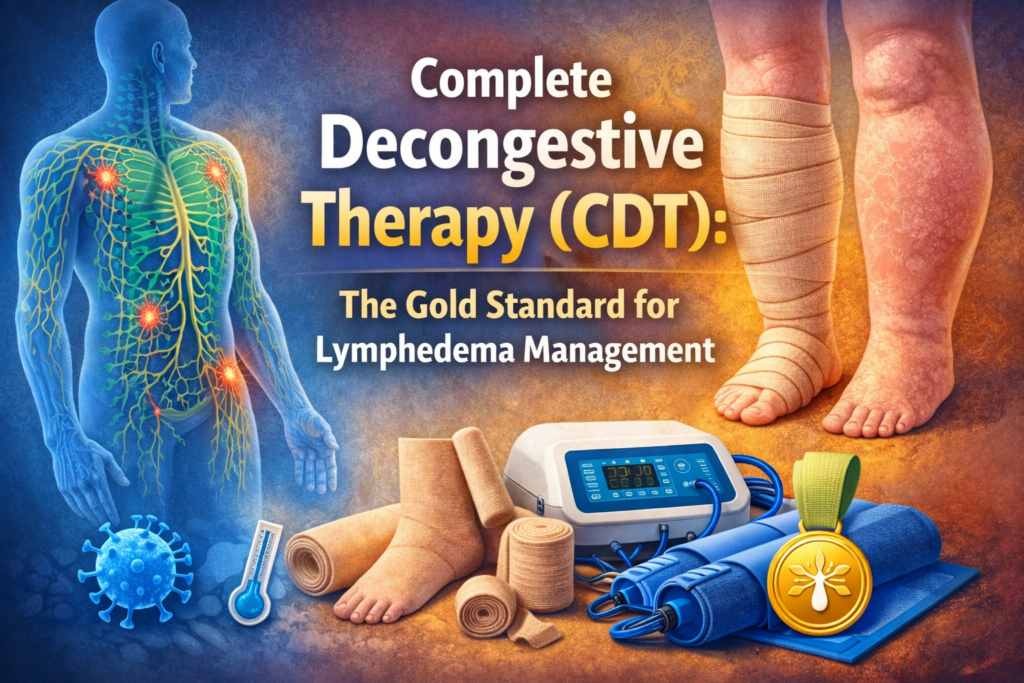
Complete Decongestive Therapy is not just a treatment. It is a comprehensive, evidence-based approach to managing lymphedema that combines clinical expertise with patient education and empowerment. When guided by a trained specialist who truly cares about your quality of life, CDT can transform your daily experience.
What Is Complete Decongestive Therapy?
CDT is the internationally recognized gold standard for lymphedema treatment. It is a multi-component approach that addresses both the physical symptoms and the lifestyle management of lymphatic system dysfunction.
| Component | What It Does | Why It Matters |
|---|---|---|
| 1 Manual Lymphatic Drainage | Gentle, precise movements stimulate lymph flow and reroute fluid around blocked or damaged pathways | Reduces swelling, improves tissue quality, and activates your body's natural drainage |
| 2 Compression Therapy | External pressure prevents fluid re-accumulation and supports lymph vessel function | Maintains progress between treatments and during daily activities |
| 3 Therapeutic Exercise | Muscle contractions act as a pump to move lymph fluid through vessels | Enhances drainage naturally while improving strength and mobility |
| 4 Skin Care and Education | Proper hygiene and protection reduce risk of cellulitis and infection | Prevents complications that can worsen lymphedema |
The Two Phases of CDT Treatment
CDT follows a structured approach designed to first reduce swelling, then maintain your results long-term.
Intensive Reduction
- Daily MLD sessions
- Short-stretch bandaging
- Guided exercises
- Skin care protocols
Maintenance and Self-Management
- Transition to compression garments
- Self-MLD training
- Exercise program
- Lifestyle integration
Who Benefits from Complete Decongestive Therapy?
| Condition | Common Causes | How CDT Helps |
|---|---|---|
| Primary Lymphedema | Congenital or developmental lymphatic system abnormalities | Manages symptoms, prevents progression, improves quality of life |
| Secondary Lymphedema | Cancer treatment, surgery, radiation, trauma, infection | Reduces post-treatment swelling, supports healing, prevents complications |
| Post-Surgical Swelling | Any major surgery, especially involving lymph node removal | Accelerates recovery, optimizes surgical outcomes, reduces fibrosis risk |
| Chronic Venous Insufficiency | Vein valve dysfunction, often in legs | Reduces edema, improves tissue health, decreases heaviness |
| Lipedema | Abnormal fat distribution with secondary lymphatic impairment | Manages fluid component, reduces pain, improves mobility |
What You Can Expect from CDT
Physical Outcomes
- Reduced limb volume
- Softer tissue texture
- Decreased tightness
- Improved skin condition
- Better wound healing
Functional Outcomes
- Increased range of motion
- Improved mobility
- Enhanced strength
- Better sleep quality
- Reduced pain and discomfort
Quality of Life Outcomes
- Greater independence
- Increased confidence
- Better clothing fit
- Enhanced body image
- Reduced anxiety about condition
Individual results vary based on lymphedema stage, underlying causes, and commitment to treatment protocols.
Why Specialized Certification in CDT Matters
Complete Decongestive Therapy requires advanced, specialized training. A Certified Lymphedema Therapist (CLT) has completed extensive coursework in lymphatic anatomy, pathophysiology, assessment, and all four components of CDT. This is not a weekend workshop. It is a comprehensive medical certification.

