

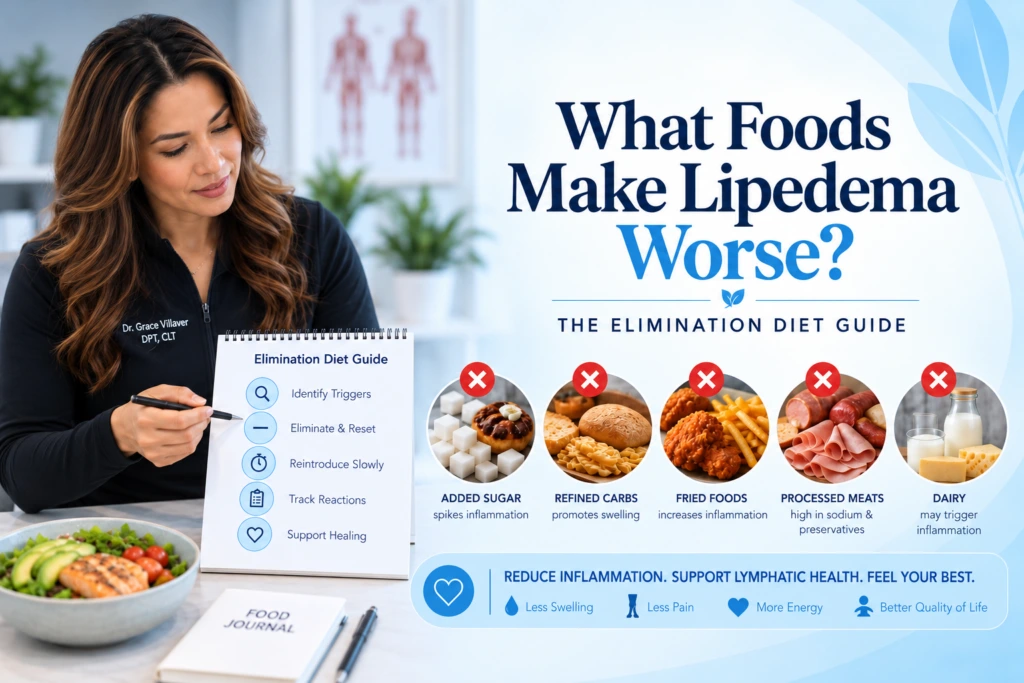
One of the most common questions I get in my clinic is this: "What should I eat? What should I avoid?" And I understand why. When you are living with lipedema, you want to do everything in your power to reduce inflammation, manage symptoms, and take back some control. Food feels like something you CAN control.
But here is the truth: the answer is not the same for everyone. And if I handed you a list of 30 foods to eliminate tomorrow, you would be overwhelmed, you might give up before you even start, and we would never actually figure out which foods are truly triggering YOUR symptoms.
So instead, I am going to walk you through the same approach I use with my patients: the gradual elimination method. We identify inflammatory foods based on the research, then we systematically test them one at a time to see how YOUR body responds. Because lipedema is individual. Your triggers are not the same as the next person's.

Why Does Diet Matter for Lipedema?
Lipedema is not caused by diet. Let me say that again: lipedema is not your fault, and it is not caused by what you eat. But research shows that certain foods can worsen the inflammation, swelling, and pain that come with lipedema(1)(2).
A 2024 systematic review and meta-analysis published in the journal Nutrients found that ketogenic diets prioritizing anti-inflammatory foods (like omega-3 fatty acids from fish, olive oil, nuts, and vegetables) led to significant improvements in body weight, waist measurements, hip measurements, and pain sensitivity in women with lipedema(1).
Another 2024 study showed that a Mediterranean-style ketogenic diet reduced two key markers of systemic inflammation: C-reactive protein (CRP) and interleukin-6 (IL-6). These inflammatory markers are commonly elevated in chronic diseases, including lipedema(2). The researchers found that anti-inflammatory compounds in the diet (antioxidant vitamins C, A, and E, unsaturated fatty acids, and polyphenols like quercetin and anthocyanins) supported the reduction in inflammation(2).
What does this mean in plain language? The right foods can calm inflammation. The wrong foods can fan the fire.
What Foods Make Lipedema Worse?
Based on peer-reviewed research and what I see clinically, these are the most common inflammatory triggers for lipedema:
Sugar and Refined Carbohydrates
Sugar causes rapid blood sugar spikes, leading to insulin resistance. Elevated insulin promotes fat storage and triggers inflammatory cascades in your tissue(3)(4). Sugar also increases water retention, worsening the swelling and pressure pain that many lipedema patients experience(3).
Examples: Soda, candy, pastries, white bread, pasta, white rice, processed cereals, cookies, cakes
Gluten
Recent research found that 47.4% of symptomatic lipedema patients carry the HLA-DQ2 genotype, and 22.2% carry HLA-DQ8. Both of these genetic markers are associated with gluten sensitivity and increased intestinal permeability(5). When your gut lining becomes more permeable, food antigens and bacterial toxins can trigger systemic inflammation(5).
Examples: Wheat, barley, rye, bread, pasta, crackers, most baked goods
Dairy Products
Many lipedema patients report symptom improvement when they eliminate dairy. Conventional dairy contains inflammatory sugars and hormones that can worsen swelling and pain. Clinical observations and patient reports consistently note dairy as a trigger, particularly when consumed in large quantities(6)(7).
Examples: Milk, cheese (especially processed cheese), ice cream, cream, butter
Alcohol
Alcohol contributes to swelling, inflammation, and water retention. It also disrupts metabolic processes and can amplify pain(8).
Examples: Beer, wine, cocktails, spirits
Processed Foods and High-Sodium Items
Excess salt causes water retention, which aggravates the fluid buildup and swelling that already exist in lipedema tissue(3)(4). Processed foods also typically contain inflammatory fats, hidden sugars, and chemical additives that increase systemic inflammation.
Examples: Processed meats (hot dogs, deli meats), canned soups, chips, fast food, frozen meals

The Elimination Diet: Start Small, Track Everything
Here is what I tell my patients: do not try to eliminate everything at once. That approach is miserable, it is unsustainable, and it does not give you clear answers. Instead, use the gradual elimination method.
Elimination diets are widely used in clinical practice to identify food sensitivities and intolerances(9). The process is simple: you remove a suspected trigger food for a set period (typically 2 to 4 weeks), then reintroduce it while carefully monitoring your symptoms(9)(10).
How to Do It (The Way I Recommend)
- Pick ONE food category to eliminate first. Start with the trigger you suspect most or the one that feels easiest to eliminate. Common starting points: sugar, gluten, alcohol, or dairy.
- Eliminate it completely for one week. Not "mostly avoid it." Completely remove it from your diet. Read labels. Be strict.
- Track your weight and symptoms daily. Write down your weight each morning. Note your pain level (scale of 1-10), swelling, energy, mood, digestive symptoms, and any skin changes. Use a simple journal or notes app on your phone.
- After one week, evaluate. Did anything improve? Did the swelling decrease? Did the pain dial down? Did you lose any weight or notice less fluid retention?
- Reintroduce the food for 2-3 days. Eat the eliminated food again and continue tracking. Does the swelling come back? Does the pain spike? Does your weight jump?
- Move to the next food category. Once you have clear data on one food, eliminate the next one using the same process.
This approach is supported by peer-reviewed literature. A systematic review on elimination diets notes that reintroduction should occur one food at a time, with 3 to 5 days between each new food to allow your body time to react(10). Clinical trials have shown that personalized elimination diets based on food sensitivity testing lead to measurable improvements in symptoms and overall well-being(11).

What Should You Eat Instead?
While you are eliminating inflammatory triggers, you still need to eat. And you need to eat well. Here is what the research supports as anti-inflammatory, lipedema-friendly foods:
- Omega-3 rich foods: Fatty fish (salmon, mackerel, sardines), flaxseeds, chia seeds, walnuts. Omega-3 fatty acids are potent anti-inflammatory agents(1)(2).
- Leafy greens and cruciferous vegetables: Spinach, kale, broccoli, Brussels sprouts. High in antioxidants, vitamins, and minerals that fight inflammation(4).
- Berries and low-glycemic fruits: Blueberries, strawberries, raspberries. Rich in polyphenols and antioxidants, low glycemic index prevents blood sugar spikes(2)(4).
- Healthy fats: Olive oil, avocados, nuts (almonds, hazelnuts). Monounsaturated and polyunsaturated fats reduce inflammation(1).
- Herbs and spices: Turmeric, ginger, garlic. These have documented anti-inflammatory properties(4).
- High-quality protein: Grass-fed meat (in moderation), wild-caught fish, eggs (if tolerated), legumes.
- Whole grains (gluten-free if you are sensitive): Quinoa, brown rice, millet, buckwheat.
The goal is not perfection. The goal is progress. You are gathering data about your own body.
Why Individual Differences Matter
I tell every patient this: your triggers are not the same as the next person's. Lipedema presents differently in every woman I treat. Some patients are extremely sensitive to gluten. Others can tolerate gluten just fine but react dramatically to dairy. Some find that alcohol is their biggest trigger, while others see no change when they eliminate it.
This is why the research emphasizes personalized approaches. A 2025 systematic review on dietary interventions for lipedema concluded that dietary strategies must respect an individual's "metabolic, behavioral, and clinical specificities" to be effective(12). Genetics play a role, too. The HLA genotypes I mentioned earlier (HLA-DQ2 and HLA-DQ8) explain why some lipedema patients have gluten sensitivity while others do not(5).
This is also why I refer patients to a registered dietitian who is knowledgeable about lipedema and chronic inflammatory conditions. A dietitian can help you navigate the elimination process, ensure you are still getting adequate nutrition, and create a personalized plan based on your results.
What My Patients Say
Diet Is One Piece of the Puzzle
I want to be very clear about something: diet alone will not cure lipedema. Lipedema is a chronic, genetic condition that requires comprehensive treatment. But dietary changes CAN reduce inflammation, improve symptoms, and give you back some quality of life.
The most effective approach combines targeted nutrition with manual lymphatic drainage therapy, compression, exercise, and in some cases, surgical intervention. As a Certified Lymphedema Therapist, I see the difference that lymphatic therapy makes in my patients every single day. When we combine lymphatic care with thoughtful dietary adjustments, the results are measurably better.
Ready to Take Control of Your Symptoms?
If you are in Leesburg, Ashburn, or Northern Virginia and you are tired of one-size-fits-all advice that does not account for YOUR body, let's work together.
We will start with a comprehensive evaluation of your lymphatic function, tissue quality, and movement patterns. Then we will build a personalized treatment plan that addresses the whole system, not just one symptom at a time.
Schedule your consultation and let's figure out what YOUR body needs.
The Bottom Line
Inflammatory foods can worsen lipedema symptoms. The research is clear on that. But the specific foods that trigger YOUR inflammation are unique to you, and the only way to find out is to test them systematically.
Start with one food. Eliminate it for one week. Track your symptoms. Reintroduce it. Watch what happens. Then move to the next one. Do not try to be perfect. Just gather data.
And if you need help navigating this process, reach out to a registered dietitian who understands lipedema. Or work with a lymphedema therapist who can integrate dietary guidance with lymphatic care and physical therapy.
Your body is not failing you. The system just was not built to understand it. But YOU can learn to understand it. One week, one food, one datapoint at a time.
References
- (1) Amato AC, et al. The Efficacy of Ketogenic Diets (Low Carbohydrate; High Fat) as a Potential Nutritional Intervention for Lipedema: A Systematic Review and Meta-Analysis. Nutrients (2024). pmc.ncbi.nlm.nih.gov
- (2) Czerwińska-Ledz O, et al. Exploring the Anti-Inflammatory Potential of a Mediterranean-Style Ketogenic Diet in Women with Lipedema. Nutrients (2024). pmc.ncbi.nlm.nih.gov
- (3) Cavusoglu T. Factors Exacerbating Lipedema: Triggering Drugs, Foods, and Supplements. Clinical Education Article (2024). tarikcavusoglu.com
- (4) Azouz N. Diet and Nutrition for Lipedema: What to Eat and Avoid. Dallas Plastic Surgery Institute (2024). drazouz.com
- (5) Amato AC, et al. The IgG Paradox in Lipedema: More Food Sensitivities, Less Antibody Production. PMC (2024). pmc.ncbi.nlm.nih.gov
- (6) Lipedema Foundation. Nutrition Guidelines for Lipedema. lipedema.com
- (7) Lipedema Simplified. Diet & Supplement Recommendations and Rationale for Lipedema (2025). lipedema.net
- (8) Lipocura. Optimal nutrition for lipedema: foods that help (2026). lipocura.com
- (9) Motola G, Mahan LK. Elimination Diets. StatPearls/NCBI Bookshelf (2024). ncbi.nlm.nih.gov
- (10) Gunnars K. How to Do an Elimination Diet and Why. Healthline Evidence-Based Review (2024). healthline.com
- (11) Vibrant America Clinical Lab. Effect of Personalized Elimination Diet on Food Sensitivity Related Symptoms. ClinicalTrials.gov NCT05389683 (Completed). clinicaltrials.gov
- (12) Amato AC, et al. Clinical or cultural? Dietary interventions for lipedema: a systematic review. ScienceDirect (2025). sciencedirect.com
- (13) Certified Lymphedema Therapist: Vodder Method MLD. Level Up Rehabilitation Services. levelupptdoc.com
