

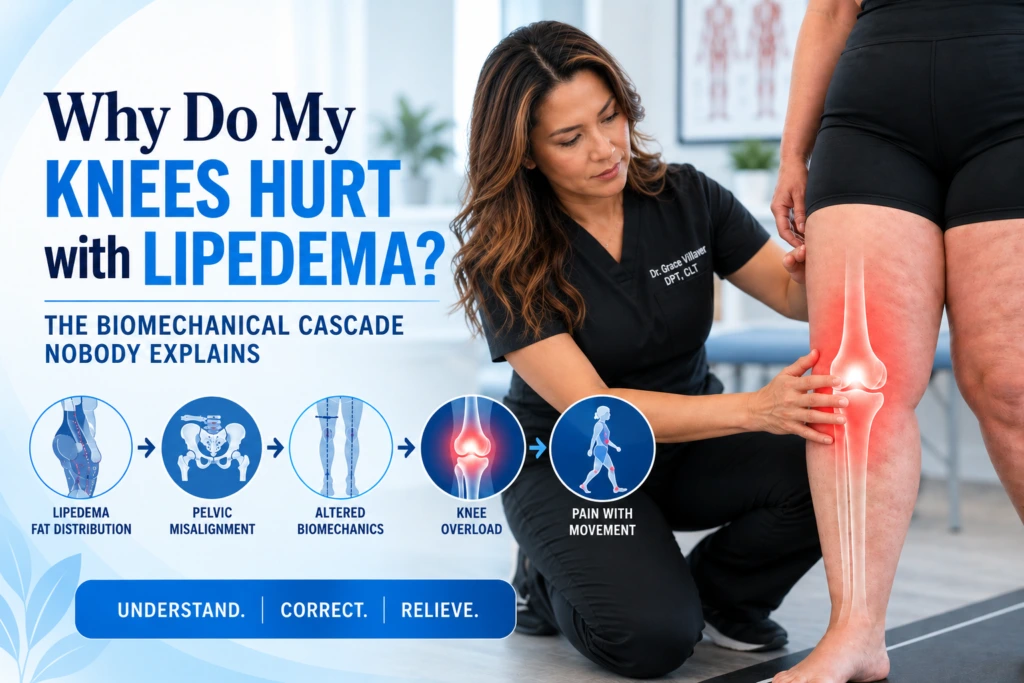
I want you to really picture this for a moment, because this is something I see every single day in my clinic, and it is something that nobody ever explains to these women.
Lipedema tissue creates disproportionate mass in the lower body: hips, thighs, knees, calves. That mass changes how you distribute weight. Your knees are forced inward into a valgus pattern because the thighs are pushing toward each other. Your hips externally rotate to try to create space when you walk. That classic wide, compensatory gait. Your pelvis tilts. Your low back arches or flattens trying to compensate. And your feet are bearing abnormal load with every single step.
Over years, this creates real orthopedic consequences: patellofemoral pain, hip impingement, early joint degeneration, chronic low back pain, pelvic floor dysfunction. And here is what breaks my heart: these women are often blamed for these problems. They are told if they just lost weight, their knees would stop hurting. But the biomechanical damage is already done, and weight loss alone (even if it were simple, which in lipedema it is not) does not restore normal joint mechanics. You have to treat the body where it actually is.
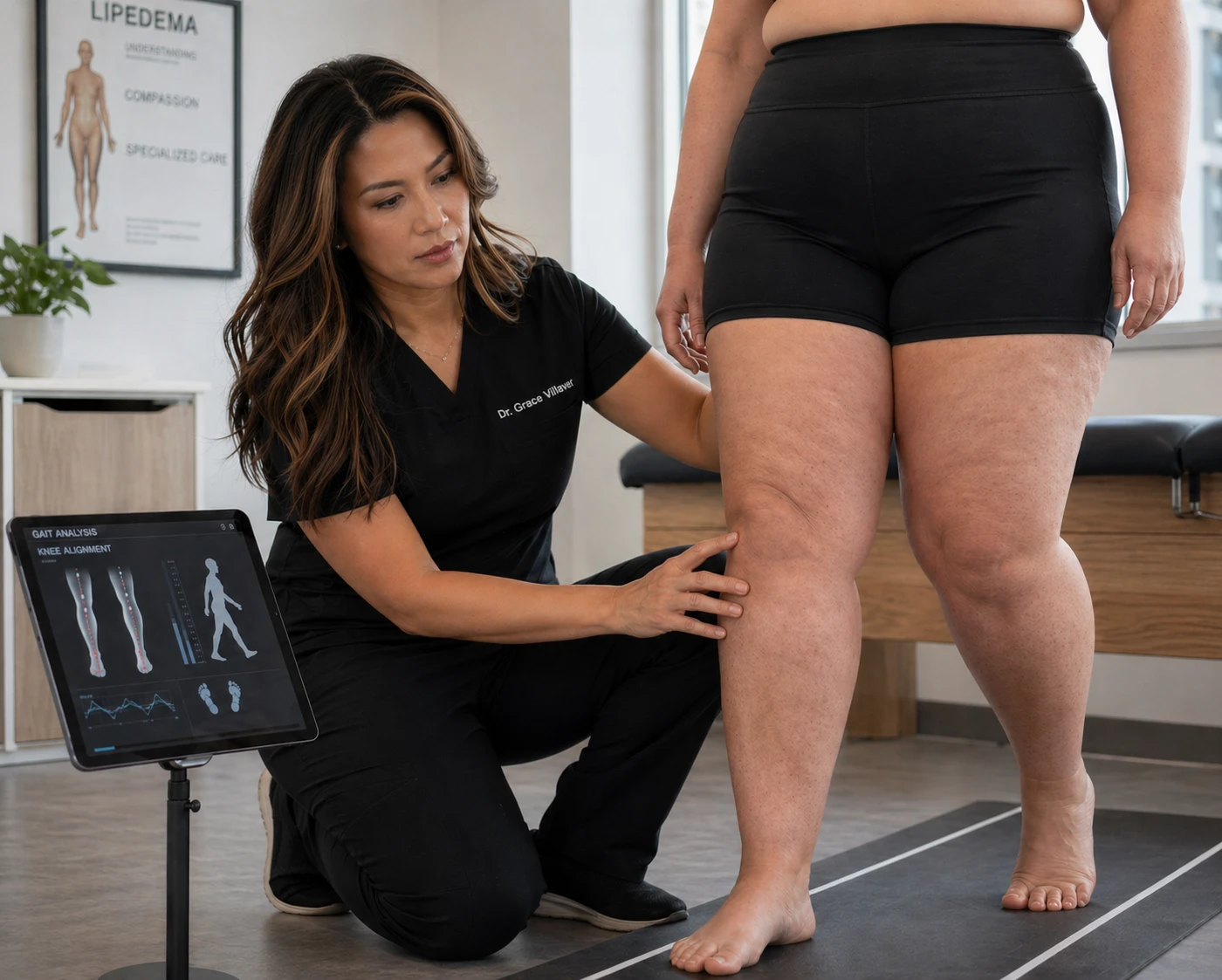
How Common Is Knee Pain in Lipedema?
If you have lipedema and your knees hurt, you are not imagining it. You are not weak. And you are not alone.
That statistic comes from a 2025 peer-reviewed study published in Cureus and indexed in PubMed Central(1). More than half of women with lipedema experience knee pain, not as a side effect of being overweight, but as a direct biomechanical consequence of how lipedema tissue reshapes the way their lower body moves and loads.
The same study describes what researchers call the "sarcopenic-valgus cascade," a biomechanical and inflammatory chain reaction linking adipose dysfunction, muscle weakness in the thighs, dynamic knee valgus, collapsed foot arches, altered gait, and ultimately chondromalacia patellae (cartilage breakdown behind the kneecap)(1). This is not a theory. This is what is happening in your body right now if you have lipedema and your knees hurt when you walk.
What Is the Biomechanical Cascade?
Lipedema is never just a fat problem or a fluid problem. It is a full-body, multi-system condition that simultaneously impacts your lymphatic, vascular, immune, connective tissue, and musculoskeletal systems all at once.
Here is the cascade I see in my clinic every day:
- Disproportionate lower body mass. Lipedema deposits fat abnormally in the hips, thighs, and calves. This creates an uneven load distribution that your skeleton was not designed to carry symmetrically.
- Thigh-predominant sarcopenia. Chronic inflammation within lipedema tissue blunts the muscles' ability to grow and strengthen. Women with lipedema demonstrate lower lower-limb strength than BMI-matched women with obesity(1). Your muscles are being asked to stabilize abnormal loads without the strength reserve to do it.
- Dynamic knee valgus. As the thighs push toward each other, the knees collapse inward during walking, stairs, and standing. This valgus pattern places abnormal stress on the inner knee and kneecap, leading to patellofemoral pain syndrome and accelerated cartilage wear(1).
- Hip external rotation and wide-based gait. To create space for the thighs during walking, the hips rotate outward. This compensatory pattern alters the angle at which the femur (thigh bone) loads into the hip socket, increasing the risk of femoroacetabular impingement and early hip joint degeneration(2).
- Pelvic tilt and low back compensation. As the pelvis tilts to accommodate the altered hip and knee mechanics, the lumbar spine compensates. Some women develop excessive lumbar lordosis (arching). Others flatten their low back entirely. Both patterns overload the facet joints and discs, leading to chronic low back pain(3).
- Plantar arch collapse and foot pronation. The feet are typically spared of lipedema fat deposition. Yet clinical cohorts and expert consensus increasingly describe functional foot change (overpronation and flatfoot) as the limb adapts to proximal weakness and valgus. Pronation couples with tibial internal rotation and femoral adduction, amplifying patellofemoral stress. Systematic reviews now associate a more pronated or flat foot posture with patellofemoral pain(1).
- Pelvic floor dysfunction. Increased weight demands from tissue, fluid, and force cause increased tension and strain on the pelvic floor muscles and bones. Up to 50% of women with lipedema have hypermobile joints, which increases the risk for pelvic organ prolapse and pelvic floor pain(4)(5). The pelvic floor may become too tight to compensate for laxity elsewhere or too loose to support pelvic organs(5).
This is the cascade. Each compensation creates the next problem. And over years, the cumulative orthopedic damage becomes harder and harder to reverse.
Why "Just Lose Weight" Does Not Fix the Problem
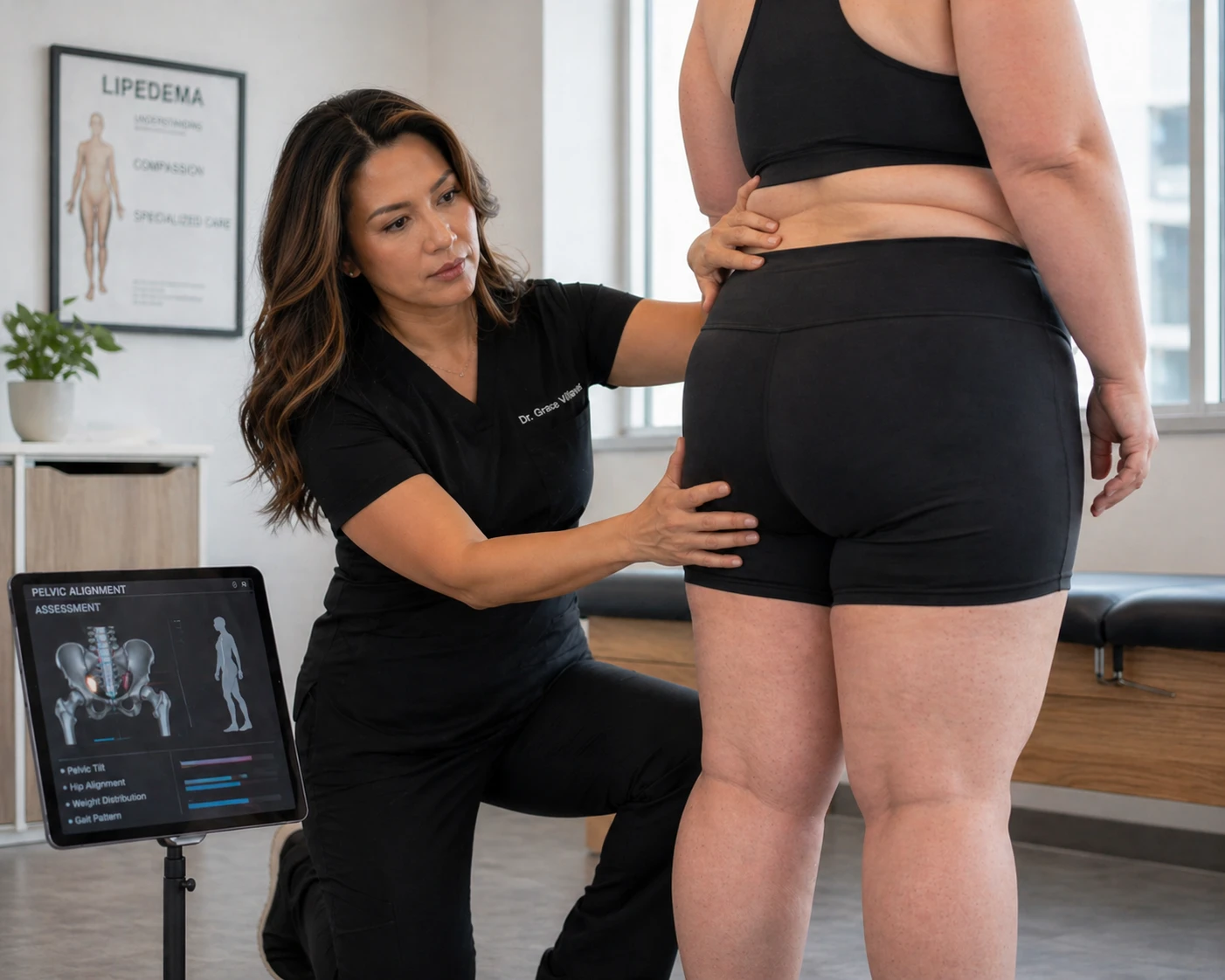
I need to say this plainly: if your doctor told you that losing weight will make your knee pain go away, they do not understand lipedema biomechanics.
Weight loss (even when it happens, which in lipedema is notoriously difficult due to the disease's resistance to caloric restriction(6)) does not automatically restore normal joint alignment. The valgus pattern at your knees was created by years of compensatory loading. The external rotation at your hips was carved into your movement pattern over thousands of steps. Your pelvis has adapted. Your foot arches have collapsed. Your pelvic floor has either tightened or weakened in response to chronic altered mechanics.
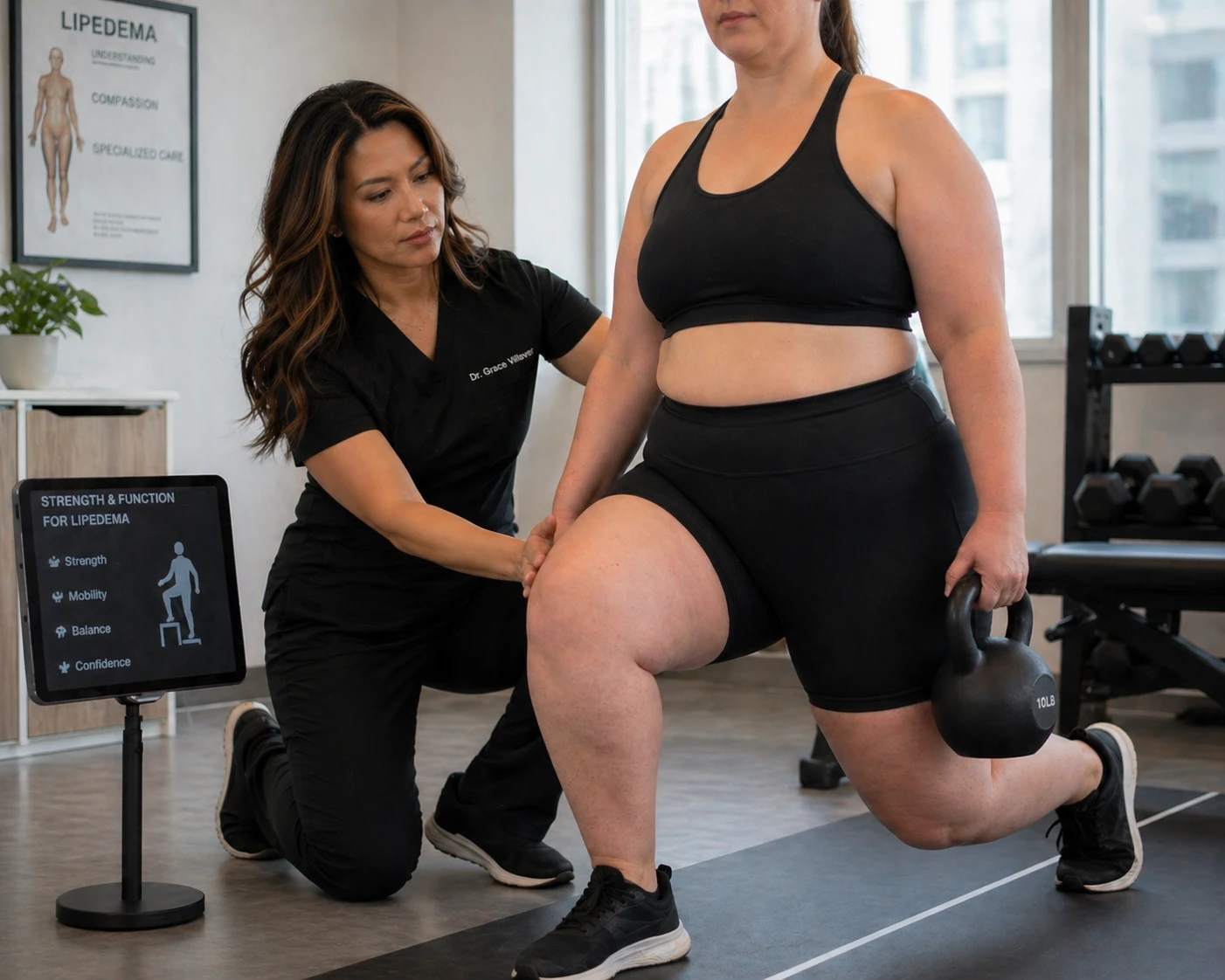
These are not problems that vanish when the scale drops 20 pounds. These are biomechanical adaptations that require targeted physical therapy intervention: gait retraining, neuromuscular re-education, progressive strengthening of weak hip abductors and external rotators, foot and ankle stabilization, and core control to restore neutral pelvic alignment(7)(8).
The Hypermobility Connection
If you have lipedema, there is a significant chance you also have joint hypermobility. Recent peer-reviewed studies report that 44% of lipedema patients have joint hypermobility, and 60% recall being hypermobile during childhood(9). Another 2025 Spanish study of over 1,800 lipedema patients found that 95.8% showed ligamentous hyperlaxity(10).
Hypermobility amplifies every problem I just described. If your joints are already moving beyond their normal range, the abnormal loading from lipedema pushes them even further into unstable positions. Your knees collapse inward more dramatically. Your hips rotate more. Your arches flatten more. And because hypermobile joints rely more on muscular control than ligamentous stability, the sarcopenia (muscle loss) caused by lipedema's inflammatory environment leaves you with even less capacity to stabilize those joints(9).
The result? Joint pain (notably in the ankles, knees, cervical spine, sacrum, and feet), exercise-induced fatigue, and a significantly higher risk of pelvic organ prolapse(5)(9).
What Actually Helps
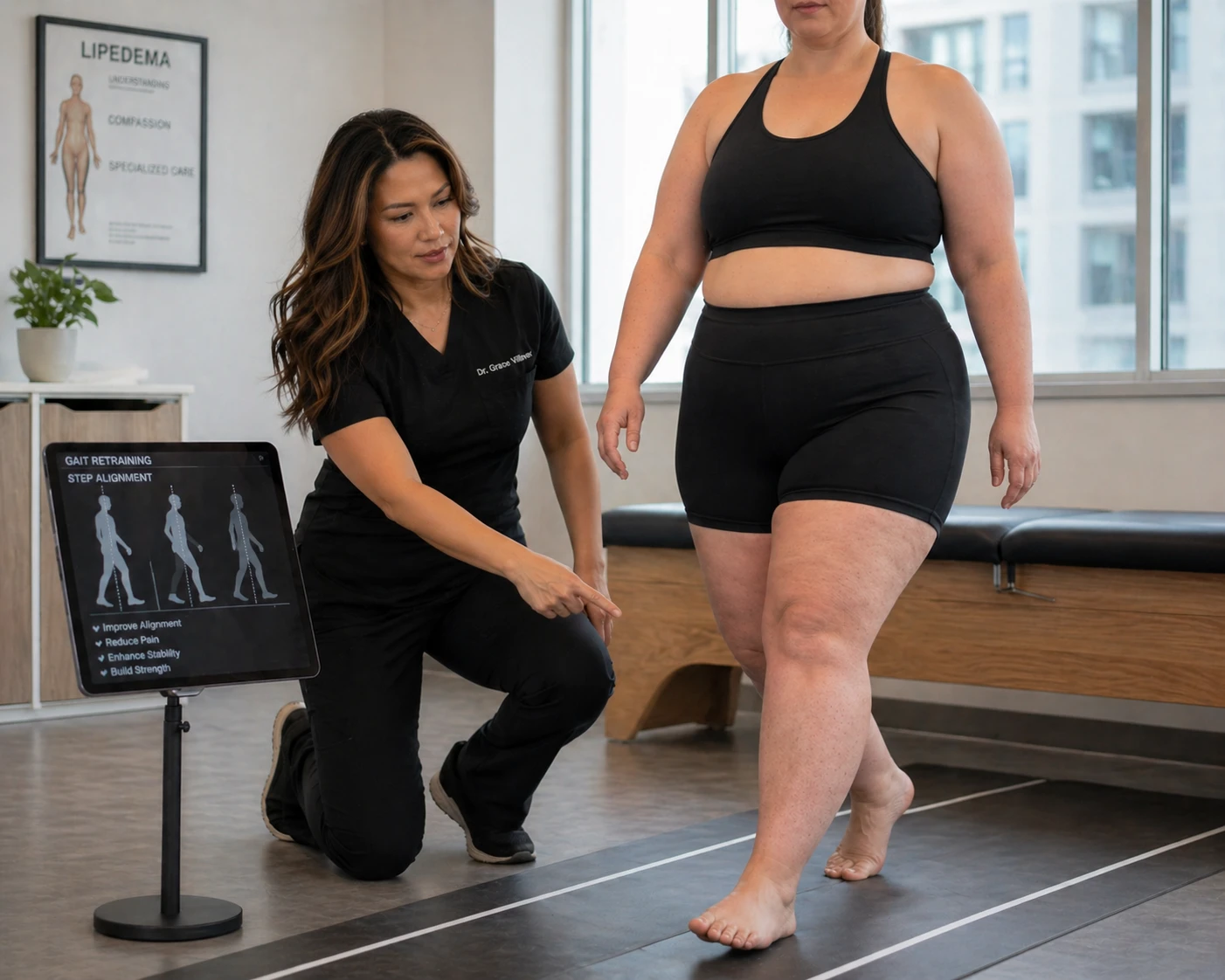
The good news is that targeted physical therapy intervention works. Systematic reviews and consensus statements from peer-reviewed journals confirm that complex decongestive physiotherapy, gait training, hydrotherapy, aerobic exercise, and resistance exercise training are all effective in the management of lipedema(7)(8). The effects are even greater when combined with ongoing compression therapy(11).
According to the Standard of Care for Lipedema in the United States, people with lipedema benefit from(4):
- Postural and core exercises
- Muscle strengthening exercises (especially hip abductors, glutes, and quadriceps)
- Gait training with attention to cadence, step width, and pelvic control(1)
- Neuromuscular re-education to retrain movement patterns
- Deep abdominal breathing to increase lymphatic flow and stimulate the parasympathetic system
For hypermobility, gait should be retrained with control-over-range strategies: meaning we prioritize joint stability and muscular control rather than pushing you into extreme ranges of motion that your ligaments cannot support(1).
What My Patients Say
If You Feel Dismissed or Unheard
I would say this: your instincts about your own body are valid, and the right provider will never make you feel like you have to earn the right to be believed. Keep advocating. Keep looking. Because you deserve a care team that meets you with as much determination as you bring to every appointment.
The conversation is finally happening. Lipedema is being named, researched, and taken seriously in ways it simply was not even five years ago. And women are coming in informed, asking the right questions, refusing to be dismissed, and that shift in the patient is changing what providers are being forced to learn.
You Hold Both DPT and CLT Credentials: Why Does That Matter?
A DPT and CLT together is the most powerful combination you can have for lipedema because lipedema is never just a fat problem or a fluid problem. It is a full-body, multi-system condition that simultaneously impacts your lymphatic, vascular, immune, connective tissue, and musculoskeletal systems all at once.
As a DPT I understand how chronic inflammation reshapes the way someone moves and loads their joints over years, and as a CLT I understand the lymphatic and vascular physiology driving that inflammation at the tissue level, so I am never just chasing symptoms; I am addressing the system underneath them.
Most providers are trained to look through one lens. I get to look through several simultaneously, and for a condition as complex and as chronically mismanaged as lipedema, that is not a luxury; that is a necessity.
Ready to Address the Cascade?
Your body is not failing you. It has been failed by a system that was not built to understand it, and there is a profound difference between those two things.
If you are in Leesburg, Ashburn, or Northern Virginia and you are tired of being dismissed, schedule a comprehensive evaluation. We will assess your gait, your joint alignment, your strength deficits, your tissue quality, and your lymphatic function, and we will build a treatment plan that addresses the system, not just the symptom.
References
- (1) Amato AC. Chondromalacia in Lipedema: The Sarcopenic–Valgus Cascade That Keeps Getting Missed. Cureus (2025). pmc.ncbi.nlm.nih.gov
- (2) Aksoy H, et al. Cause and management of lipedema-associated pain. Dermatol Ther (2021). pubmed.ncbi.nlm.nih.gov
- (3) Lee M, et al. Adipose Tissue as Pain Generator in the Lower Back and Lower Extremity: Application in Musculoskeletal Medicine. PMC (2023). pmc.ncbi.nlm.nih.gov
- (4) Herbst KL, et al. Standard of care for lipedema in the United States. Phlebology (2021). pmc.ncbi.nlm.nih.gov
- (5) Lipedema Foundation. Understanding Pelvic Health - Lipedema Pelvic Health Physical Therapists (2024). lipedema.org
- (6) Cifarelli V, et al. Lipedema: Progress, Challenges, and the Road Ahead. Obesity Reviews (2025). wiley.com
- (7) Esmer M, et al. Physiotherapy and rehabilitation applications in lipedema management: A literature review. J Vasc Surg Venous Lymphat Disord (2021). pubmed.ncbi.nlm.nih.gov
- (8) Panni A, et al. The Role of Physical Exercise as a Therapeutic Tool to Improve Lipedema: A Consensus Statement from the Italian Society of Motor and Sports Sciences and the Italian Society of Phlebology. Curr Obes Rep (2024). pmc.ncbi.nlm.nih.gov
- (9) Alvero-Cruz JR, et al. Lipedema and Hypermobility Spectrum Disorders Sharing Pathophysiology: A Cross-Sectional Observational Study. J Clin Med (2025). pmc.ncbi.nlm.nih.gov
- (10) Paramotion. Lipedema & Hypermobility: Understanding the Overlap in Connective Tissue (2025). paramotion.org
- (11) Vink T, et al. Exercise training in women with lipedema – A systematic review. Vasa (2025). pubmed.ncbi.nlm.nih.gov
- (12) Certified Lymphedema Therapist: Vodder Method MLD. Level Up Rehabilitation Services. levelupptdoc.com
