

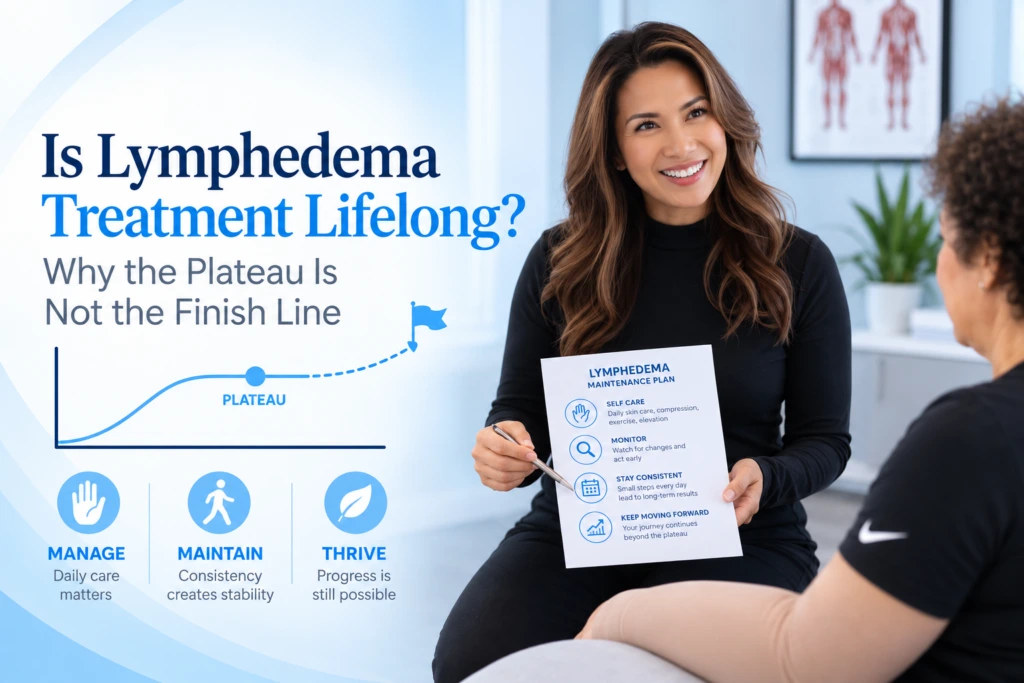
A patient recently asked me a question I hear often in my lymphedema clinics in Leesburg and Ashburn: "Can I stop Complete Decongestive Therapy now that I have reached a plateau and can manage my symptoms on my own?"
I understand why she asked. She had worked hard through Phase 1. Her limb measurements had dropped significantly. She was feeling better, moving better, and wearing her compression garment daily. From the outside, it looked like the problem was solved.
But lymphedema and lipedema are chronic conditions. The underlying lymphatic impairment that caused the swelling in the first place does not resolve when the swelling goes down. It is controlled. And the moment you stop the behaviors that are controlling it, the swelling comes back, often faster and harder than before. The question is not whether lymphedema treatment is lifelong. It is. The question is what that lifelong commitment actually looks like in practice, and how to make it sustainable.
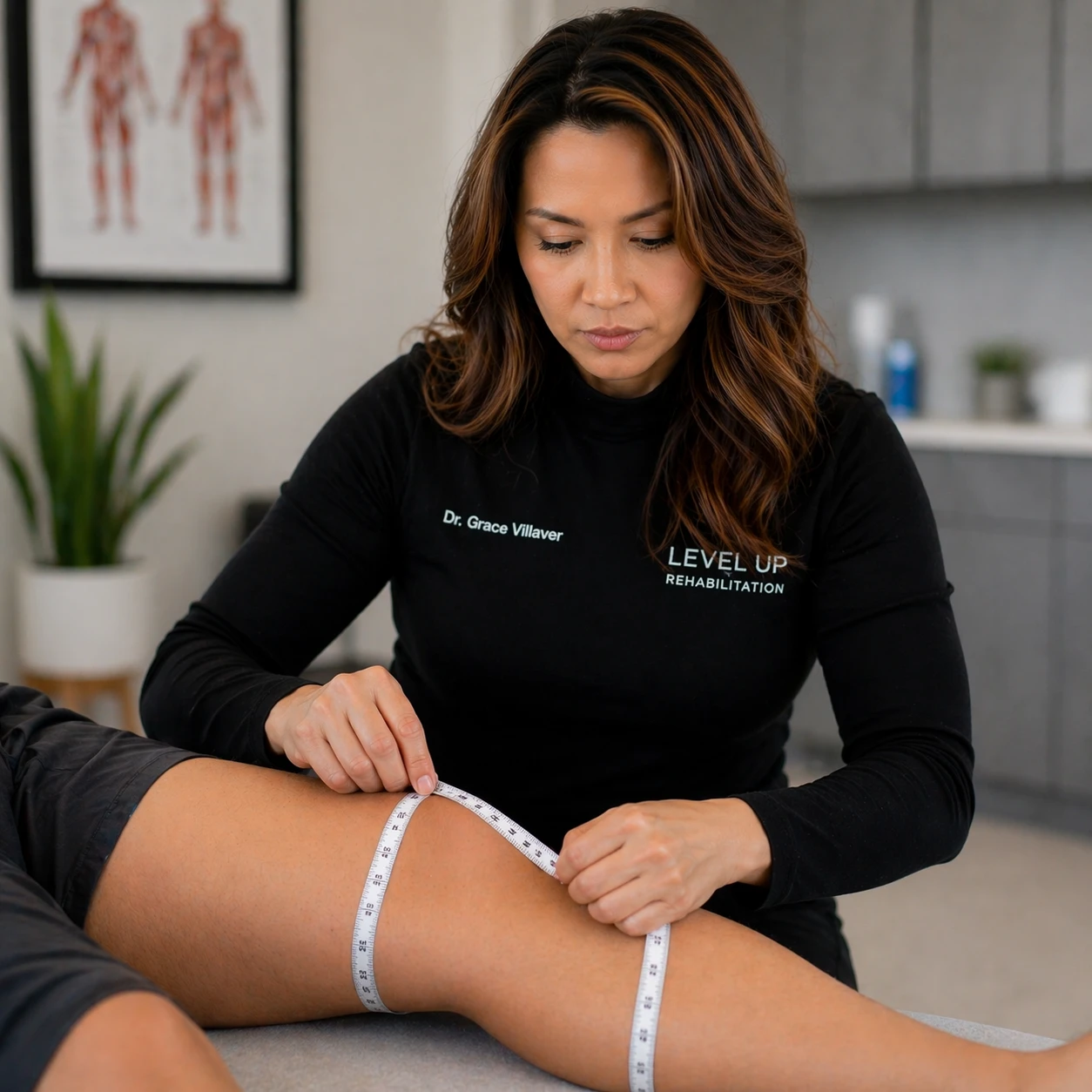
What Happens If You Stop Lymphedema Treatment After Improvement?
This is not a theoretical question. It has been studied in large, long-term cohorts, and the data are consistent.
The most important dataset comes from Vignes and colleagues at Hopital Cognacq-Jay in Paris, who followed 682 women with breast cancer-related lymphedema after completing intensive Phase 1 CDT. Treatment failure was defined as losing at least 50% of the volume reduction achieved during the intensive phase. The results followed a clear trajectory(1):
within 1 year
within 2 years
within 4 years
Patients who wore a daytime compression sleeve combined with overnight multilayer bandaging at least four nights per week cut their failure risk nearly in half (hazard ratio 0.53)(1). In an earlier Vignes cohort of 537 women, non-compliance with low-stretch bandaging raised the risk of volume regrowth by 55%, and non-compliance with the elastic sleeve raised it by 61%(2).
The Lasinski systematic review, published in PM&R and supported by the American Lymphedema Framework Project, synthesized the pattern across multiple studies: adherent patients preserved 90% of their initial volume reductions, while non-adherent patients lost 33% of their gains(3).
The bottom line from the research: if you stop lymphedema treatment after improvement, the improvement does not hold. This is not because treatment failed. It is because lymphedema is a chronic condition that requires ongoing management, just like diabetes requires ongoing insulin or dietary management even when blood sugar is well controlled(4).
Why Is Lymphedema Maintenance Therapy Not Optional?
Phase 1 CDT is the intensive reduction stage: daily MLD sessions, short-stretch bandaging, decongestive exercises, and skin care protocols, typically running 3 to 5 sessions per week over 2 to 4 weeks. Cochrane-reviewed data show that compression bandaging alone produces 30 to 37% limb volume reduction in Phase 1, with MLD adding roughly another 7%(5). The results can be dramatic.
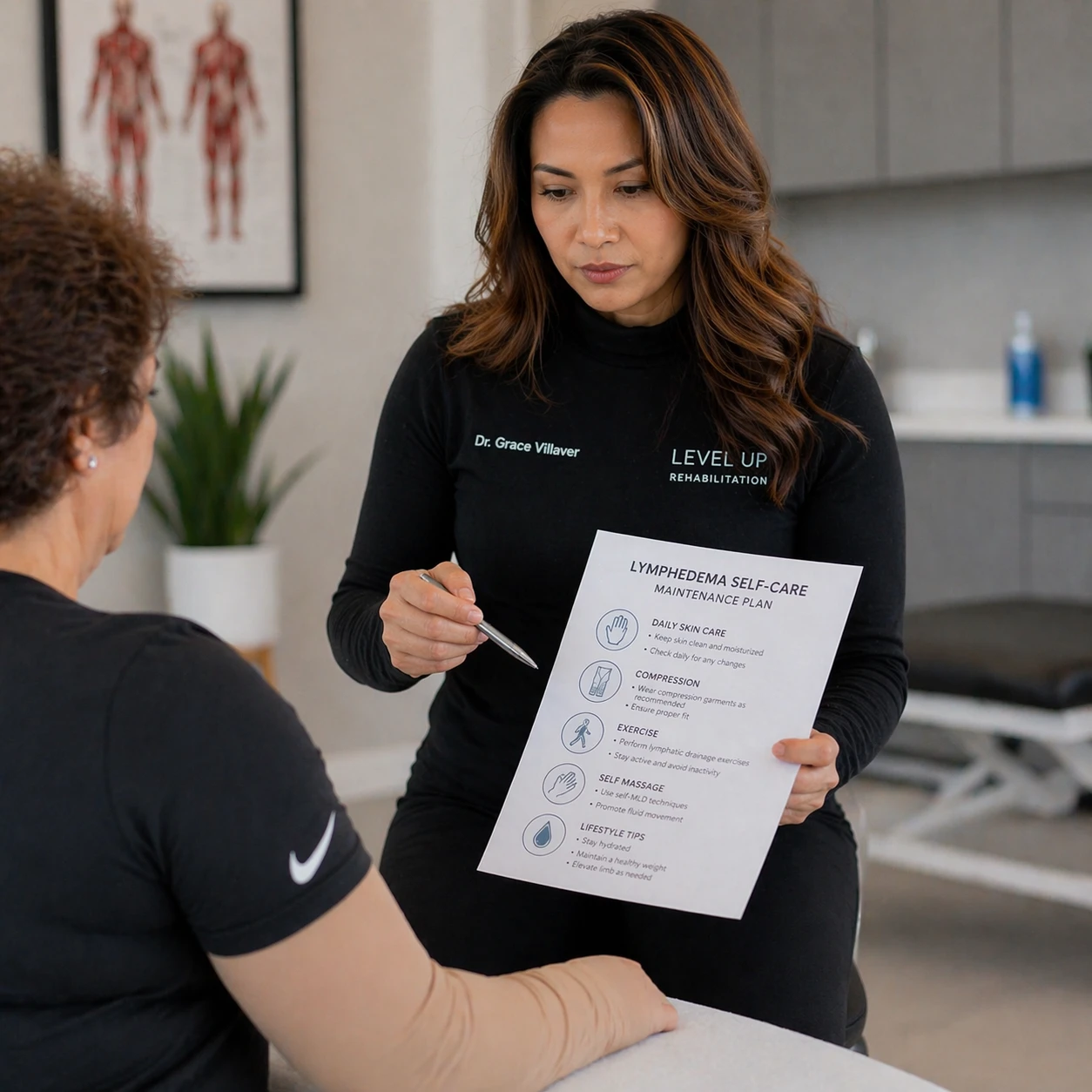
Phase 2 is where you protect those results for the rest of your life. It rests on four pillars(6):
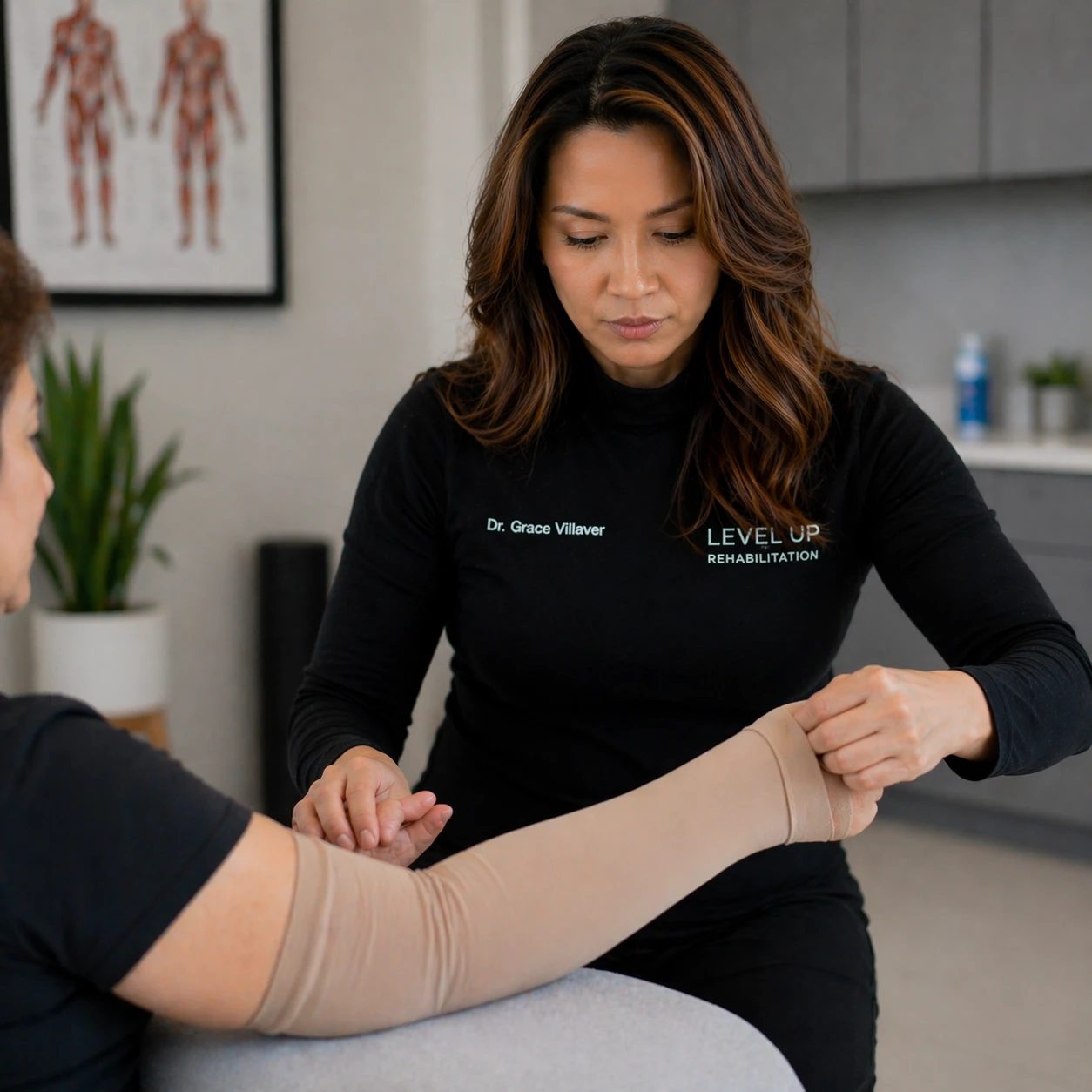
Daily Compression
Raises interstitial pressure so fluid stops reaccumulating. The moment a well-fitted garment comes off permanently, hydrostatic physics pushes fluid back into the tissue. Garments must be replaced every 3 to 6 months as elasticity degrades.
Self-MLD
Gentle, at-home lymphatic drainage (10 to 15 minutes most days) keeps the lymphatic load moving through available pathways. A 2024 crossover trial showed that when MLD was paused for just one month, limb circumference and pain both increased measurably.
Targeted Exercise
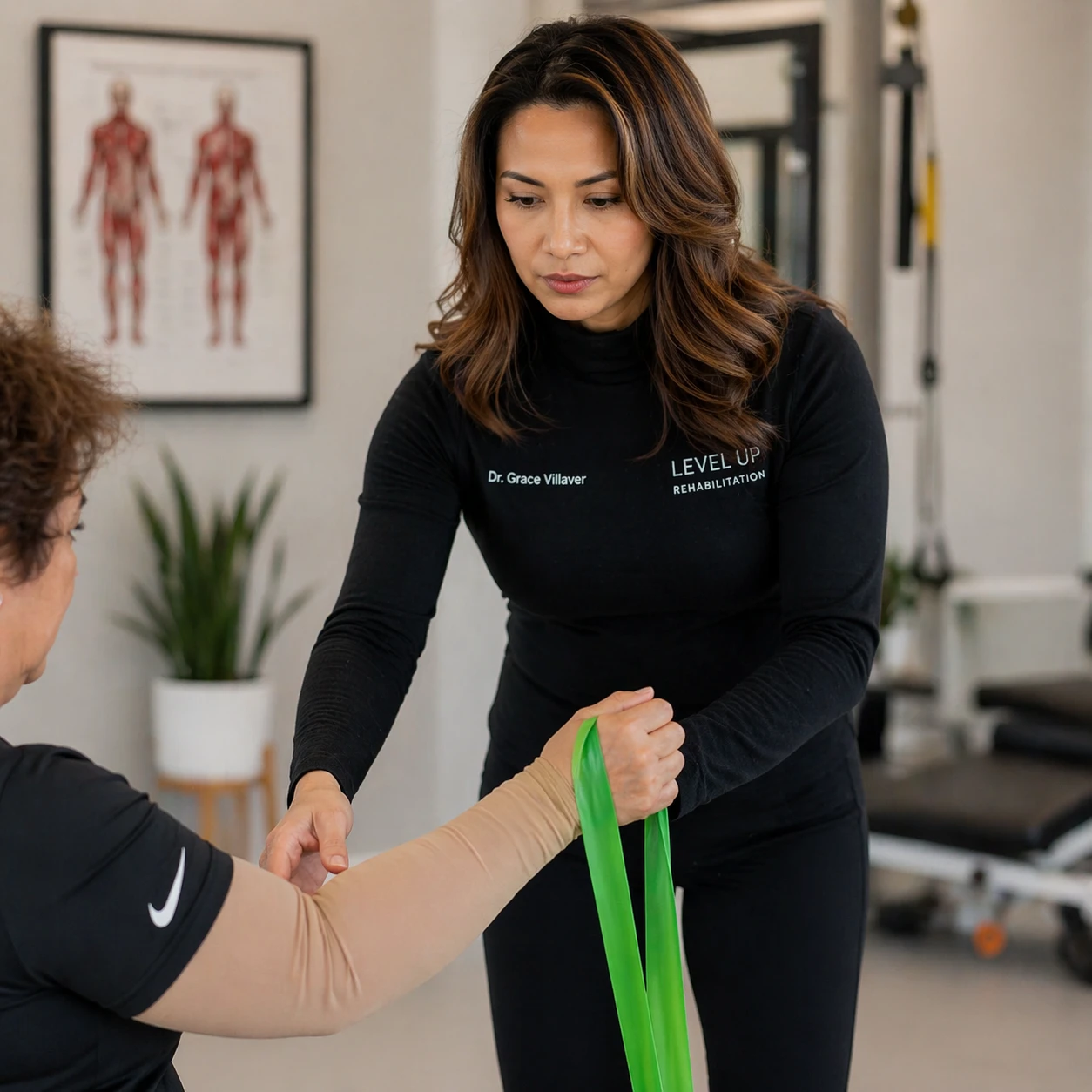
Resistance and aerobic exercise with compression support lymphatic return through muscle contraction. A meta-analysis of 21 studies confirmed that exercise does not worsen lymphedema and is safe as part of ongoing maintenance.
Skin Care
Daily moisturizing, skin inspection, and prompt treatment of any breaks prevent the cellulitis infections that can set back months of progress and cause permanent lymphatic vessel damage.
The International Society of Lymphology's 2020 Consensus Document states this plainly: lymphedema "typically requires, as do other chronic disorders, lifelong care and attention"(4). A 2020 systematic review of all published lymphedema guidelines in the Journal of Vascular Surgery confirmed the consensus: every reviewed guideline recommends lifelong compression and ongoing CDT maintenance as the standard of care(7).
Plateau is not the finish line. Plateau is the success marker. Maintenance is the protection plan.
What Happens If You Stop Wearing Compression for Lymphedema?
This is the question patients ask most often, and the answer involves more than just fluid. When compression and drainage stop, the disease does not stay where you left it. It moves forward.
Chronic lymph stasis drives a well-characterized cycle of inflammation, fibrosis, and adipose deposition(8). Research in Lymphatic Research and Biology and the International Journal of Molecular Sciences shows that Th2 inflammation (driven by IL-4 and IL-13) promotes collagen deposition, which hardens tissue and converts pitting edema into non-pitting fibrotic swelling. Simultaneously, adipocytes (fat cells) proliferate in the subcutaneous compartment. Brorson's CT studies showed that long-standing lymphedema is dominated by fat, not fluid, and fat does not respond to compression or MLD the way fluid does(9).
This is why ISL Stage II is described as harder to reverse than Stage I, and Stage III (elephantiasis with hyperkeratosis) harder still. Every month of uncontrolled swelling narrows the window in which your limb can still be meaningfully reduced.
The infection data are particularly important. The LIMPRINT consortium's large international study found a 1-year cellulitis incidence of 11% and a lifetime prevalence of 22% in arm lymphedema(10). Risk scales with stage: odds of cellulitis are roughly 9 times higher in Stage III than in early disease. In a 2020 New England Journal of Medicine randomized trial, compression reduced cellulitis recurrence from 40% to 15% (hazard ratio 0.23; number needed to treat = 4)(11). Each cellulitis episode causes further scarring of lymphatic vessels, accelerating the very disease you are trying to control.
The clinical reality: stopping compression does not simply return you to where you started. It puts you on a trajectory toward fibrosis, adipose tissue deposition, increased infection risk, and disease progression that becomes progressively harder to reverse. That is why every major international guideline identifies daily compression as the non-negotiable backbone of lifelong lymphedema care(4)(7).
Can Lipedema Be Cured Permanently?
I hear this question from lipedema patients as well, and the honest answer is no. Every major international guideline, including the 2021 U.S. Standard of Care (Herbst et al.), the 2024 German S2k guidelines, and a 2025 systematic review in Obesity Reviews, describes lipedema as chronic and progressive(12)(13). It meets all four WHO chronic disease criteria.
Progression tracks hormonal transitions (puberty, pregnancy, menopause), weight changes, trauma, and surgery. Over time, many patients develop secondary lymphatic involvement, a condition called lipo-lymphedema, which is why compression, MLD, and exercise remain lifelong mainstays even for patients who have had liposuction(13). Liposuction can remove diseased adipose tissue and provide meaningful relief, but it does not cure the underlying condition. Long-term results depend on continued conservative care.
The maintenance commitment for lipedema patients follows the same logic as lymphedema: the disease does not stop when treatment stops. The goal is to slow progression, manage symptoms, and preserve function for as long as possible.
How Do You Make Lymphedema Maintenance Therapy Sustainable for Life?
I want to be honest about something: Phase 2 is real work. Systematic reviews of qualitative studies describe lymphedema self-management as "a lifetime commitment and a challenge"(14). Patients in focus groups report spending 150 minutes or more per week on self-care, plus 12 or more hours of daily compression. The psychosocial burden is documented: emotional distress, body image disruption, financial strain, and social isolation(15).
Treatment fatigue is real, and pretending otherwise would be a disservice to my patients. But the evidence also identifies what helps:
Education and self-efficacy building. Patients who understand their condition and feel competent managing it sustain adherence longer. A 2020 randomized controlled trial found that structured group education outperformed routine care on quality of life and fear of recurrence(16). This is why I invest significant time in teaching every patient the "why" behind each component of their home program, not just the "how."
Simplified, individualized regimens. Custom-fitted garments, donning aids, velcro wraps, and pneumatic compression devices all reduce the burden of daily management and improve compliance. Not every patient needs the same protocol. The goal is to find the minimum effective maintenance plan that your life can actually sustain.
Ongoing therapist partnership. Best practice guidelines published in peer-reviewed journals recommend ongoing specialist follow-up every 6 to 12 months indefinitely(17). Adjustments to garments, re-measurement, and brief return-to-Phase-1 intensives during flares are normal. Phase 2 is dynamic, not static.
"It feels amazing to have a medical professional want to support and empower you to manage a chronic illness, not keep you dependent on them."
Lauren Silvesti, Level Up patient
Lauren's words capture exactly what I aim for. My job is not to keep you in my clinic forever. My job is to give you the knowledge, skills, and confidence to manage your condition independently, with periodic check-ins to catch early warning signs (ring tightness, morning heaviness, a changing Stemmer's sign, or the feeling that compression is "not working as well") before they become setbacks.
What Does Long-Term Care Actually Look Like for Real Patients?
The maintenance mindset is something I see reflected in patients across my practice, not just lymphedema patients. The ones who do best are the ones who view their clinician as a long-term partner, not a short-term fix.
"I've been seeing Grace for about two years now, and she has completely changed the way my body feels and performs. Whether it's fixing muscle strains, treating injuries, or keeping me healthy so I can live and work out pain-free, she consistently delivers amazing results. She is the only person I trust... If you want a credentialed, highly effective recovery specialist who truly knows what they're doing and genuinely cares about your long-term health and performance, stop looking and book with her."
Craig Myers, Level Up patient (2 years of ongoing care)
"I'm a 63-year-old who needed to improve my flexibility, balance, and strength. Grace has developed a plan for me that fits my schedule and lifestyle. The improvement I've seen is beyond my expectations. She is a permanent part of my wellness plan."
Constance Cleveland, Level Up patient
"I'm so grateful for Dr. Grace. She was the first to truly listen with compassion. She helped relieve my discomfort from inflammation and swelling, and I felt better almost immediately. She honestly helped give me my life back."
Remie, Level Up patient
What Craig, Constance, and Remie share is a relationship with their care that extends beyond the acute problem. Craig has been coming for two years. Constance calls her therapist "a permanent part of my wellness plan." Remie found relief from inflammation and swelling that changed her daily life. For lymphedema and lipedema patients, this long-term partnership is not a luxury. It is the clinical standard of care(4)(7).
Does Insurance Cover Compression Garments for Lymphedema?
Cost is one of the most common barriers to long-term adherence, and I want patients to know about a significant recent change. The Lymphedema Treatment Act, which went into effect on January 1, 2024, now requires Medicare (and most Medicare-aligned plans) to cover three daytime and two nighttime compression garments per affected body part every six months(18). Many patients are unaware that coverage has expanded.
For patients in my private-pay practice, I always provide detailed receipts with the necessary codes for insurance reimbursement. Cost should never be the reason someone stops a treatment that the evidence says they need for life.
The Plateau Is Proof That the Work Is Working
If you have reached a plateau in your CDT, that is a genuine accomplishment. It means your lymphatic system, with the help of intensive therapy, has found a new equilibrium. But the evidence from systematic reviews, large prospective cohorts, international consensus documents, and randomized trials converges on a single message: that equilibrium is actively maintained, not permanent(3)(4).
Stopping Phase 2 produces measurable volume regression in most patients within months. It accelerates fibrotic and adipose tissue changes that are difficult to reverse. It multiplies cellulitis risk. And it shortens the window in which treatment remains maximally effective. Lymphedema and lipedema are, by every authoritative definition, lifelong. The good news is that with sustained Phase 2 care, the great majority of patients maintain their gains and avoid the cascade of complications that defines untreated disease.
As Pat Nolan, one of my long-term patients, puts it: Dr. Grace "continually helps motivate me to stay on track... I feel supported, listened to, and confident in her care." That is what Phase 2 should feel like. Not a burden, but a partnership.
If you are navigating a plateau, experiencing early signs of rebound, or need to recalibrate your maintenance plan, visit my Certified Lymphedema Therapist page to schedule a maintenance visit, or call (703) 637-8252. The research is clear that ongoing specialist partnership is one of the strongest predictors of long-term success.
In health,
Dr. Grace Villaver, DPT, CLT
Level Up Rehabilitation Services, LLC
42910 Winkel Dr, Unit #105, Ashburn, VA 20147
(703) 637-8252 | Mon-Fri, 7 AM - 5 PM
References
- (1) Vignes S, et al. Long-term outcome of patients with breast cancer-related lymphedema after CDT. Breast Cancer Res Treat (2013). pubmed.ncbi.nlm.nih.gov
- (2) Vignes S, et al. Factors influencing breast cancer-related lymphedema volume after intensive CDT. Arch Phys Med Rehabil (2006). pubmed.ncbi.nlm.nih.gov
- (3) Lasinski BB, et al. A systematic review of the evidence for CDT in the treatment of lymphedema from 2004 to 2011. PM&R (2012). sciencedirect.com
- (4) International Society of Lymphology. The diagnosis and treatment of peripheral lymphedema: 2020 Consensus Document. Lymphology (2020). isl.arizona.edu
- (5) Badger C, et al. Physical therapies for reducing and controlling lymphoedema of the limbs. Cochrane Database of Systematic Reviews (2004). cochranelibrary.com
- (6) Bakar Y, et al. Essential components of the maintenance phase of complex decongestive therapy. Medical Oncology (2024). springer.com
- (7) Gloviczki P, et al. A systematic review of guidelines for lymphedema and the need for contemporary intersocietal guidelines. J Vasc Surg Venous Lymphat Disord (2020). sciencedirect.com
- (8) Kataru RP, et al. The Role of Inflammation in Lymphedema: A Narrative Review. Int J Mol Sci (2024). mdpi.com
- (9) Mehrara BJ, Greene AK. Lymphedema and Obesity: Is There a Link? Nonoperative Treatment of Lymphedema. PMC (2014). pmc.ncbi.nlm.nih.gov
- (10) Moffatt CJ, et al. Factors associated with cellulitis in lymphoedema of the arm: an international cross-sectional study (LIMPRINT). PMC (2024). pmc.ncbi.nlm.nih.gov
- (11) Webb E, et al. Compression stockings to prevent recurrent cellulitis of the leg. NEJM (2020). pmc.ncbi.nlm.nih.gov
- (12) Herbst KL, et al. Standard of care for lipedema in the United States. Phlebology (2021). pmc.ncbi.nlm.nih.gov
- (13) Cifarelli V, et al. Lipedema: Progress, Challenges, and the Road Ahead. Obesity Reviews (2025). wiley.com
- (14) Teo I, et al. Experiences of breast cancer survivors with lymphedema self-management: a systematic review of qualitative studies. J Cancer Survivorship (2022). pubmed.ncbi.nlm.nih.gov
- (15) Fu MR, et al. Psychosocial impact of lymphedema: a systematic review. Psycho-Oncology (2013). wiley.com
- (16) Heidarnia M, et al. Effect of lymphedema self-management group-based education on quality of life. Quality of Life Research (2020). springer.com
- (17) Armer JM, et al. Best practice guidelines in assessment, risk reduction, management, and surveillance for post-breast cancer lymphedema. Curr Breast Cancer Rep (2013). pmc.ncbi.nlm.nih.gov
- (18) Ghosh A, et al. Lymphedema Treatment Act: A Critical Step for Cancer Survivors, but Unresolved Equity Gaps Persist. PMC (2025). pmc.ncbi.nlm.nih.gov
- (19) Certified Lymphedema Therapist: Vodder Method MLD. Level Up Rehabilitation Services. levelupptdoc.com
