
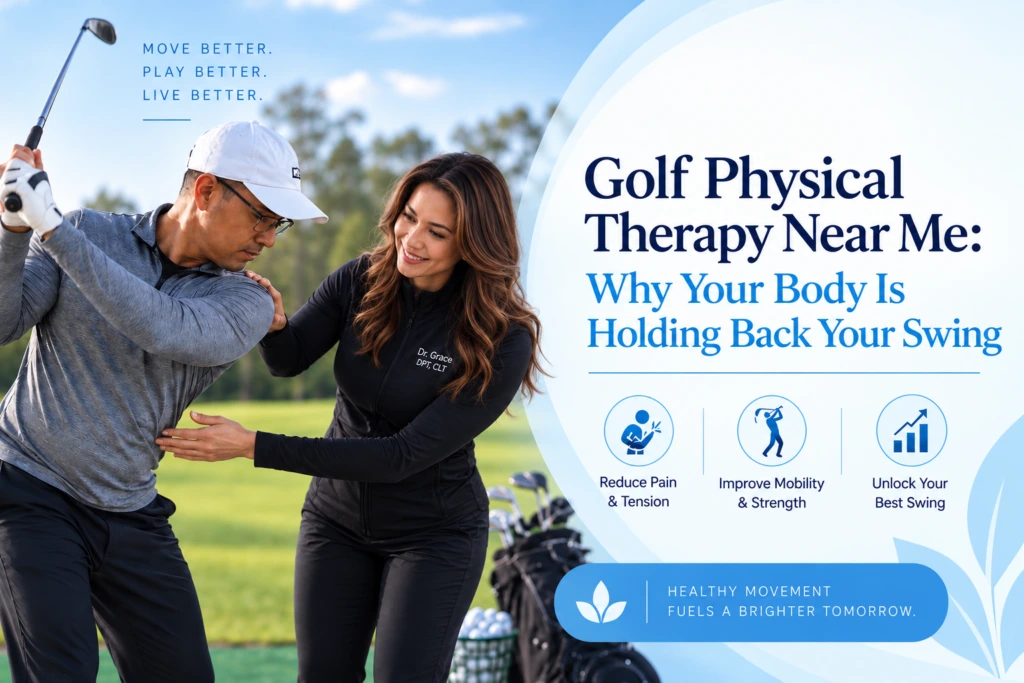
If your back stiffens on the 14th tee at Raspberry Falls, if your drives at Creighton Farms keep losing a few yards each season, or if you have taken lesson after lesson and still cannot hold your posture through impact, the problem is usually not your swing. It is your body. When I see golfers across Leesburg, Ashburn, and Loudoun County searching for golf physical therapy near me, what they really need is a clinician who can screen, diagnose, and treat the physical limitations that their swing coach cannot touch.
I am Dr. Grace Villaver, DPT, and I am a Titleist Performance Institute (TPI) Certified Golf Fitness Instructor. I serve golfers across Leesburg, Ashburn, Sterling, Purcellville, South Riding, Aldie, and the broader Northern Virginia corridor. In this guide, I will walk you through what golf physical therapy actually is, what the research says about why it works, and how combining a TPI movement screen with a clinical PT evaluation produces results that traditional lessons, gym workouts, or stretching alone often cannot.
The short version: golf pros fix the swing, and golf physical therapists fix the body so the swing can finally be fixed. The relationship between golf and physical therapy is not a new idea, but it is still underutilized by amateur golfers. The two disciplines are partners, not substitutes. When they work together, golfers stop chasing fixes and start playing the game their body is actually capable of.
Why "Work on Your Swing" Often Fails
Most amateur golfers who plateau are not lazy, uncoordinated, or undisciplined. They are physically restricted in ways their coach cannot see and their body has learned to hide. I see this every week in my practice: a golfer comes in frustrated after months of lessons, convinced they just cannot "get it." But the problem is not effort or talent. It is hardware.
The kinetic chain of the golf swing alternates between mobility and stability: ankles mobile, knees stable, hips mobile, lumbar spine stable, thoracic spine mobile, scapulae stable, shoulders mobile(1). When a joint that is supposed to move loses range of motion, the joint above or below steals that motion and becomes the injury site. That is why the lumbar spine is the single most common source of pain in golfers(2): it sits between the two most important mobile joints (hips and thoracic spine), and it is only designed to rotate about 10 to 13 degrees total. When your hips cannot internally rotate and your T-spine cannot separate, your lower back absorbs a job it was never built to do(3).
The clinical data is striking. A 2024 systematic review in the British Journal of Sports Medicine (20 studies, 9,221 golfers) found lifetime injury prevalence of 56.6% in amateurs and 73.5% in professionals(4). Roughly one in four golf injuries involve the lower back(5). And Vad et al. (American Journal of Sports Medicine, 2004) showed that PGA Tour players with low back pain had measurably less lead-hip internal rotation than their pain-free peers(6). Limited hip rotation is not just a performance problem. It is an injury risk factor with a goniometer reading attached to it.
The takeaway is simple: if your body cannot physically achieve the positions your swing coach is teaching, you will compensate, and those compensations create new problems. Asking a golfer to move in a way they cannot is the recipe for frustration and eventual injury.
What Is the Body-Swing Connection?
The Titleist Performance Institute's central idea, built from two decades of research on thousands of golfers, is called the body-swing connection(7). Specific physical limitations produce specific, predictable swing faults. Fix the body, and the fault often disappears without a single swing thought. This is the foundation of everything I do with golfers at Level Up.
Here are a few examples I see nearly every week in my Loudoun County practice:
Early extension (hips thrusting toward the ball in the downswing) is present in about 70% of amateurs. Over 90% of early extenders fail the TPI overhead deep squat test, typically because of limited ankle dorsiflexion, limited hip internal rotation, or poor glute activation(8). Telling an early extender to "stay in your posture" is asking them to do something their hardware cannot do.
S-posture at address is classically coached as a setup flaw. The real driver is usually lower-crossed syndrome: tight hip flexors and lumbar extensors paired with weak glutes and deep abdominals(9). No amount of "flatten your back" cueing fixes that pattern. Targeted manual therapy and motor re-education do.
Over-the-top swing path, the most common fault in high-handicappers, is nearly guaranteed when thoracic rotation is limited. Elite backswings produce 78 to 109 degrees of torso rotation. If your T-spine can only deliver 30, your arms and hands are going to take over(1).
This is why "if you don't assess, it's just a guess" is the operating phrase at TPI. A ten-minute screen tells me more about why a golfer is stuck than six months of video review.
What Does a TPI Screen Actually Measure?
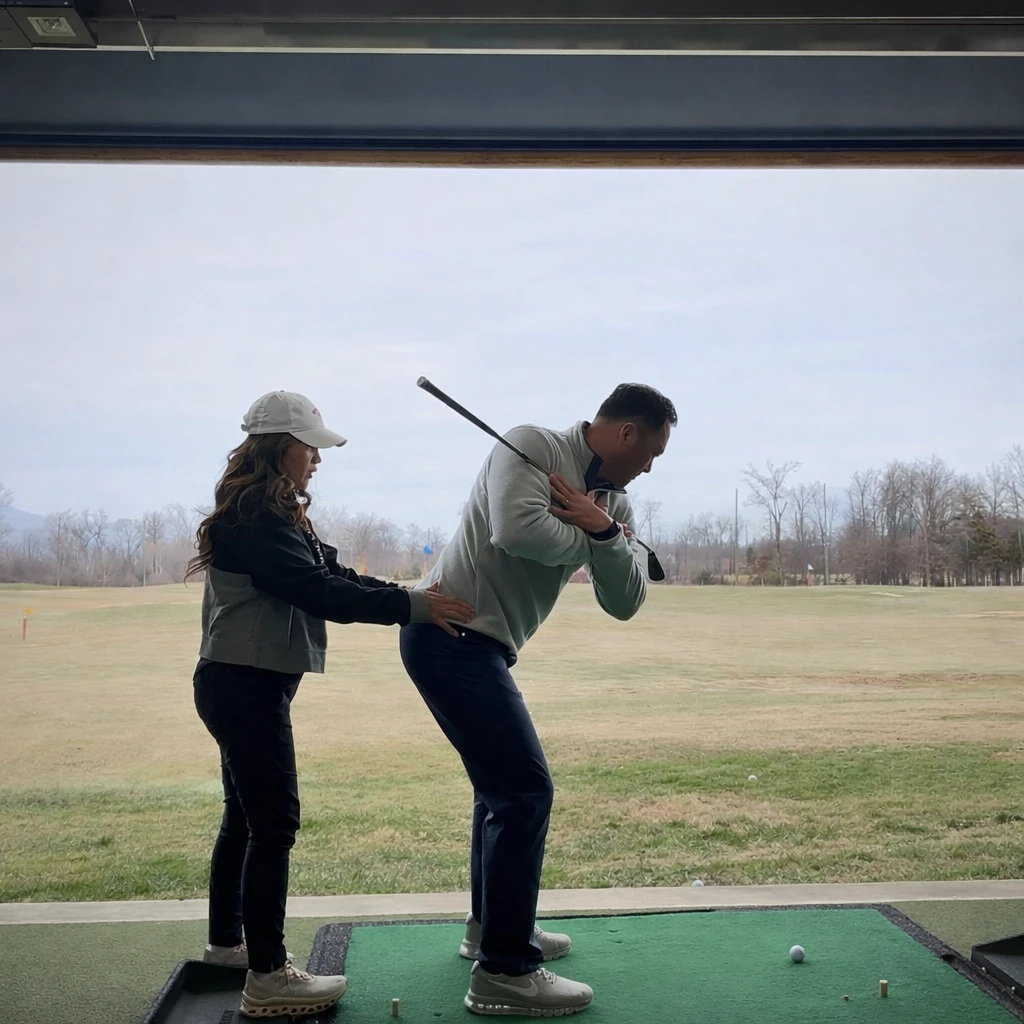
The TPI Level 1 screen is a 16-point physical assessment of mobility, stability, balance, and motor control(10). Each test is graded against normative data from PGA and LPGA tour players. The battery includes the pelvic tilt and pelvic rotation tests, torso rotation, overhead deep squat, toe touch, 90/90 shoulder test, single-leg balance, lat length, lower-quarter rotation (hip internal and external rotation), seated trunk rotation, bridge with leg extension, and cervical, forearm, and wrist assessments. Each failed test maps to likely swing characteristics, so I can often predict a golfer's top two or three swing faults before they ever pick up a club in front of me.
TPI has certified more than 27,000 professionals across 63 countries(11). Its fingerprints are all over elite golf: 18 of the last 20 major championships were won by players advised by TPI-certified experts. That ecosystem exists because the screen works.
What Does a Golf Physical Therapist Add That a Trainer Cannot?
Here is the distinction that matters for anyone searching "golf physical therapy near me": a personal trainer with a TPI certification can screen and program exercise, but by law they must stop when pain enters the picture. A Doctor of Physical Therapy with TPI certification can screen, diagnose, and treat, all in one setting, under direct access in Virginia (no physician referral required)(12).
What that means in my practice:
Differential diagnosis. A failed lower-quarter rotation test could be a hip labral tear, trochanteric bursitis, a stiff joint capsule, or referred pain from the lumbar spine. Each has a different treatment path. I can tell them apart.
Hands-on treatment. Joint mobilization, soft-tissue work, instrument-assisted techniques, cupping, and dry needling can restore range of motion in minutes that corrective exercise alone may take weeks to produce.
Rehab for real injuries. Rotator cuff tendinopathy, golfer's and tennis elbow, TFCC wrist issues, disc-related back pain, and post-surgical return-to-golf after hip arthroscopy or rotator cuff repair: all are within my scope and outside a trainer's(13).
Retrain the pattern. New range of motion is useless if the brain cannot access it in a full swing. Neuromuscular re-education locks the change in.
Re-screen and quantify. I re-run the TPI screen to prove the change is real and measurable, not just a feeling.
The DPT-plus-TPI combination is genuinely uncommon. Most TPI-certified professionals are golf coaches or personal trainers. Most doctors of physical therapy have no specialized golf-biomechanics training at all. The overlap, the clinician who can diagnose a hip labrum and then show you how it is robbing ten yards from your drive, is where my golf performance optimization practice lives.
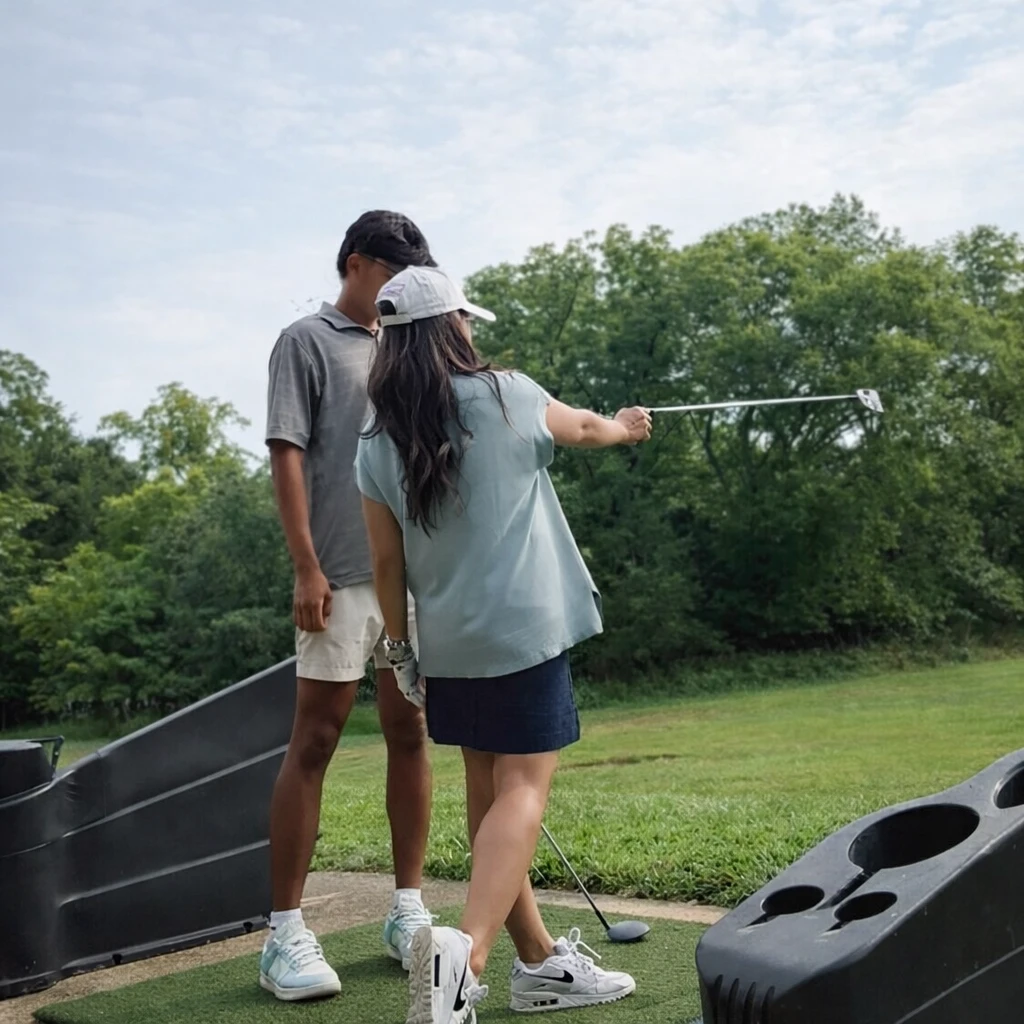
I am not trying to replace your swing coach. I am trying to make their instruction work. The pro identifies the swing fault on video. I identify whether a physical restriction is causing it. I treat the restriction. The pro retrains the new motor pattern. We reassess together. That is how performance golf PT is designed to work.
How Do Mobility Improvements Translate to Measurable Golf Performance?
The performance upside of addressing your body is well documented. Eight to twelve weeks of targeted strength, mobility, and power training routinely produce clubhead speed gains of 3 to 4 mph, translating to 4 to 8 yards of additional driving distance(14). A pre-round warm-up alone, which roughly half of amateur golfers skip, adds 1 to 2 mph of clubhead speed while cutting injury risk(15). And one peer-reviewed case report documented a recreational golfer who restored hip internal rotation through manual therapy and stabilization work and dropped three strokes off his handicap while resolving his back pain(6).
Mobility is not a luxury. It is leverage. And the golf stretching and mobility work that produces these gains is not the generic foam-rolling routine you found on YouTube. It is targeted, assessed, and built for your specific restrictions.
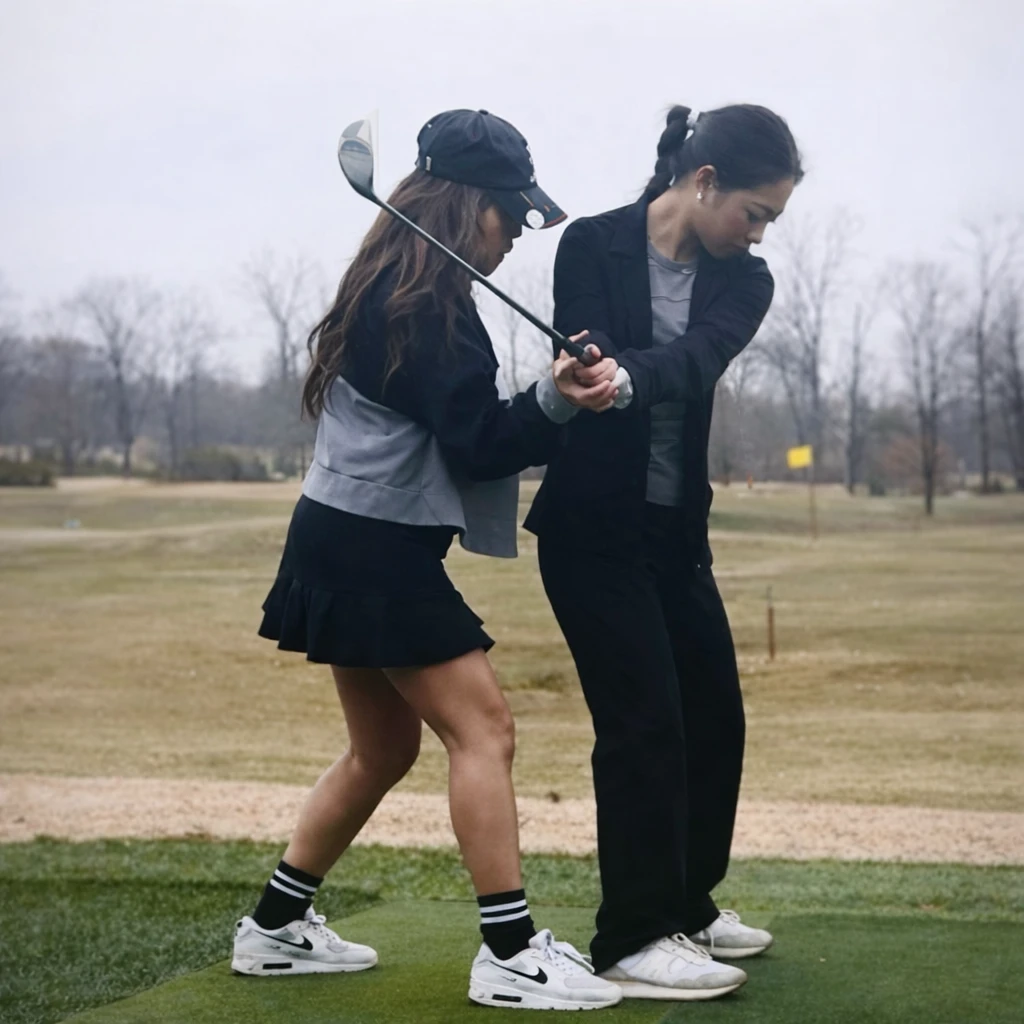
Real Results from Loudoun County Golfers
These are not hypothetical scenarios. These are real people who walked into my practice and walked out better.
Result: Made her high school golf team. Built swing-ready mobility and stability for a growing athlete. Her story is the one I hope every LCPS golf parent hears, because the fall VHSL season rewards athletes who prepared in the summer.
Result: Dramatic improvement in a single session. That is not magic. It is what happens when a physical restriction that has been quietly governing a golfer's swing for years gets identified and addressed in real time, with the swing rebuilt around the new range right there on the same day.
Result: Clear insight into the root cause of her swing patterns. When you finally see what has been holding you back, your golf future stops feeling like a guessing game and starts feeling like a project you can actually finish.
Why This Matters in Loudoun County Specifically
Loudoun County is one of the densest, most serious golf markets in the country. Leesburg and Ashburn sit at the center of a golf ecosystem that includes Creighton Farms, Trump National Washington D.C., Belmont Country Club, River Creek Club, Lansdowne Resort, Stoneleigh Golf Club, 1757 Golf Club, Raspberry Falls, Brambleton, Westpark, Loudoun Golf and Country Club, and South Riding Golf Club, plus a thriving indoor-simulator scene (X-Golf Ashburn, @GolfHouse, Play The Par, Back Nine Golf) that keeps local golfers practicing through the winter.
Every one of Loudoun County's 17 public high schools fields a varsity golf team, and LCPS programs have produced regional champions and college commits. I work with junior golfers and high school athletes alongside executives and serious recreational players. The common thread is the same: their body needs to move well enough to support the swing they are trying to build.
Northern Virginia golf season runs hardest from April through October, with cold weather compressing play from December through February. The off-season is where real change happens. Winter is the ideal window for a full TPI screen, corrective work, and a structured return-to-play plan, so that when April arrives at Lansdowne or Raspberry Falls, your first round of the year is not also your most painful one.
My concierge care model is built for Loudoun County golfers. Full 60-minute one-on-one sessions, no insurance hassles, no waiting rooms. I come to your club, your office, or your home. Serious golfers deserve undivided clinical attention, and that is exactly what I deliver. Learn more about my golf performance optimization program.
Ready to Find Out What Is Actually Holding You Back?
If you have been searching "golf physical therapy near me" from anywhere in Leesburg, Ashburn, or greater Loudoun County, the framework above is what separates a helpful visit from a transformative one. A body-first approach, delivered by a DPT who also speaks the language of the TPI screen, is the fastest way to turn physical limitations into playable yards.
Golf rewards the golfer who prepares their body as seriously as they prepare their swing. When the two finally line up, the game gets quieter, the pain fades, and the numbers on the card start moving in the right direction. That is the goal at Level Up, and it is the reason every new golfer who walks in starts the same way: on the table, running through the screen, figuring out what the body has been trying to tell them all along.
Visit my Golf Performance Optimization page to book your TPI assessment, or call (703) 637-8252 to get started.
In health,
Dr. Grace Villaver, DPT, TGFI
Level Up Rehabilitation Services, LLC
42910 Winkel Dr, Unit #105, Ashburn, VA 20147
(703) 637-8252 | Mon-Fri, 7 AM - 5 PM
Frequently Asked Questions About Golf Physical Therapy
References
- (1) TPI Body-Swing Connection. Titleist Performance Institute. mytpi.com
- (2) Golf Swing Faults: What a Physical Therapist Sees. Therapeutic Associates. therapeuticassociates.com
- (3) Low Back Pain in Golf: Contributing Factors and Strategies for Load Tolerance. Robust Golfer. robustgolfer.com
- (4) Epidemiology of musculoskeletal injury in professional and amateur golfers: a systematic review and meta-analysis. PubMed (2024). pubmed.ncbi.nlm.nih.gov
- (5) Golf-Related Low Back Pain: A Review of Causative Factors and Prevention Strategies. PMC. pmc.ncbi.nlm.nih.gov
- (6) The Role of Decreased Hip IR as a Cause of Low Back Pain in a Golfer: a Case Report. PMC. pmc.ncbi.nlm.nih.gov
- (7) About TPI: The Body-Swing Connection. Titleist Performance Institute. mytpi.com
- (8) Early Extension: Swing Characteristics. Titleist Performance Institute. mytpi.com
- (9) S-Posture: Swing Characteristics. Titleist Performance Institute. mytpi.com
- (10) TPI Certified Level 1: The 16-Point Movement Screen. Titleist Performance Institute. mytpi.com
- (11) TPI Certification Overview: 27,000+ Certified Professionals. Titleist Performance Institute. mytpi.com
- (12) Golf Rehabilitation. Johns Hopkins Physical Medicine and Rehabilitation. hopkinsmedicine.org
- (13) Golf Injury Prevention. OrthoInfo, American Academy of Orthopaedic Surgeons. orthoinfo.aaos.org
- (14) Eight Weeks of Strength and Power Training Improves Club Head Speed in Collegiate Golfers. PubMed (2018). pubmed.ncbi.nlm.nih.gov
- (15) Improving performance in golf: current research and implications from a clinical perspective. PMC. pmc.ncbi.nlm.nih.gov
- (16) Golf Performance Optimization: TPI Certified Golf PT. Level Up Rehabilitation Services. levelupptdoc.com
