

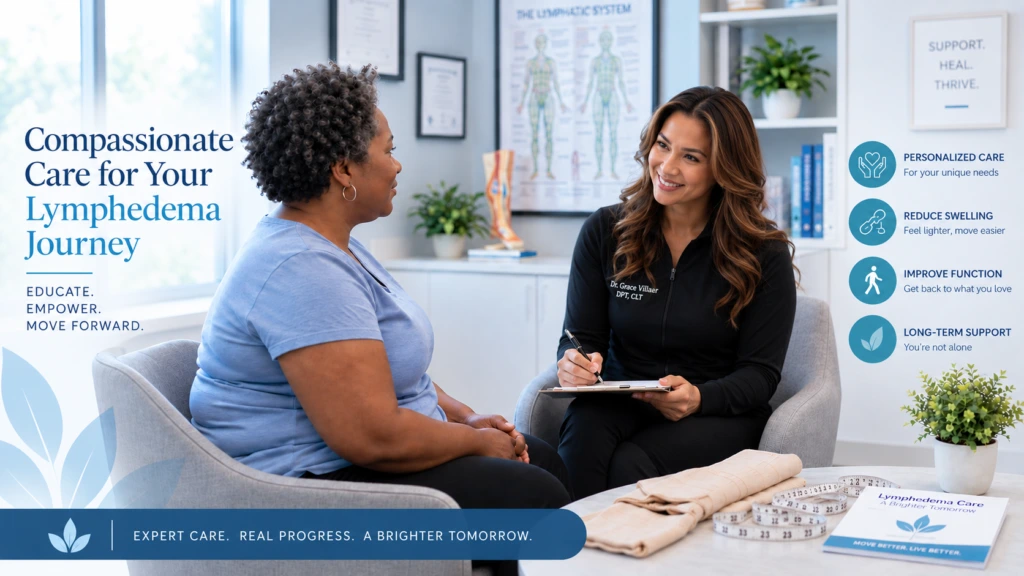
I often meet patients at my Leesburg and Ashburn, VA clinics whose stories stop me in my tracks, and I know they will resonate with so many of you. They've been faithfully taking their GLP-1 medication (think Ozempic, Trulicity, or semaglutide) for months, eating clean, walking daily, and pouring their heart into this health journey. Yet the scale mocks their efforts. Their legs feel heavier, one noticeably more swollen than the other(1).
People desperately search "lymphedema therapist near me" hoping for answers, but it can be hard to know which type of provider matches what you actually need. As I gently assess them (checking lymph node function, skin texture, and fluid dynamics), it clicks: this isn't "just stubborn weight." They have lymphedema, a chronic lymphatic dysfunction where fat and protein-rich fluid press on vessels, blocking blood return to the heart and trapping swelling in the limbs(2). If you're in this boat, let me walk you through what's really happening, and why getting the right care changes everything.

Why Aren't GLP-1 Weight Loss Medications Reducing My Leg Swelling?
GLP-1 medications are game-changers for appetite control, insulin sensitivity, and shedding pounds. They're anti-inflammatory powerhouses for many(1). But here's the catch they don't advertise: they can't fix lymphatic problems. If lymphedema or lipedema is silently driving asymmetrical leg swelling, your body holds onto fluid no matter how little you eat. Fat buildup compresses lymph vessels, creating a vicious cycle where swelling worsens inflammation, stalls circulation, and makes weight loss feel impossible(2).
In my clinics in Leesburg and Ashburn, Virginia, I see this weekly. Patients from across Northern Virginia and Loudoun County come defeated, convinced they're "failing" their meds. But concurrent treatment (lymphatic care alongside GLP-1) is key. Ignore the lymphatics, and you're fighting with one hand tied(1). Early intervention prevents progression to stage 3, where tissues fibrose irreversibly(3).
What Are the Stages of Lymphedema and How Does It Progress?
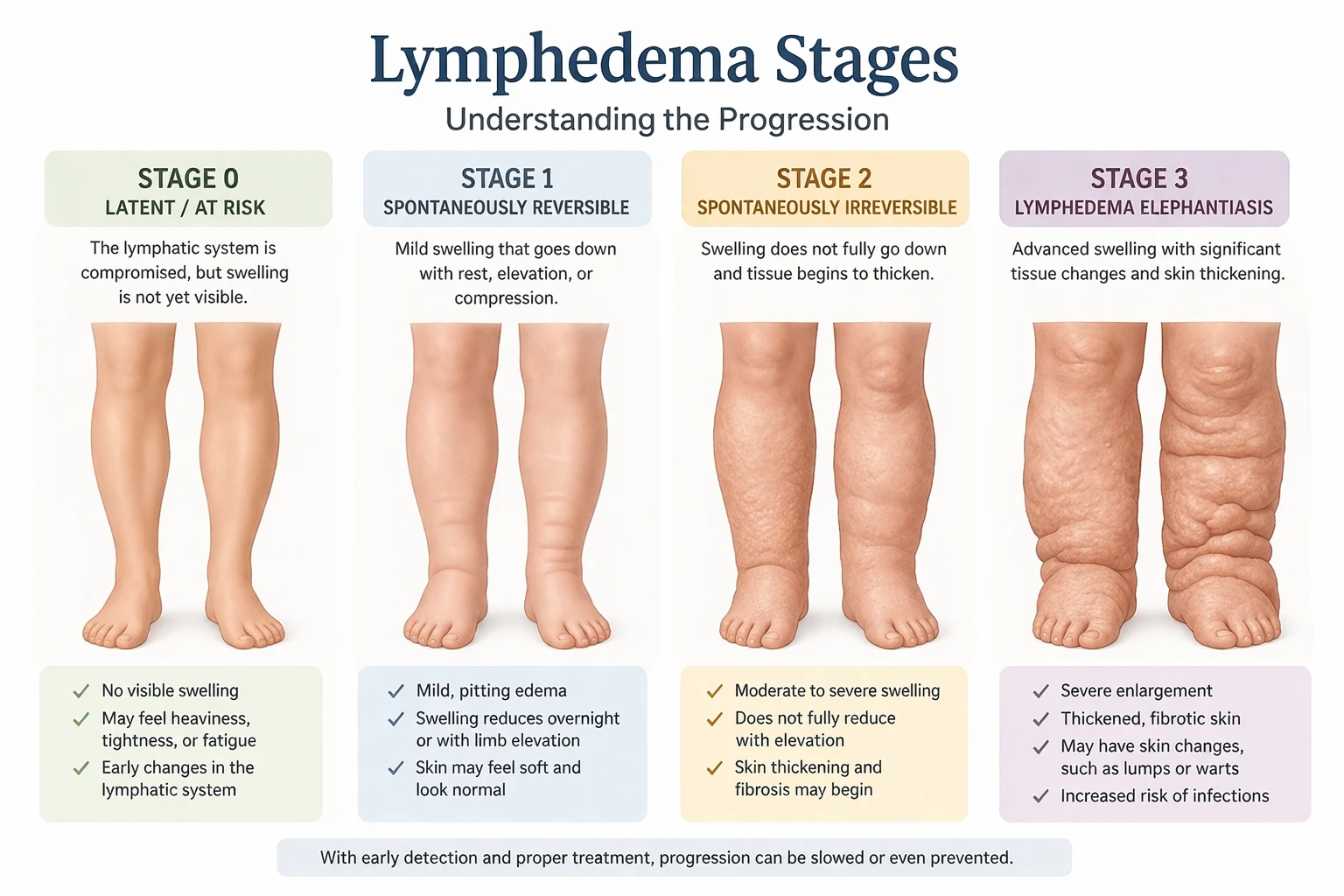
Lymphedema sneaks up because it doesn't scream at first. Stage 0 feels like vague fatigue or heaviness in your legs, with no visible swelling, just that nagging "off" sensation(3). Stage 1 brings pitting edema that shrinks overnight with elevation or rest. Untreated, it advances: Stage 2 locks in fibrosis (thickened skin), and Stage 3 brings elephantiasis-like changes, leading to chronic, irreversible vessel damage(2)(3).
Lipedema often coexists or precedes it, layering abnormal fat deposits that bruise easily and resist diet. It flares post-puberty, pregnancy, or perimenopause due to hormonal shifts, as estrogen drops spark more inflammation(4). General doctors miss it, labeling it "obesity." I've had patients cry relief at diagnosis: "Finally, someone sees me."
What Is Complete Decongestive Therapy (CDT) and How Does It Work?
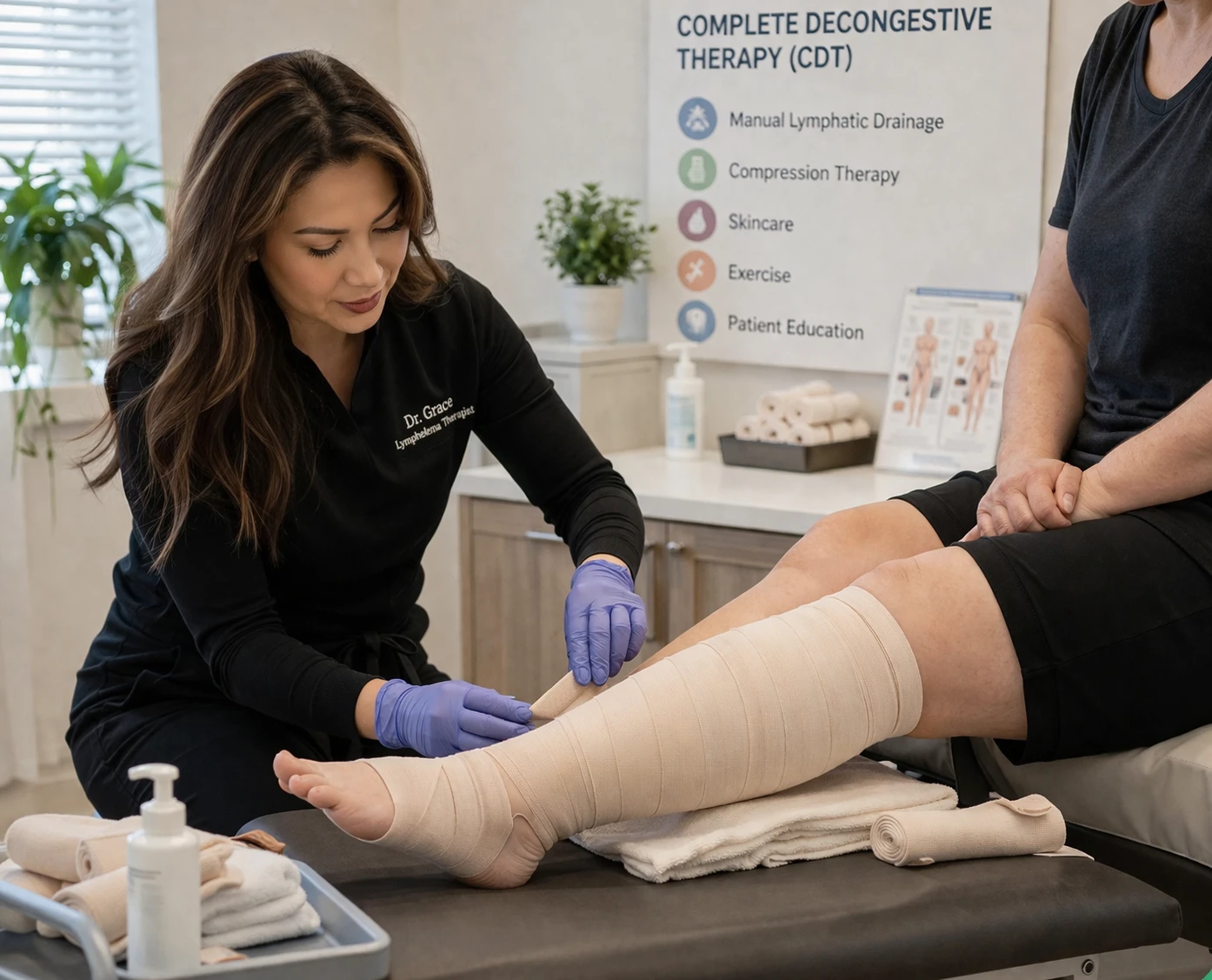
Enter Complete Decongestive Therapy (CDT), the evidence-backed protocol that's transformed my patients' lives(5). This isn't a quick fix. It's intensive Phase 1 (daily bandaging for 2 to 4 weeks) followed by lifelong Phase 2 self-care: compression garments, home pumps, targeted exercises, anti-inflammatory diets, and hormone tweaks(5).
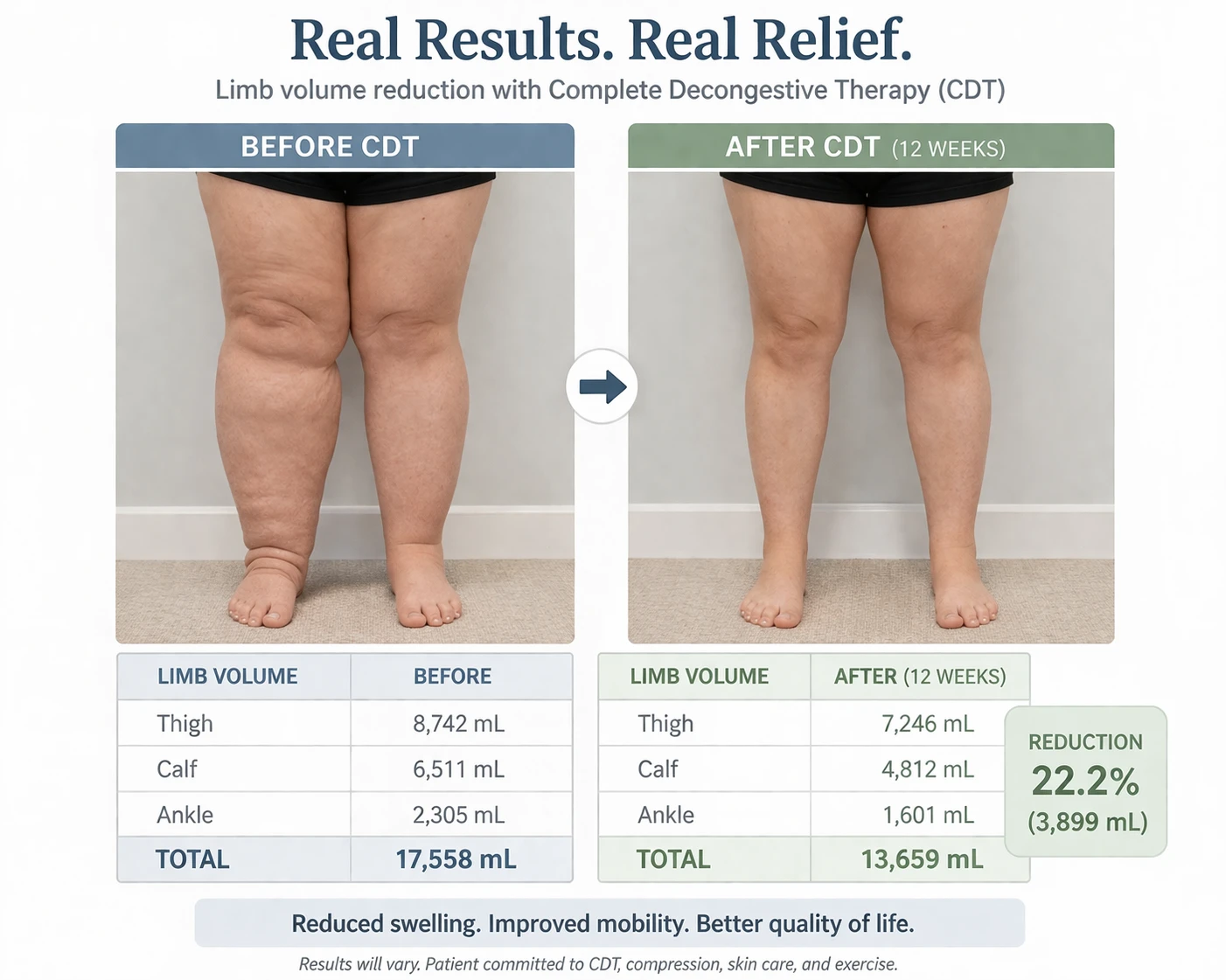
I guide patients through manual lymphatic drainage (MLD), using gentle, directional strokes to reroute fluid, paired with multi-layer bandaging that reduces limb volume by 50% or more in weeks. Add skin care to prevent infections, breathing exercises for deep lymph activation, and mindset work. It's comprehensive because lymphedema demands it.
Phase 1 is the intensive reduction stage: daily MLD sessions, short-stretch bandaging, guided decongestive exercises, and meticulous skin care protocols, typically running 3 to 5 sessions per week over 2 to 4 weeks. The results are dramatic, delivering significant volume reduction, improved tissue texture, and a foundation of self-care knowledge.
Phase 2 shifts to lifelong self-management. You transition to custom compression garments, learn self-MLD techniques for home use, integrate a pneumatic pump program, adopt anti-inflammatory dietary changes, and make lifestyle adjustments. With periodic check-ins, you maintain those hard-won results independently and confidently.
How Massage Therapy Supports Your Wellness Journey
When you search "lymphedema therapist near me," you'll see a range of providers in the results. One you'll encounter frequently is the licensed massage therapist, and for good reason. Licensed massage therapists are highly trained professionals who specialize in soft tissue techniques that reduce muscle tension, improve circulation, ease chronic pain, and support overall wellness. Many of my patients benefit tremendously from regular massage therapy as part of a healthy lifestyle, and I've seen it serve as a valuable complement alongside lymphedema care(6).
Massage therapy's scope centers on musculoskeletal wellness: helping your body feel better, move better, and recover from the physical demands of daily life. If you're living with a chronic condition like lymphedema, that comfort and stress relief can be genuinely meaningful to your quality of life.
What Does a Certified Lymphedema Therapist Actually Do?
A Certified Lymphedema Therapist (CLT) is a licensed clinician, typically a physical therapist, occupational therapist, or registered nurse, who has completed 135+ hours of specialized post-graduate training in lymphatic anatomy, pathology, and the full CDT protocol. This is medical-level training designed specifically for diagnosing and managing progressive lymphatic disease.
I'm Dr. Grace, a Doctor of Physical Therapy (DPT) and Certified Lymphedema Therapist practicing at Level Up Rehabilitation Services in Leesburg and Ashburn, VA, serving patients throughout Northern Virginia, Loudoun County, and the greater Washington, D.C. area. With over a decade of clinical experience and CLT certification from top programs (Vodder, Klose, Norton), I bring orthopedic assessments, vascular imaging interpretation, cancer-safe protocols, compression prescription, and physician coordination to every patient. Check my credentials on my About page(6).
What does this look like in practice? A CLT diagnoses your lymphedema stage, delivers the full CDT protocol (manual lymphatic drainage, multi-layer bandaging, compression prescription, biomarker tracking), and coordinates directly with your physicians and specialists to manage your condition over time. For lymphedema, lipedema, and cancer-related swelling, this clinical depth is what drives lasting volume reduction and prevents disease progression.
When lymphedema is the diagnosis, your treatment plan needs to match the severity and stage of your condition. A CLT manages the medical complexity of lymphatic disease: decongestion, lymphatic reprogramming, fibrosis treatment, and long-term biomarker tracking. Every provider on your team plays a role, and a CLT ensures the lymphatic piece is handled with the clinical precision it requires.
Which Specialists Should Be on Your Lymphedema Care Team?
Here's something I tell every patient: no single provider can solve this alone. Lymphedema and lipedema live at the intersection of vascular health, hormonal balance, metabolic function, and chronic inflammation. The best outcomes I've seen come from patients who build a coordinated care team, each specialist addressing a different piece of the puzzle.
Certified Lymphedema Therapist
Delivers CDT (manual lymphatic drainage, compression, bandaging), tracks limb volume, and coordinates the overall lymphatic management plan through every stage of care.
Board-Certified Obesity Medicine Physician
Manages GLP-1 and metabolic therapies, monitors inflammatory markers, and adjusts medication protocols as lymphatic function improves and body composition changes.
Cardiologist
Evaluates cardiovascular risk, rules out heart-related causes of edema, and ensures that fluid management strategies are safe for your heart and circulatory system.
Vein Specialist (Vascular Surgeon)
Assesses venous insufficiency, identifies any vascular blockages contributing to swelling, and determines whether interventional procedures could support lymphatic drainage.
Chronic inflammation doesn't respect specialty boundaries. When your obesity medicine physician fine-tunes your GLP-1 dosing, your cardiologist monitors fluid balance, your vein specialist addresses venous reflux, and your CLT delivers targeted decongestion, every system reinforces the others. I coordinate closely with each member of the team so nothing falls through the cracks. That synergy is what transforms "managing symptoms" into genuine, measurable progress.
My role as your CLT goes beyond hands-on therapy. I serve as a bridge between your specialists, sharing progress data, limb measurements, and functional outcomes so your entire team stays aligned on your treatment goals. You deserve providers who talk to each other.
The Emotional Side: Why Listening Matters in Lymphedema Care
Chronic illness isn't just physical; it's an emotional marathon. My patients grieve: "Why me and not my sibling?" Anger at misdiagnoses, denial over permanence, resentment toward "easy-fix" friends. I sit with them, truly listen, with no rushing, no judgment. We unpack fear, validate isolation, build compliance through empathy.
"Dr. Grace, you're the first to hear my whole story."
Mental health support amplifies CDT: low estrogen worsens inflammation, stress spikes cortisol (trapping fluid), so we layer therapy referrals, mindfulness, hope. I've held hands through tears, celebrated small wins. Healing starts when you feel seen.
When Should You See a Certified Lymphedema Therapist?
If GLP-1 isn't delivering and you've got persistent, asymmetrical swelling (heaviness, tenderness, skin changes), pause dieting shame. Get evaluated by a Certified Lymphedema Therapist who can assess your lymphatic function and connect you with the right specialists(2). If you're in the Leesburg or Ashburn, VA area or anywhere in Northern Virginia, combining CDT with your medical team's care creates the synergy your body needs.
You're not broken. Your body's signaling. Learn to listen, then act. Visit my certified lymphedema therapist page to book with a true CLT, and take the first step toward building the care team you deserve.
References
- (1) Generalized Edema Caused by Albiglutide (GLP-1)
- (2) Lymphedema: StatPearls
- (3) Complete Decongestive Therapy Phase 1 Consensus
- (4) Hormones Impact on Lipedema: Systematic Review
- (5) Complete Decongestive Therapy for Lymphedema
- (6) Dr. Grace DPT/CLT Credentials
